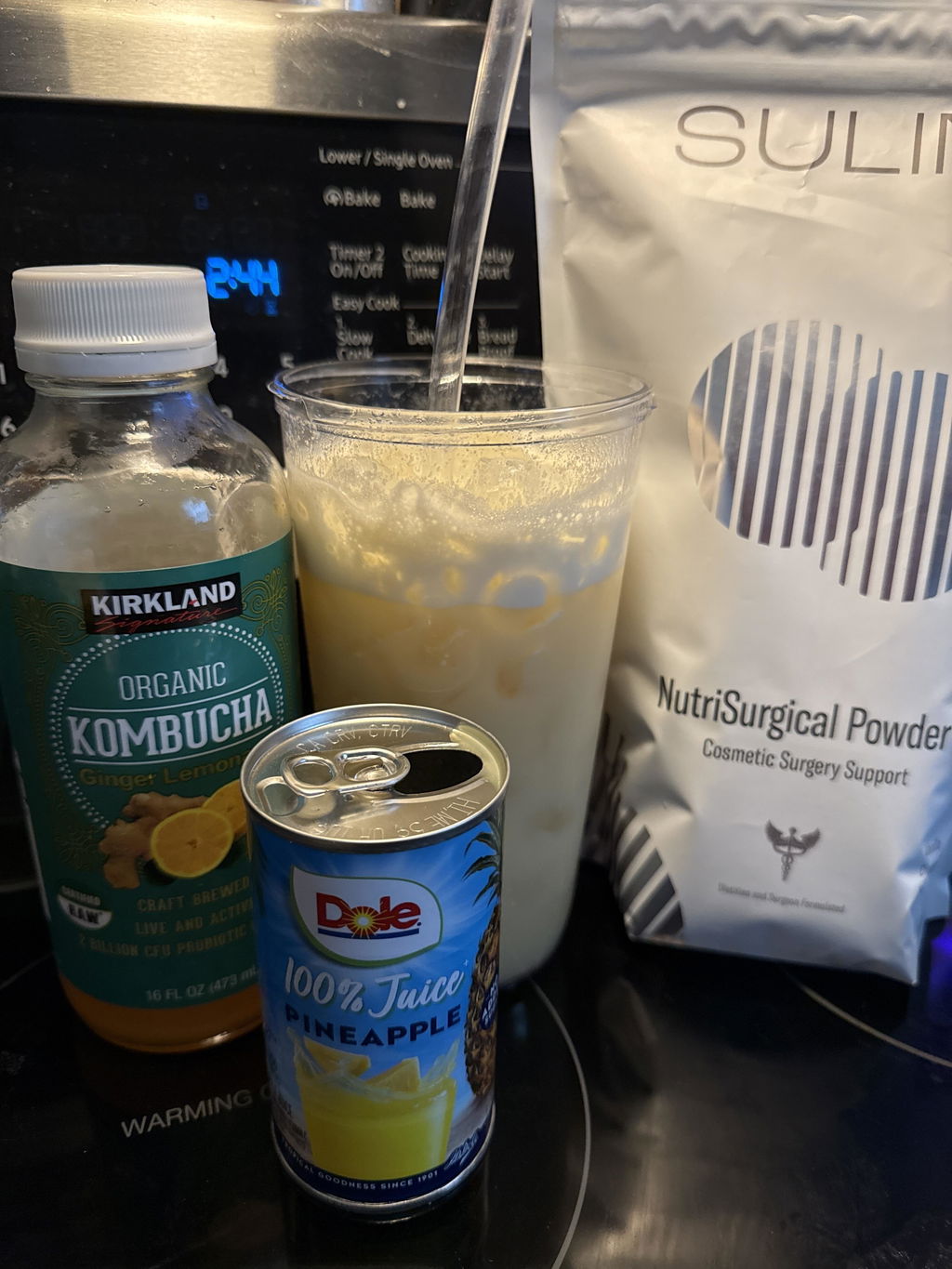
After a tummy tuck, eat small, protein-rich meals throughout the day and add fiber and fluids steadily to keep digestion moving, letting your appetite and your surgeon's instructions set the pace. Your abdomen has been tightened and repaired, so large meals feel uncomfortable, and constipation is common. Good nutrition will not change your surgeon's technique, but it gives your body the building blocks it uses for normal wound healing and helps you feel stronger as the weeks go by.
Quick Answers
What should I eat first after a tummy tuck? Start with light, easy foods such as broth, yogurt, eggs, soft fish, and oatmeal, in small portions. Follow any diet instructions from your surgical team about when to progress.
How much protein do I need? Protein needs rise during healing. One post-surgery patient guide suggests 60 to 100 grams a day,¹ though your own target depends on your size and health. Ask your surgeon or a dietitian for a number that fits you.
What causes constipation and bloating after a tummy tuck? Pain medication, anesthesia, reduced activity, and swelling can all slow digestion. Fluids, fiber from food, and gentle walking, as your surgeon allows, help.
What should I avoid eating? Heavy, greasy, or very salty meals, alcohol, and anything that tends to cause gas. Salt can add to swelling, and gas can add to pressure on a tight abdomen.
Can I take vitamins and supplements? Only ones your surgeon approves. Some, such as vitamin E and fish oil, are commonly paused before surgery. If you're looking specifically for what to avoid after surgery, our guide is a great starting point.
When can I eat normally again? Many people feel close to their usual appetite within a couple of weeks, but it varies. Keep prioritizing protein for the first several weeks while you heal.
Why does nutrition matter so much after a tummy tuck?
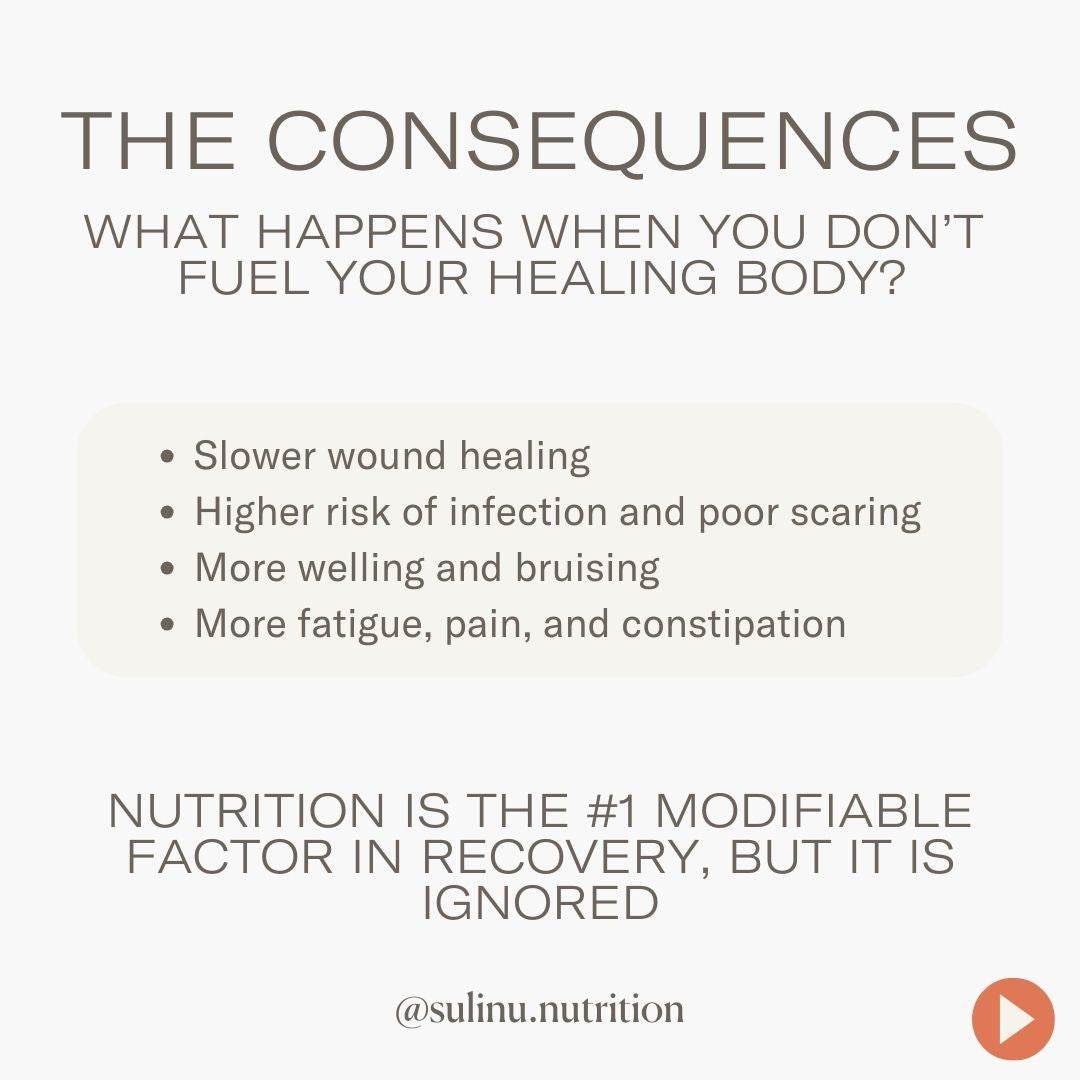
Nutrition matters because a tummy tuck is a large surgery that creates a long incision, repairs muscle, and often lifts a wide area of skin, and your body needs raw materials to heal all of that. Protein supplies the amino acids used to build new tissue, and vitamin C helps your body make collagen. Fluids keep circulation and digestion working.
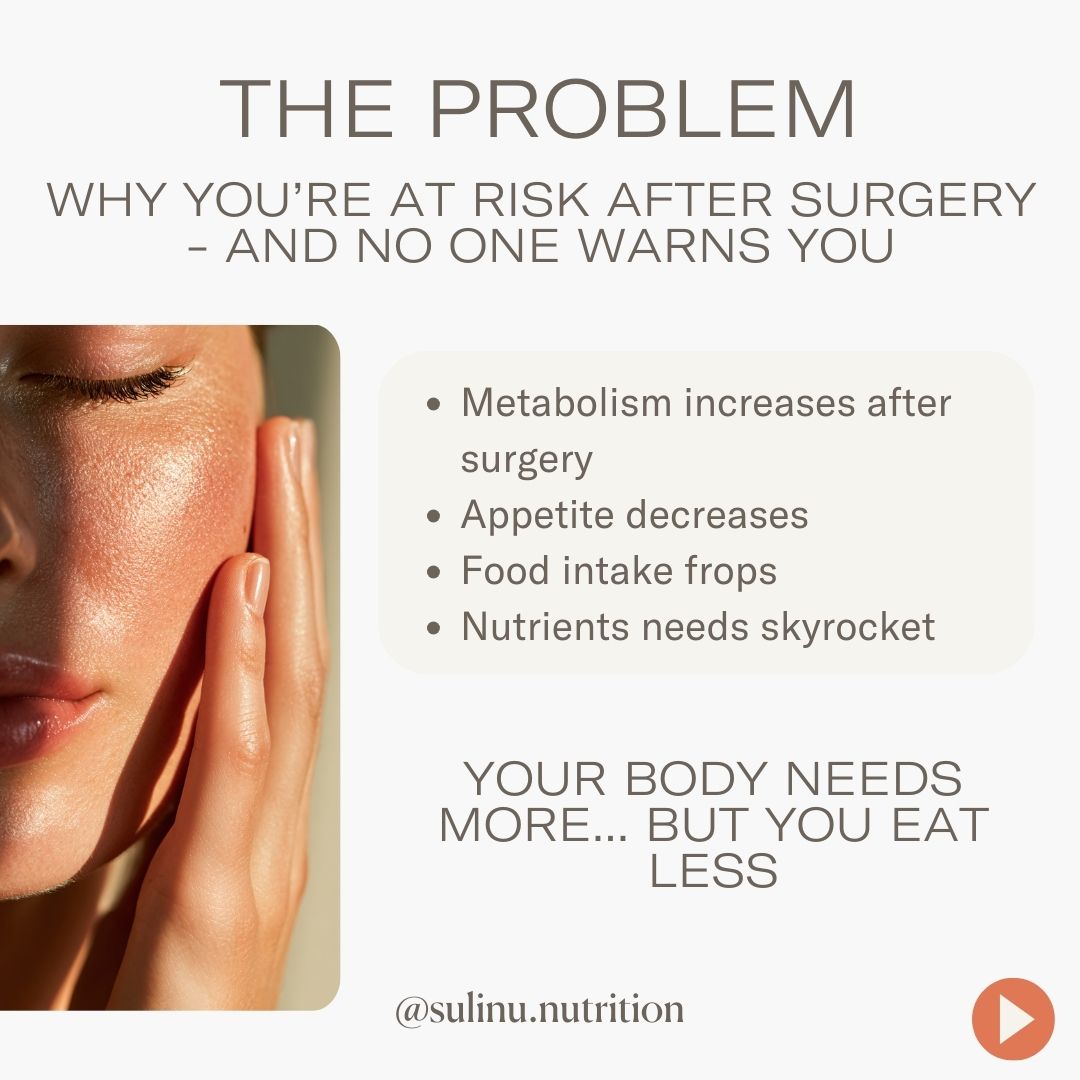
Eating well is also practical. Surgery, medication, and stress can blunt your appetite, and it is easy to go through the first days on crackers and tea. A little planning gives you something nourishing to reach for when you are hungry.
People often ask how food connects to bruising and swelling. Good nutrition supports the repair process behind both, but it does not replace compression or rest, and your surgeon's directions still come first. Our posts on what helps with bruising after a tummy tuck and the stages of swelling after a tummy tuck show what to expect.
What should you eat before a tummy tuck?
In the weeks before surgery, build regular meals around protein and produce, drink enough water, and follow your surgeon's rules for the day of surgery. You are not trying to diet. Arriving well nourished gives your body a better starting point.
-
Protein: eggs, Greek yogurt, fish, poultry, tofu and beans
-
Vitamin C: oranges, kiwi, strawberries and peppers
-
Iron-containing foods: lean red meat, lentils and spinach, unless your surgeon has flagged a concern
-
Whole grains and vegetables: they supply fiber that you will need after surgery
-
Fluids: plain water throughout the day
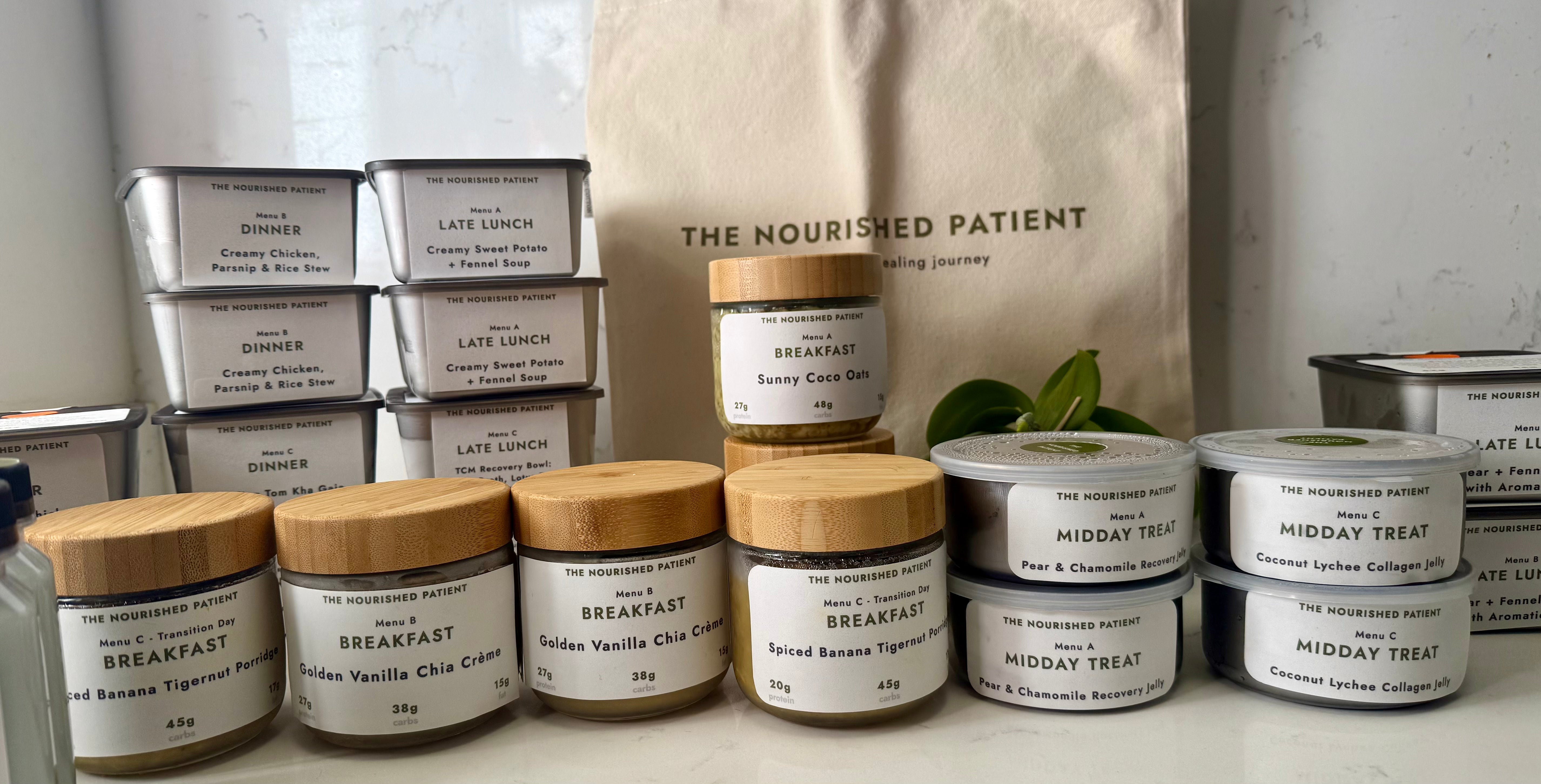
Stock your kitchen now. Fill your freezer with soups and portioned meals, and buy easy protein sources, applesauce, oatmeal, and broth. Shopping while healing is hard, so it helps to have a caregiver and a list.
Review your supplements with your surgeon at your pre-op visit. Some common products affect bleeding. Vitamin E, for example, is generally stopped two weeks before surgery.² Your surgeon sets your dates. Our guide to what to eat before surgery covers the fasting window and pre-op meals in more detail.
Not sure where to start? Check out The Ultimate Surgery Bundle
Everything you need to keep your pre- and post-surgery nutrition on the right track.

Tummy Tuck Recovery Nutrition
The Ultimate Surgery Bundle hands you eight expert guides so nothing about recovery catches you off guard.
What should you eat after a tummy tuck, week by week?
Your needs shift from gentle and simple in the first days to steadier, protein-focused meals as your appetite returns. Use the stages below as a guide, and follow your surgeon's diet instructions if they differ.
The first few days
Focus on staying hydrated and eating small amounts of easy food. Anesthesia and pain medication can leave you nauseated and constipated, and sitting upright or bending is uncomfortable.
- Broth, clear soups and diluted juice
- Plain yogurt, cottage cheese and soft scrambled eggs
- Oatmeal, mashed potato and smoothies
- Crackers or toast if your stomach is unsettled
- Small sips of water through the day
Eat slowly and stop when you feel full. A large meal can add pressure to a tight abdomen. Many people do best with five or six mini meals.
Week one to two
Add a protein source to every meal and bring in more fiber. Appetite usually begins to return, and constipation becomes a more common concern.
- Eggs, fish, poultry and tofu in soft, easy preparations
- Cooked vegetables and soft fruit such as bananas, pears and berries
- Beans and lentils in soups, if they do not give you gas
- Oats, brown rice and whole grain bread
- A protein shake if you struggle to eat enough
Fiber should go up gradually, along with fluids. Added fiber without enough water can make constipation worse.
Weeks three to six
Return to a balanced diet built around protein, produce, whole grains and healthy fats such as olive oil. Many people feel steadier and hungrier by now. Keep protein high at each meal, because your body is still repairing tissue below the surface and remodeling the incision.
- Include a palm-sized portion of protein at meals
- Fill half your plate with vegetables and fruit
- Choose healthy fats such as avocado and nuts
- Keep walking and drinking water
If you are curious how this fits with your incision healing, our tummy tuck scars guide explains how scars mature over the first year.
Which foods and habits should you limit?
Limit alcohol, heavy salt, greasy or fried foods, and anything that reliably gives you gas. Each has a reason tied to recovery.
-
Alcohol: it interacts with pain medication, can dehydrate you, and may affect healing. Avoid it while you are on prescriptions and until your surgeon says otherwise.
-
High-sodium foods: processed meats, canned soups, and fast food can contribute to water retention, which may add to swelling.
-
Greasy or fried meals: they digest slowly and can cause nausea, which is the last thing you want with sore abdominal muscles.
-
Gas-producing foods: foods such as cabbage, broccoli, cauliflower, onions, and carbonated drinks cause bloating in some people. Our dietitian-written guide to nutrition with a tummy tuck goes through which vegetables tend to be better tolerated early on.
-
Unapproved supplements and teas: some herbal products affect bleeding or interact with medication.
Restrictions are not meant to be permanent. Most people return to a varied diet over time.
How do you manage constipation and bloating after a tummy tuck?
Drink enough fluids and eat the fiber you tolerate, then ask your surgeon which stool softener to use and when you may walk more. Straining puts stress on a healing abdominal repair, so prevention matters.
- Drink water regularly. Broth and herbal tea can count.
- Add prunes, pears or oats if your stomach tolerates them.
- Walk short distances several times a day when you are cleared.
- Ask your surgeon about a stool softener or gentle laxative before surgery and start it when advised.
- Call your team if you have gone several days without a bowel movement or have severe abdominal pain.
Our Ultimate Surgery Bundle contains a Constipation Guide to avoid this not-so-fun side effect of surgery.
Nutrition Support During Tummy Tuck Recovery
Food comes first, but some people find it hard to reach their protein and nutrient goals while their appetite is low. A structured approach can help bridge the gap, as long as your surgeon approves.
Your body uses protein, vitamin C, and other nutrients to repair the incision and the muscle beneath it, and it benefits from digestive comfort while it does so. Pairing a food-first plan with targeted support is a common way to cover the days when you cannot eat much.
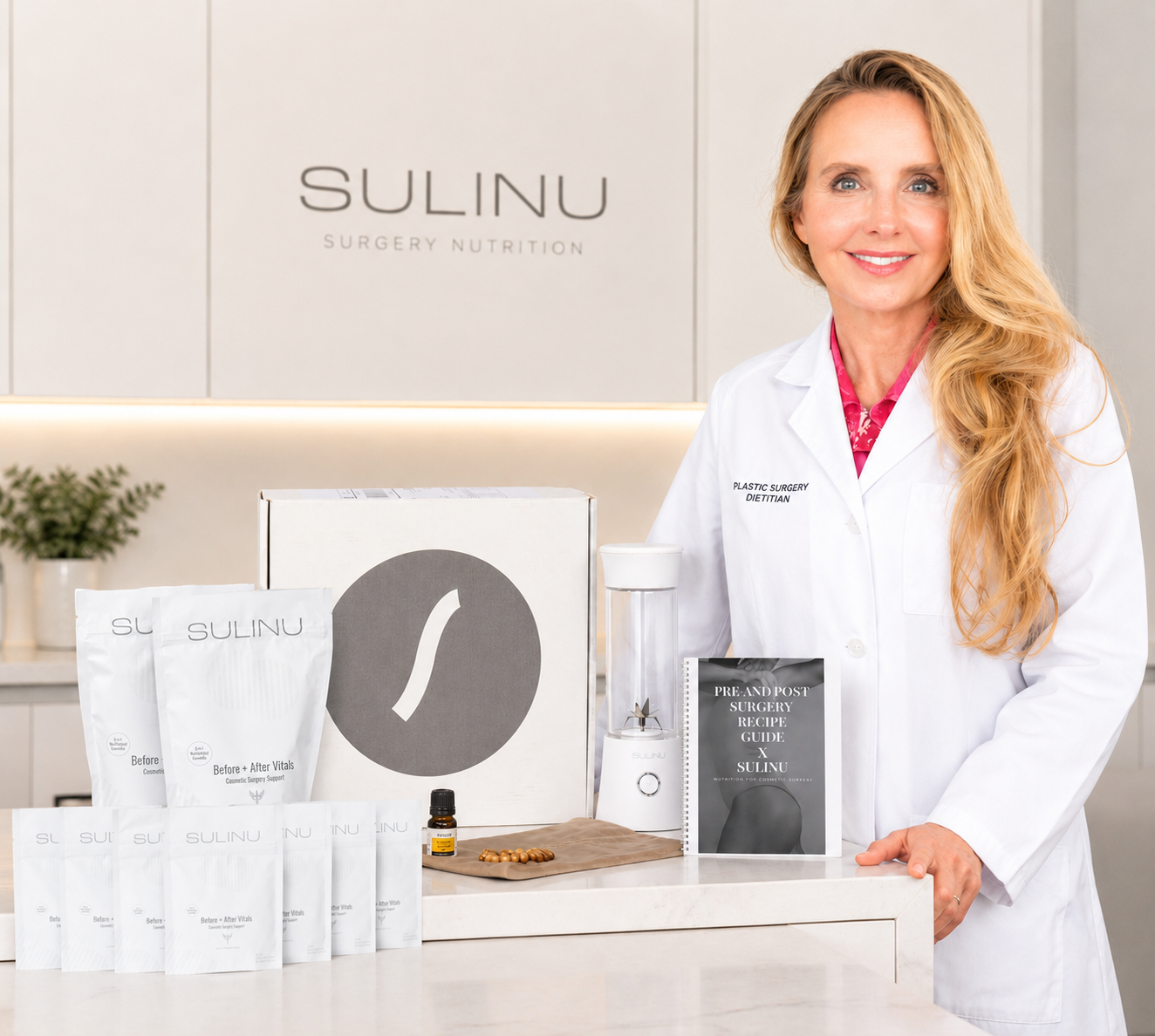
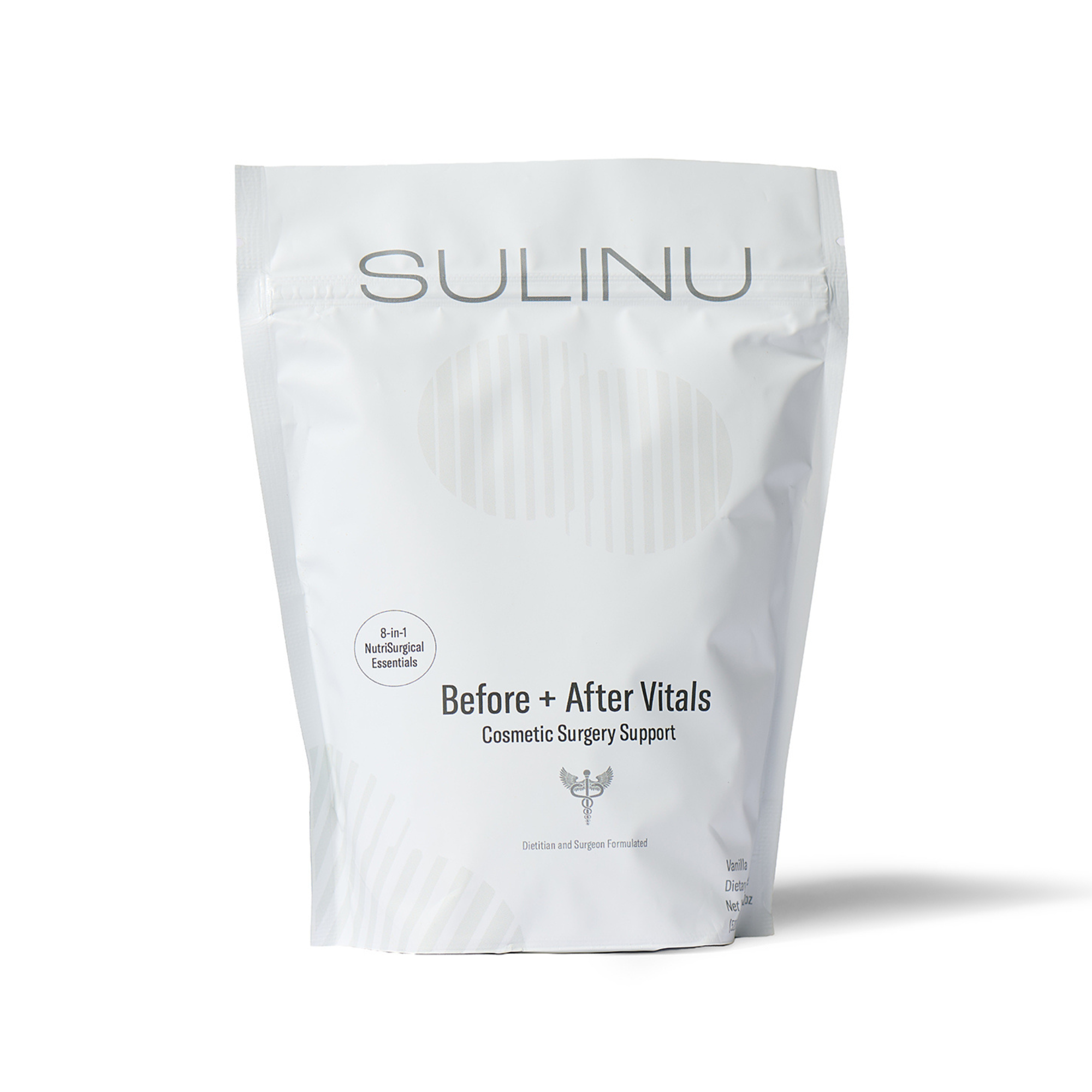
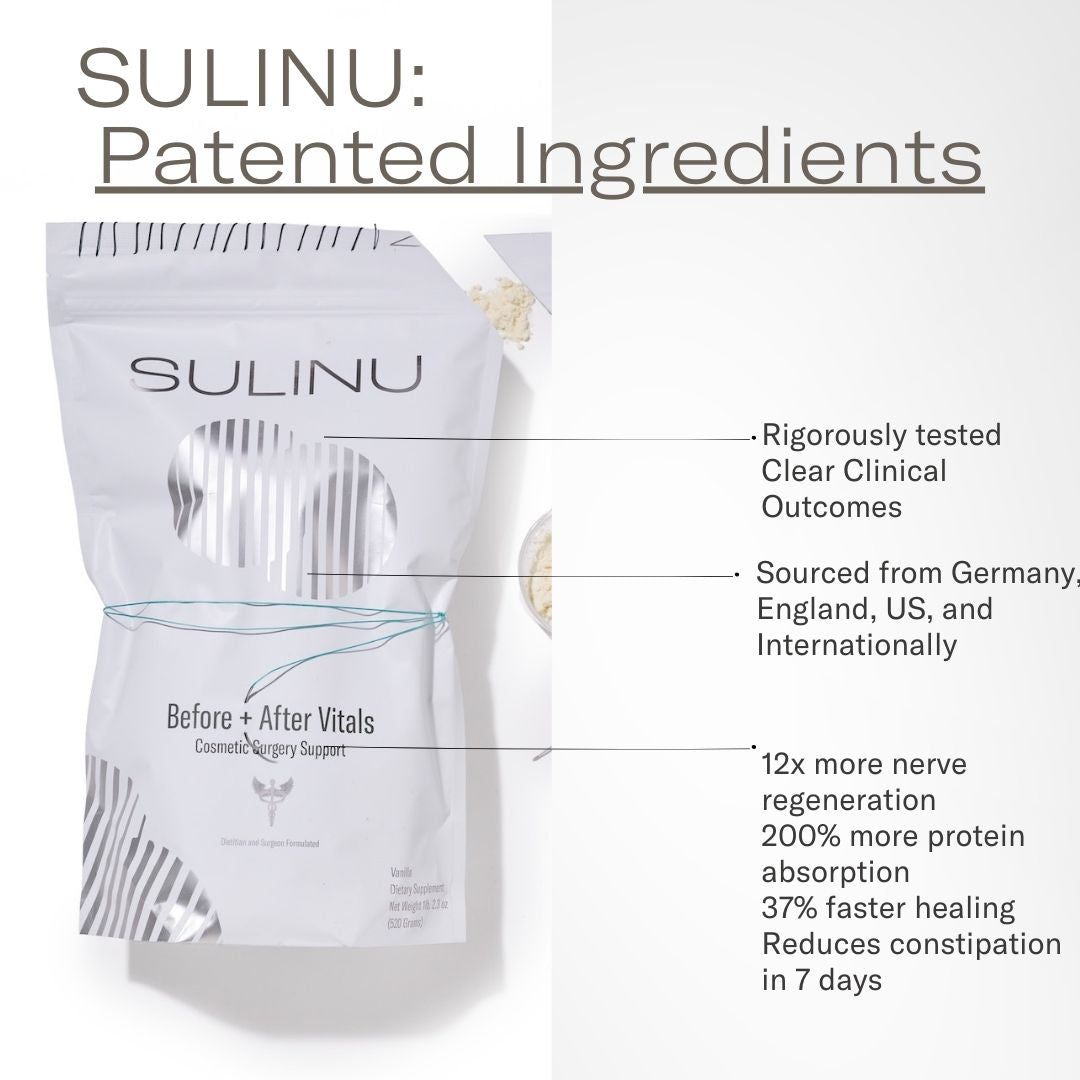
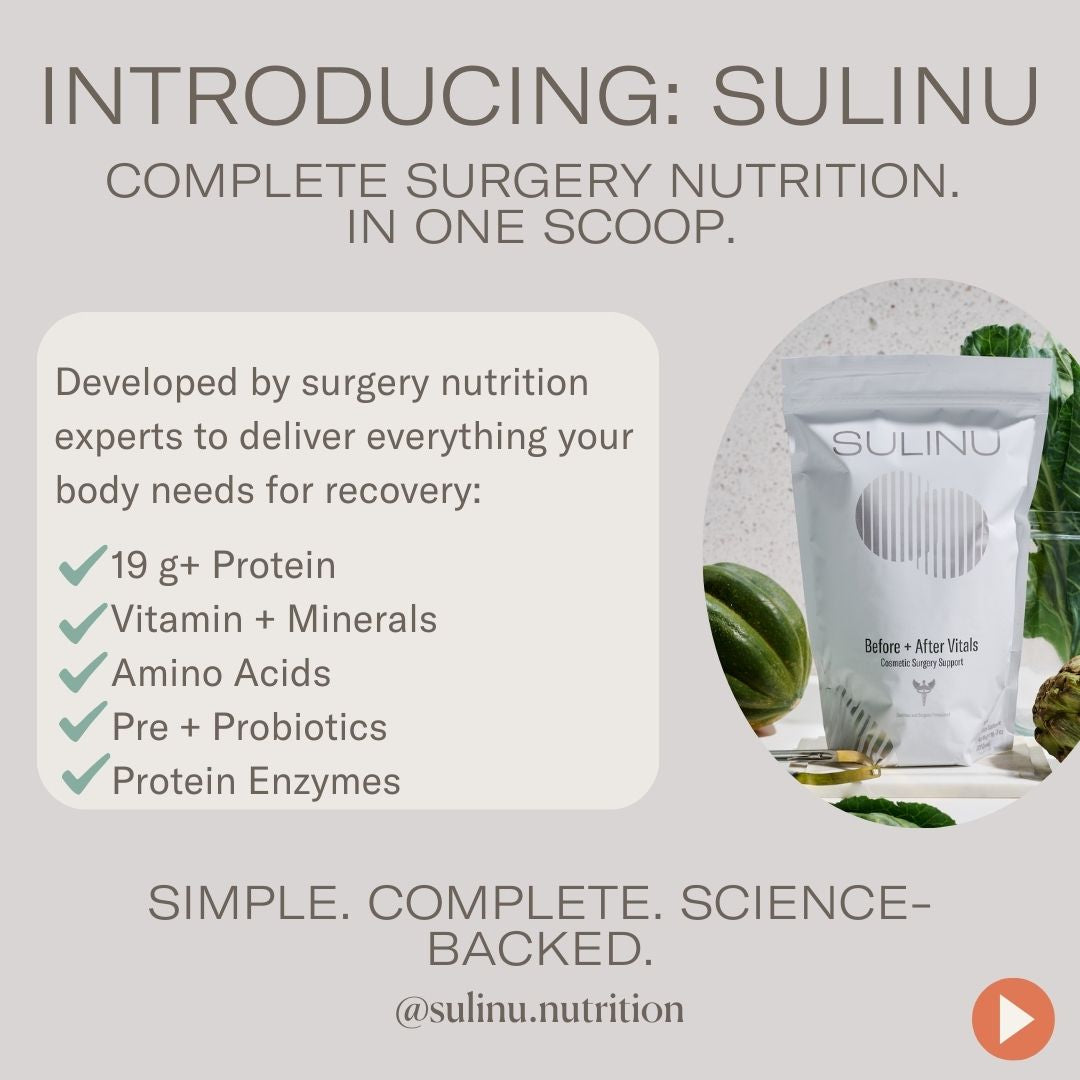
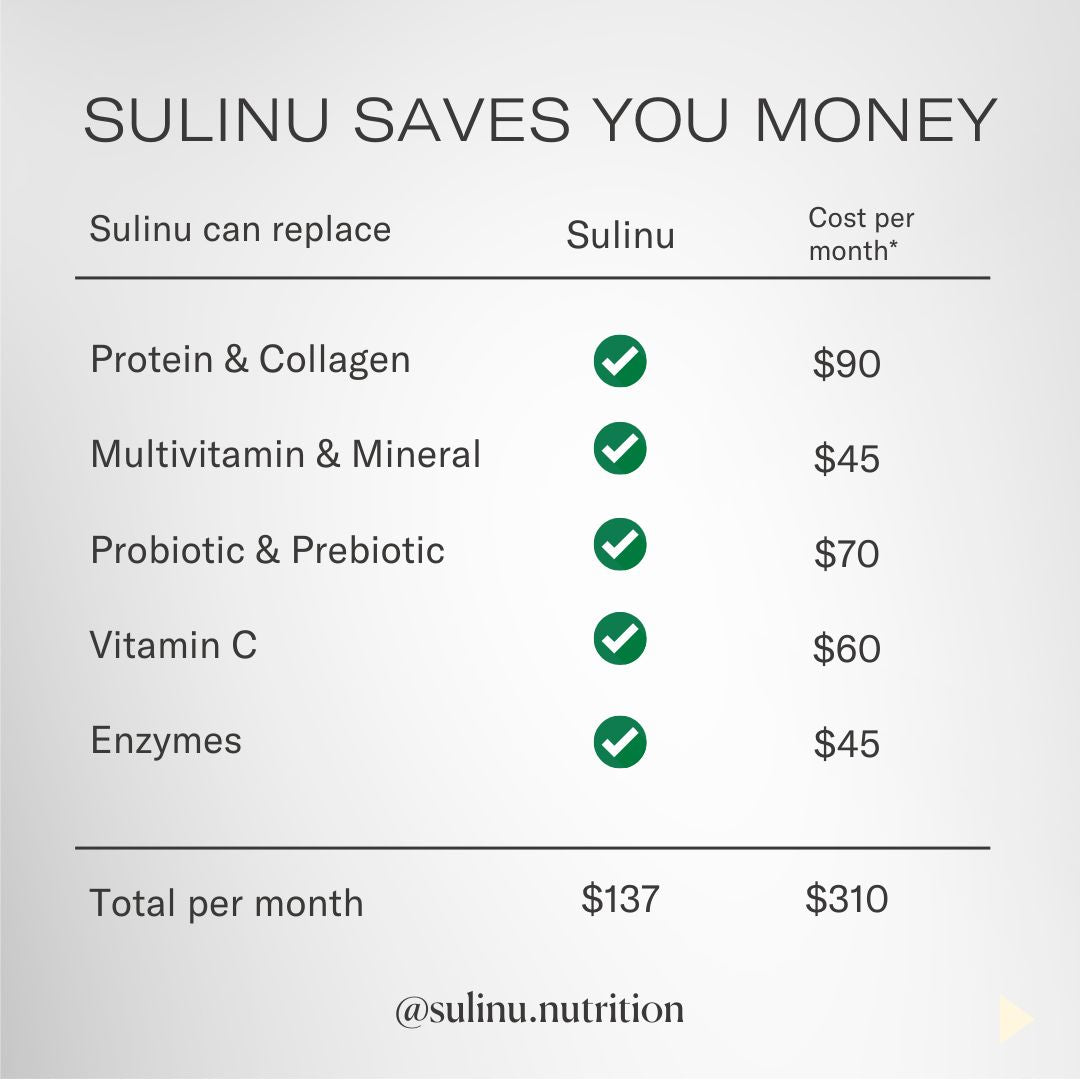
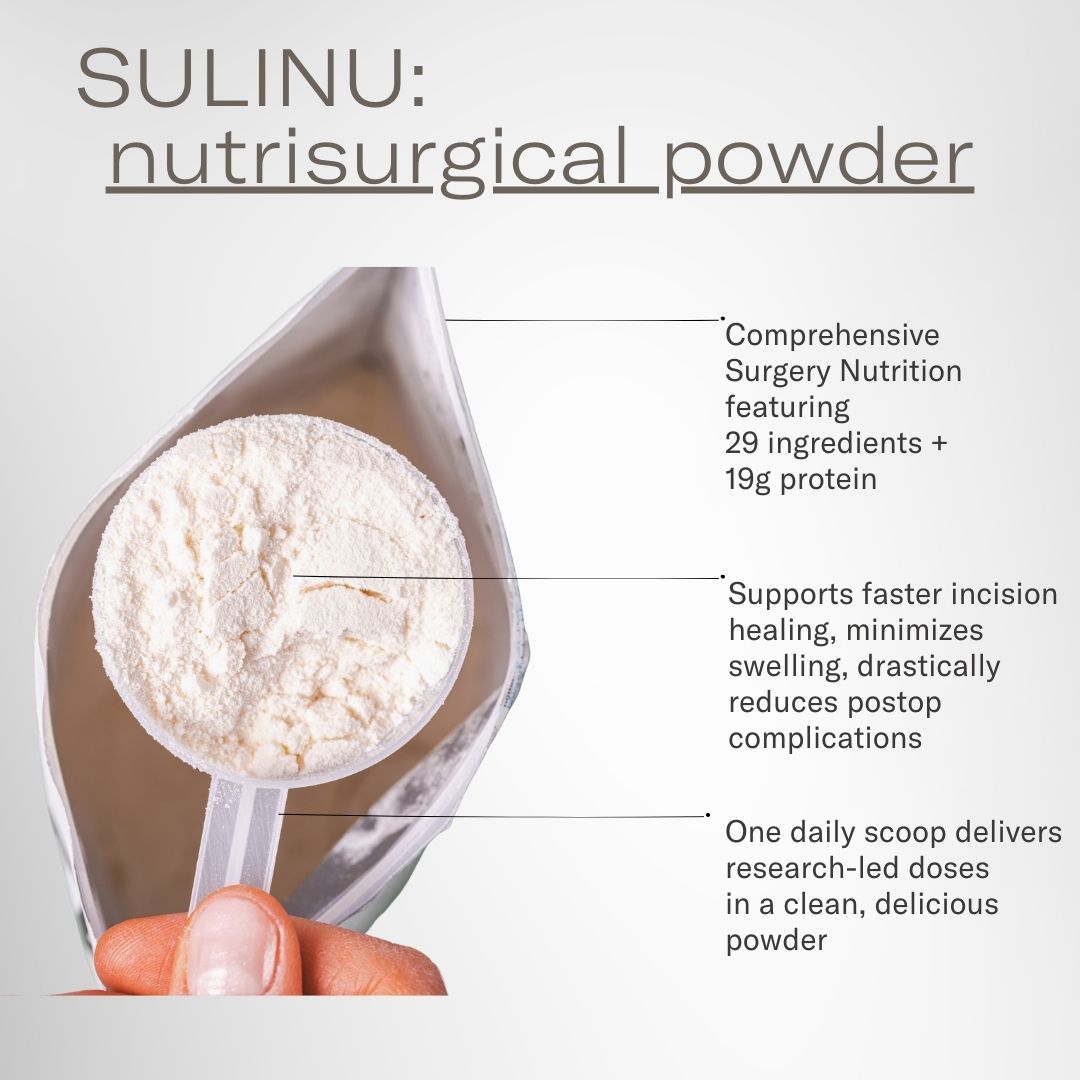
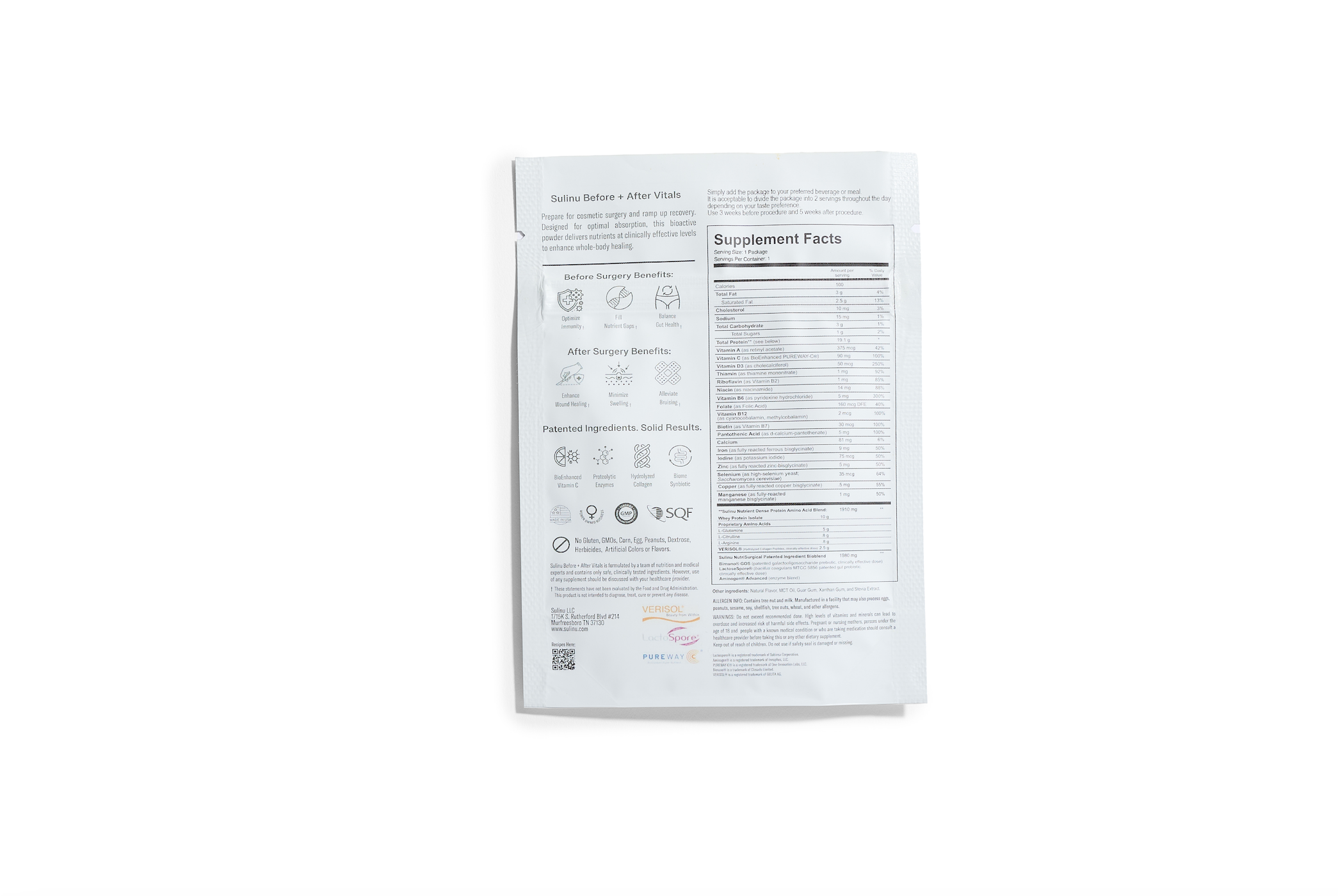
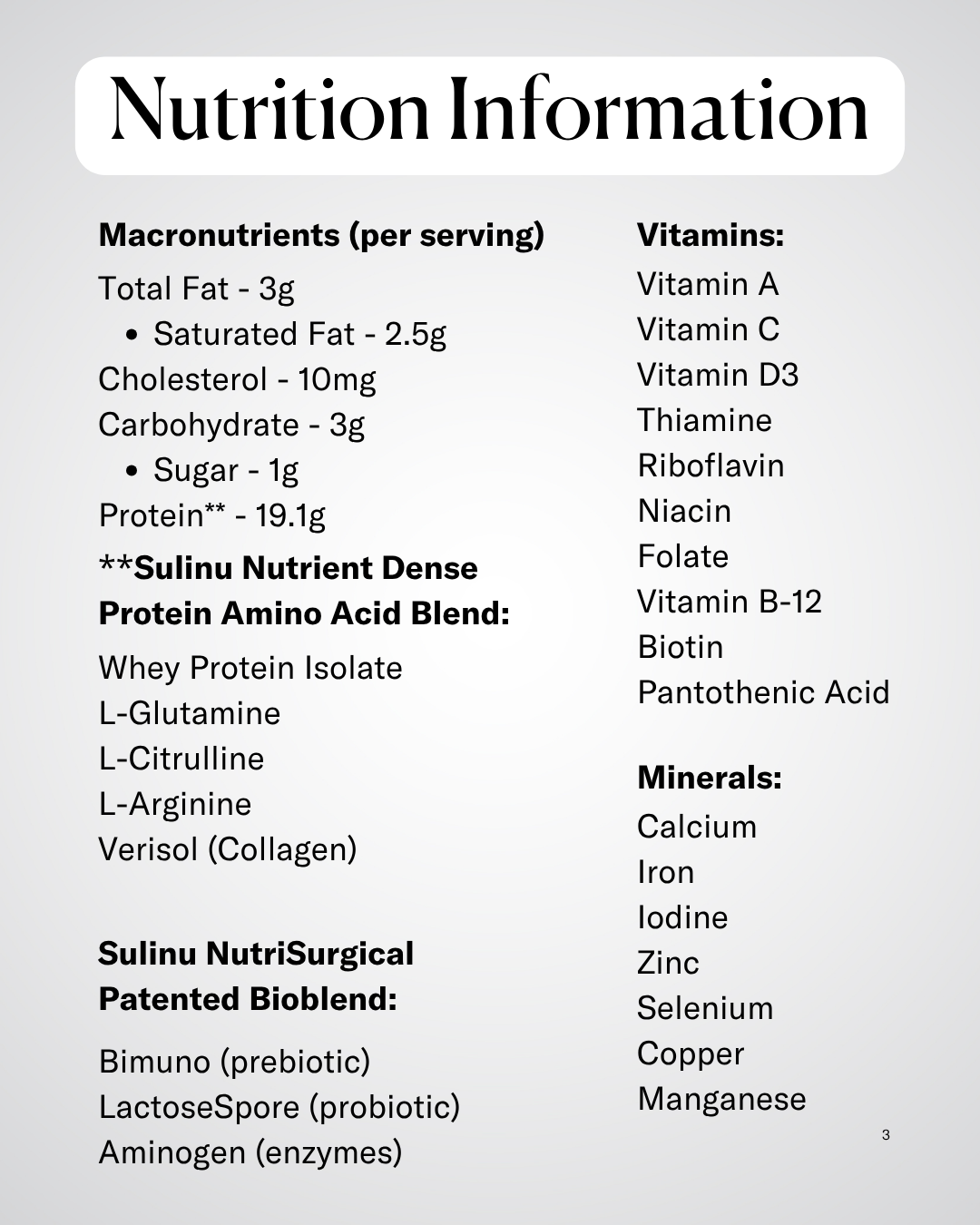
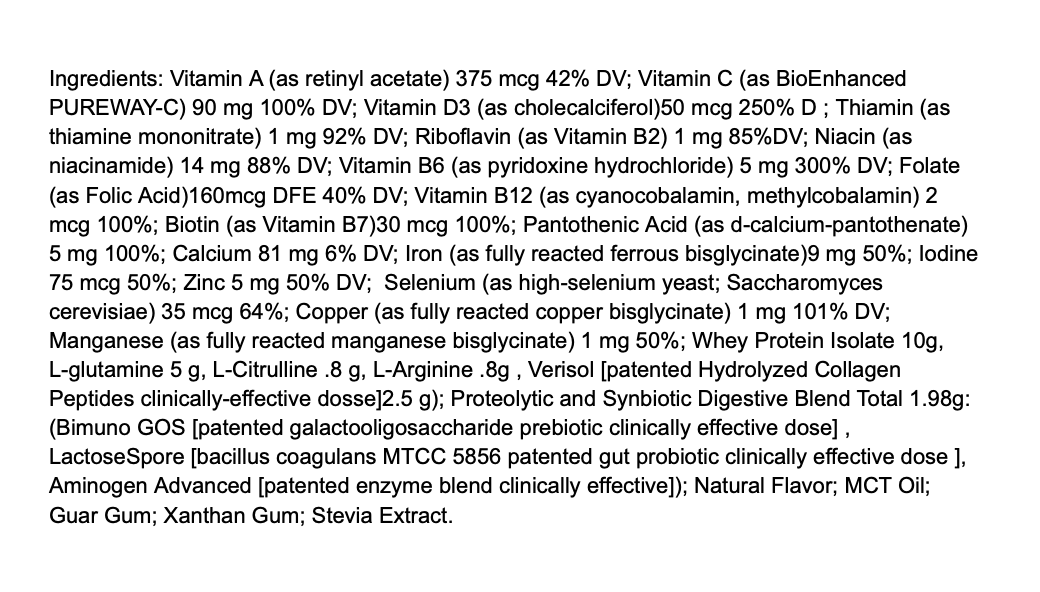
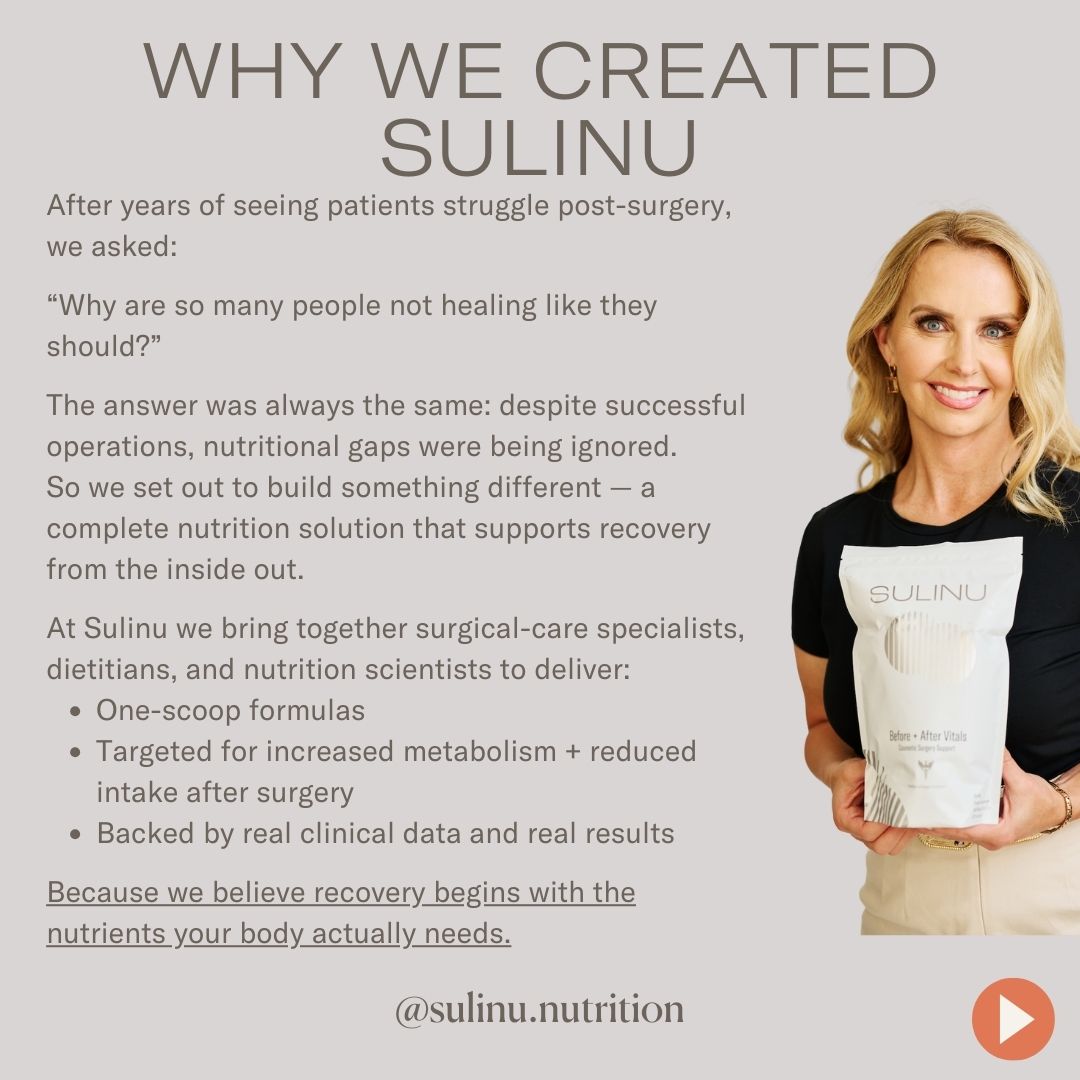
Sulinu's Before + After Vitals is the world's first comprehensive wound healing supplement built specifically for surgery recovery — a NutriSurgical formula, meaning it addresses the surgical healing process directly rather than functioning as a general multivitamin. The formula includes 29 surgeon-approved ingredients, including patented ingredients and a few core components that impact your recovery.
The formula includes 29 surgical essentials:
BioEnhanced Vitamin C
A patented, rapid-absorbing form that some research suggests achieves significantly higher tissue retention than standard ascorbate formulations. Vitamin C is foundational to collagen synthesis, immune defense, and antioxidant protection during the inflammatory phase, all of which directly influence how your body manages bruising, swelling, and the quality of scar tissue over time. It's also formulated to avoid the GI side effects that typically make high-dose vitamin C difficult to tolerate post-surgery.
Hydrolyzed Collagen Peptides
A patented version that some studies indicate may support meaningful improvement in skin elasticity in a matter of weeks. Collagen peptides don't just add collagen. They signal skin cells to produce more of their own. This matters at every stage: for swelling resolution as tissues remodel, for bruising clearance as vascular integrity is restored, and for scar quality as new tissue architecture forms.
Proteolytic Enzymes
Patented enzymes that, when combined with protein, some research suggests, can help double total amino acid absorption. Amino acids are the building blocks your body uses to repair incision tissue, clear inflammatory debris, and build new scar architecture. Getting more of them absorbed, not just consumed, is the goal.
Biome Synbiotics
Surgery disrupts gut health, and disrupted gut health disrupts everything else: nutrient absorption, immune function, inflammatory response. Prolonged bruising and swelling are often downstream of a gut that isn't processing and delivering nutrients efficiently. This patented prebiotic and probiotic blend is designed to survive stomach acid and arrive active in the gut, supporting the digestive foundation that makes all other healing nutrients work.
The formula also includes targeted amino acids (L-glutamine, L-citrulline, L-arginine), essential vitamins (A, B-complex, C, D3), and minerals (zinc, copper, manganese, iron) — all in clinically relevant dosages, not token inclusions.
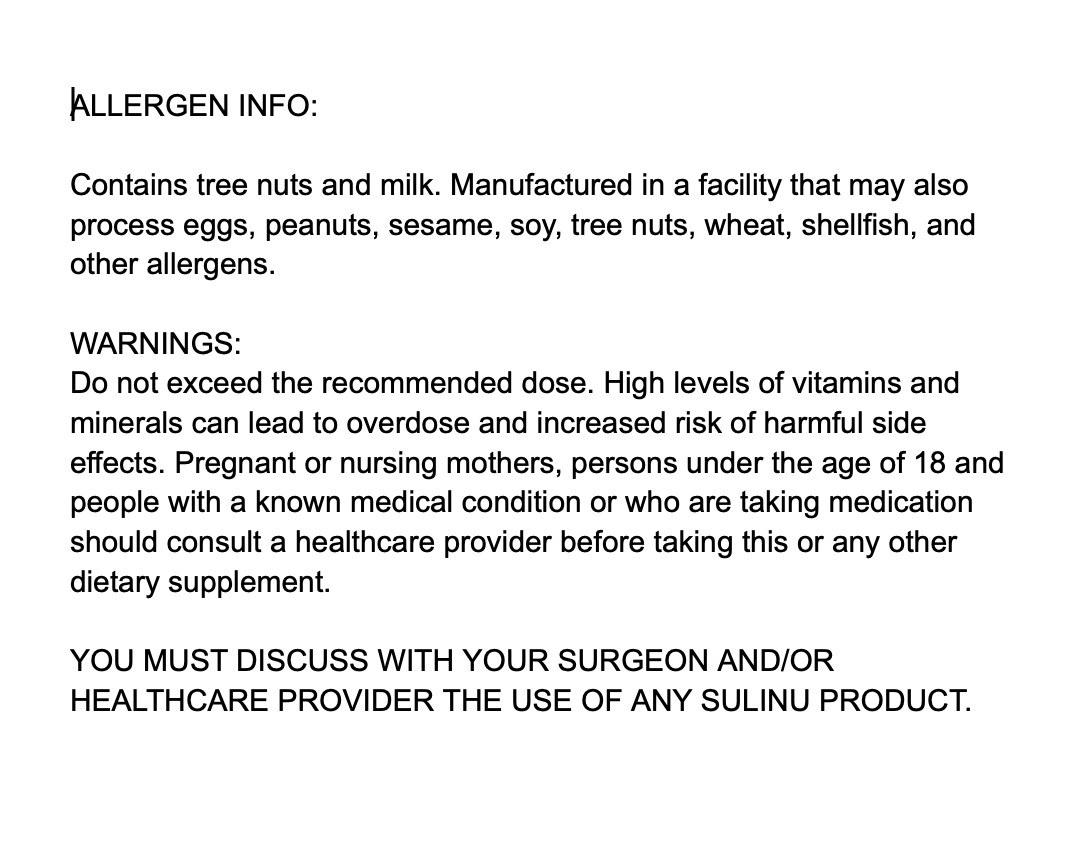
No GMOs. No gluten. No artificial colors. No ingredients that interfere with each other. Everything in Before + After Vitals is there because it has a specific job in your recovery.
Scoop. Mix. Heal.

How much do I need to support my tummy tuck recovery?
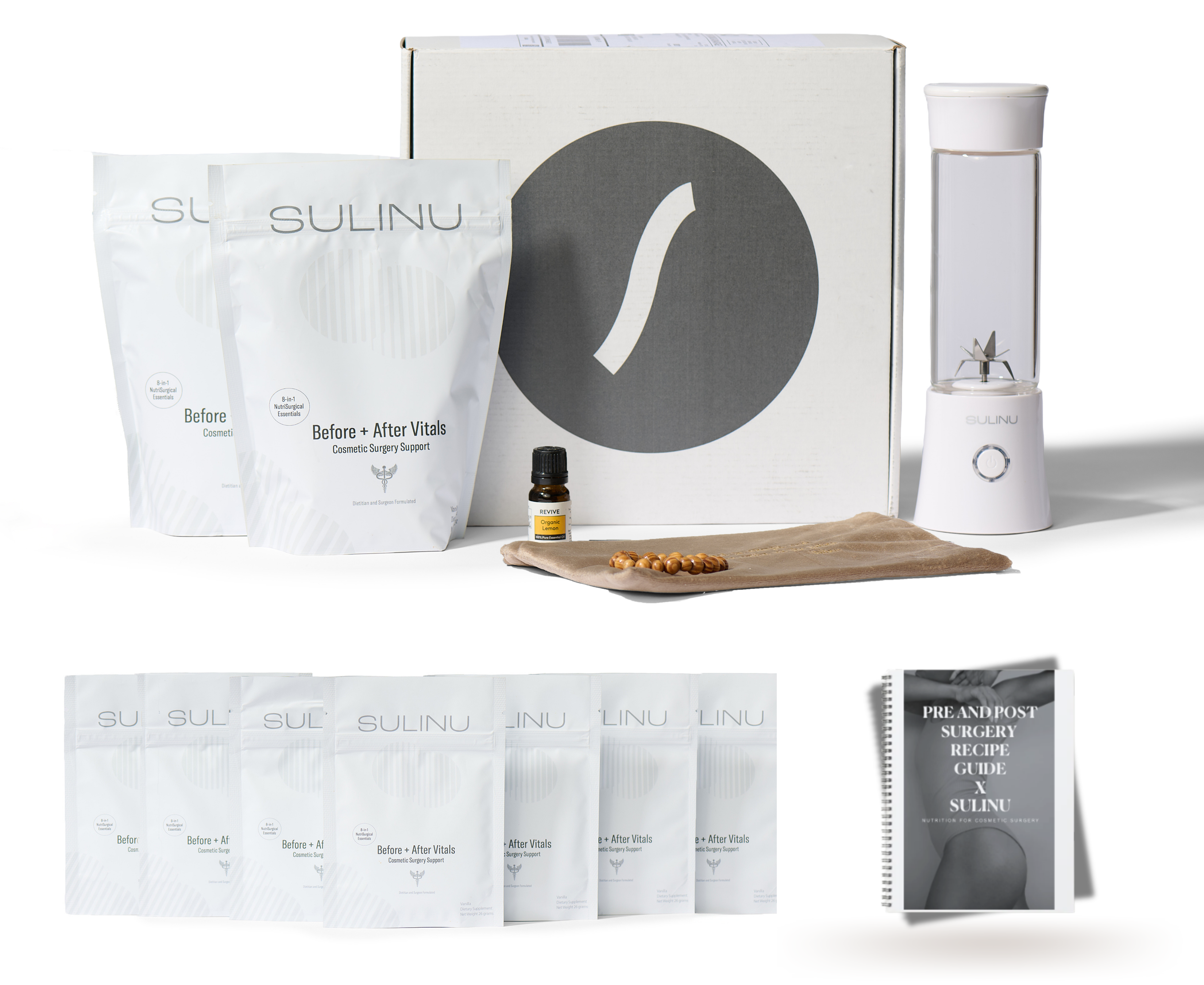
Our recommended protocol is two bags total for most surgeries.
1 bag for before surgery
1 bags for after surgery

Prepping for a Tummy Tuck?
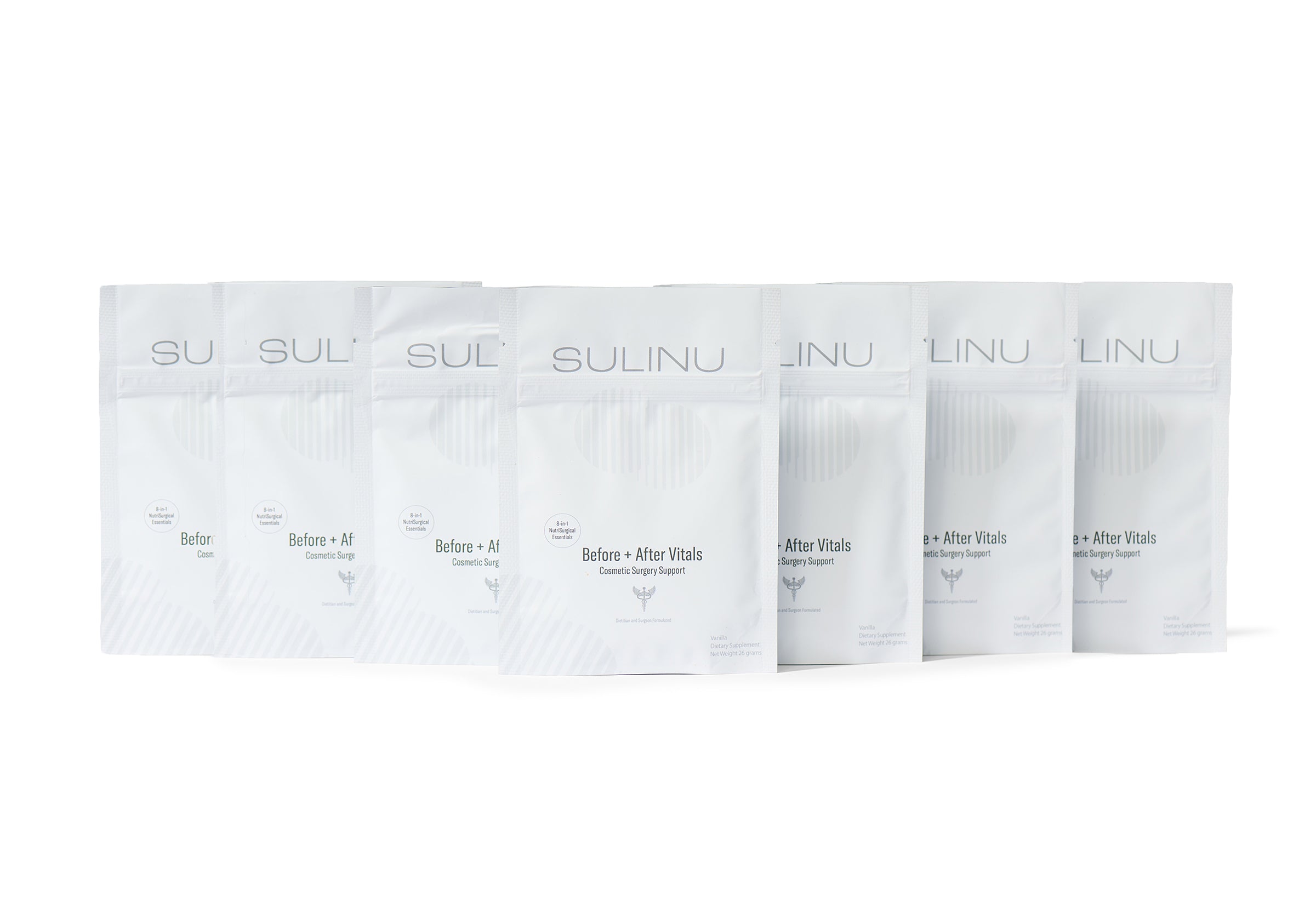
Get everything you need to start prepping your body before surgery - our highly rated supplement, travel-ready packs, and the guide that tells you exactly how to eat right leading up to your procedure.

Already healing from surgery? You can still support your results!
Bruising, scarring, and swelling don't stop mattering after surgery. You've got up to a year to still influence how your tissue heals. Starting now still counts.
If you want to compare bundle options, browse the Tummy Tuck Supplements collection.

What practical tips make eating easier after a tummy tuck?
Make eating require as little effort as possible. A few habits help.
- Prepare and freeze portions before surgery
- Keep snacks and drinks at waist height, close to where you rest
- Use a bendable straw so you can sip without moving much
- Set reminders to eat and drink if your appetite is low
- Choose foods you can eat with one hand
- Sit as upright as your surgeon allows while eating to ease pressure on the abdomen
- Ask a friend to cook or drop off meals
How long should you keep eating for recovery?
Keep protein and fluids up for at least the first six weeks and for as long as you still notice swelling, soreness or fatigue. Healing continues well past the visible stage. Scars and tissue keep remodeling for many months, and a steady diet supports that process. Your surgeon or dietitian can help you taper your approach as you return to normal activity.
Questions to Ask Your Surgeon
- Are there foods I should avoid before or after surgery?
- How much protein should I aim for each day?
- When should I start fiber or a stool softener, and which one?
- Which supplements should I stop before surgery, and on what dates?
- Can I take a protein shake or supplement afterward?
- How much fluid should I aim for?
- When can I drink alcohol again?
- Do any of my medications interact with foods or supplements?
- What symptoms of constipation or nausea should prompt a call?
When to Contact Your Surgical Team
Call your surgeon, or seek emergency care when instructed, if you notice any of the following.
- You cannot keep food or fluids down
- Nausea or vomiting that does not settle
- No bowel movement for several days, or severe abdominal pain or swelling
- Fever or chills
- Redness, warmth or drainage from the incision
- Sudden swelling in one area, or a firm, tender lump
- Calf pain or swelling, chest pain or shortness of breath (seek emergency care)
- Signs of dehydration such as dizziness or very dark urine
FAQs: Eating After a Tummy Tuck
1. What should I eat the first day after a tummy tuck? Light, easy foods such as broth, yogurt, eggs and oatmeal, in small amounts. Follow any instructions your surgeon gave you about progressing.
2. How much protein should I eat after a tummy tuck? It depends on your size and health. One post-surgery patient guide suggests 60 to 100 grams a day.¹ Ask your surgeon or dietitian for your target.
3. Which foods help with bloating after a tummy tuck? Peppermint tea, ginger, bananas and cooked vegetables are often better tolerated, while carbonated drinks and some raw vegetables may worsen gas. Individual response varies.
4. What helps constipation after a tummy tuck? Fluids, fiber, walking when permitted and a stool softener approved by your surgeon. Call your team if it persists.
5. Can I drink alcohol after a tummy tuck? Avoid it while taking prescription pain medication and until your surgeon approves.
6. Do I need to take vitamins after a tummy tuck? Not everyone does. Ask your surgeon before taking any, since some products affect bleeding.
7. Are protein shakes okay after a tummy tuck? For many people, they are useful when appetite is low. Ask your surgeon, and see our post on whether protein shakes help after surgery.
8. How long does nutrition matter after a tummy tuck? For at least the first six weeks, and you will likely benefit from steady protein beyond that while swelling and scars continue to settle.
9. Does what I eat affect bruising or swelling? Salt can add to water retention, and protein and fluids support normal repair. Compression and rest do the heavier lifting, as covered in our post on tummy tuck bruising.
10. Can I follow a special diet like keto or vegan after a tummy tuck? Many people can, but check with your surgeon. Make sure you still meet your protein and calorie needs.
References
- Rutgers Cancer Institute of New Jersey. Nutrition Guidelines for Wound Healing After Surgery. 2016. https://cinj.org/sites/cinj/files/documents/Nutrition-Guidelines-for-Wound-Healing-After-Surgery-2016.pdf
- Mayo Clinic. Vitamin E. https://www.mayoclinic.org/drugs-supplements-vitamin-e/art-20364144
Medical Disclaimer
The information provided in this article is for general educational purposes only and is not intended to constitute medical advice, diagnosis, or treatment.
Every individual's healing process is unique, and outcomes vary based on a wide range of factors, including health status, surgical technique, and post-operative care. Always follow the specific guidance of your board-certified plastic surgeon and medical team.
If you experience any concerning symptoms during recovery — including signs of infection, wound separation, or unusual pain — contact your surgical team immediately.
These statements have not been evaluated by the Food and Drug Administration. Sulinu's Before + After Vitals is not intended to diagnose, treat, cure, or prevent any disease.