Plastic Surgery Nutrition: What Foods to Eat with a Tummy Tuck
Are you preparing for an upcoming tummy tuck surgery? Are you curious what foods to eat with a tummy tuck? A tummy tuck, also called an abdominoplasty, removes excess fat and skin on the stomach and reinstates the weakened muscles to create a smoother, firmer abdomen.
You may be wondering what you can eat after surgery for optimal recovery. After spending a lot of money on your surgery, it is essential to take protect that investment with nutrition!
Keep reading to learn from Kylie, MS, RD, a clinical dietitian specializing in about the best foods to eat after a tummy tuck and which foods you should avoid.
There are certain foods that can help assist your body with the surgery and recovery process of a tummy tuck. Being aware of these foods can help you make sure that you are nourishing your body with the right vitamins and compounds it needs.
Non-Cruciferous Vegetables
Non-cruciferous vegetables refer to vegetables that are NOT a part of the cabbage family. These include foods like beets, peppers, cucumbers, carrots, and potatoes.
Why are these good post-surgery?
These vegetables are non-gas forming, but also high in fiber. Fiber helps to improve digestion and prevent constipation, which is a common problem after surgery.
Nitric Oxide Forming Foods
Nitric oxide is a gas we make in our bodies from nitrates and nitrites that are naturally found in our foods. Foods that increase nitric oxide production in the body include dark green leafy vegetables like Swiss Chard and spinach, as well as carrots and beets.
Why are these good post-surgery?
The foods are helpful because nitric oxide can improve incision health and healing following your surgery.
Foods High in Protein AND Calories
When choosing proteins after surgery, it’s important to look for low-fat, high calorie options. These include low-fat Greek yogurt, eggs, beans and legumes, peanut butter, nuts, fish, and lean meats.
Why are these good post-surgery?
Protein helps your body make new cells, which helps with incision healing. Your body also needs more energy, in the form of calories, because it is working harder than normal to heal after surgery.
Action tip #1: Create a post-surgery meal prep that includes 2-3 of the foods listed above.
What foods should I avoid?
Now that you know which foods are good to eat with a tummy tuck, you may be wondering which foods you want to limit or avoid. The list below gives you examples of foods that can lead to unwanted symptoms and slower recovery with a tummy tuck.
Try to do your best to limit your consumption of these foods while going through surgery and recovery.
Cruciferous Vegetables
Cruciferous vegetables include vegetables in the cabbage family such as broccoli, cabbage, cauliflower, kale, and bok choy.
Why are these bad post-surgery?
These foods are high in sulfur which may lead to uncomfortable gas and bloating after surgery.
High-Fat Meats
High-fat meats include beef, pork, steak, sausage, bacon, hot dogs, hamburgers, and salami.
Why are these bad post-surgery?
High-fat meats are typically also high saturated fat which can slow gastric motility. Gastric motility refers to the speed of the digestive system. A slow gastric motility can lead to constipation and unwanted gas, both which you don’t want!
Foods High in Saturated Fat
Foods high in saturated fat include full-fat dairy, butter, cakes, biscuits, pastries, and most cheeses.
Why are these bad post-surgery?
These foods can also slow gastric motility, leading to uncomfortable side effects like bloating, constipation, nausea and heartburn.
What are some examples of foods I recommend?
Are you wondering what a plastic surgery dietitian recommends you eat after tummy tuck surgery? Here are a list of a couple of my favorite foods that are going to help you through your healing process. Add a couple of these foods into your pre or post surgery routine!
Kiwi
Kiwi is hydrating and high in fiber to promote digestion.
Pomegranate
Pomegranate contains antioxidants and reduces inflammation in the body. It also helps regulate nitric oxide production to reduce recovery time after surgery.
Pumpkin Seeds
They are high in iron and protein to aid in the wound healing process.
Foods to Eat With a Tummy Tuck: Final Thoughts
Here are a few key takeaways from this article:
After a tummy tuck you should include foods that are non-gas forming, nitric-oxide forming, and high in protein AND calories.
You should avoid foods that cause gas like cruciferous vegetables and foods high in saturated fat.
Foods like kiwi, pears, pomegranate, pumpkin seeds, and turkey are all beneficial to eat following a tummy tuck.
As a plastic surgery dietitian, I am able to work together with you to help you smoothly get through surgery and recovery with as minimal complications as possible. I develop a customized plan that guides you through what you should and shouldn’t be eating for optimal results.
I would love to talk with you! Follow me here or email me at plasticsurgerynutrition@gmail.com . You spend a lot on your surgeries- it is important to invest in your body’s health before and after them as well.
Looking for more fun and educational content about surgery? Then follow me at @nutriton.plasticsurgery on Instagram!
Born from clinical experience, stubborn integrity, and love.
My Story
In 2019, I closed a chapter as a surgical dietitian. Underneath the noise, I felt lost. One night, I remember standing alone in my kitchen and I prayed, "God, take this life and do something with it."
Three months later, on a camping trip, my husband and I connected with a plastic surgeon. I asked him an earnest question: "What do you give your patients to help them heal after surgery?"
He said, "Nothing. We send them home on arnica."
My stomach dropped. I thought of all the women choosing surgery to feel more at home in their bodies—brave, thoughtful, intentional—and being handed nothing more than a hope and a wish.
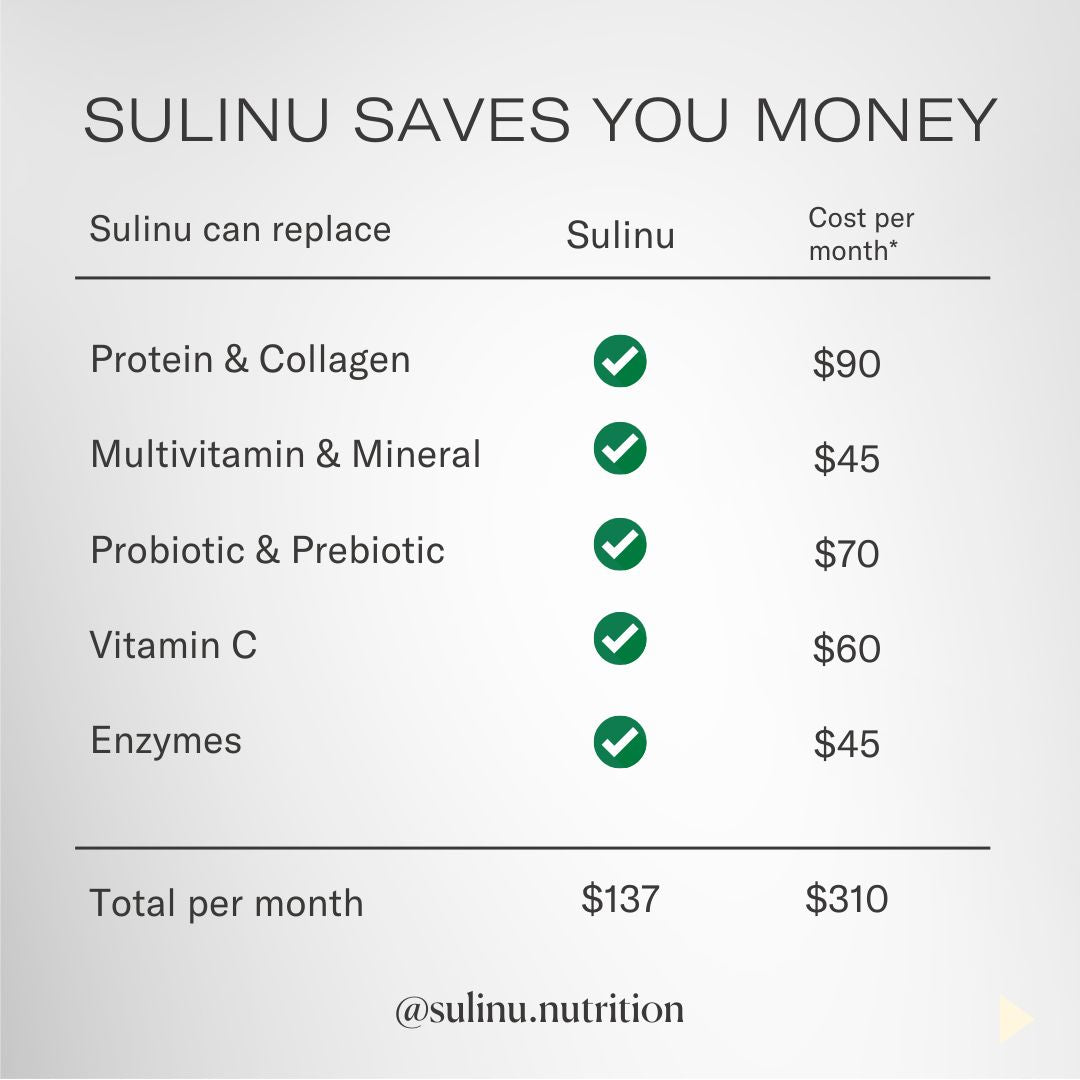
So I began searching for "the supplement" I wish I'd had for my patients. It didn't exist. What I found instead were formulas with:
Cheap, poorly absorbed ingredients
Subpar dosages that wouldn't move the needle
Prebiotics and Probiotics that were already dead on arrival
Deceptive marketing and a loud "push harder" message that didn't honor a woman's healing pace.
It took five years. Six figures in losses. Three near-bankruptcies. We didn't give up.
We created Sulinu—born from clinical experience, stubborn integrity, and a genuine love for women who are investing in themselves.
What makes Sulinu different:
Evidence-aligned dosages of nutrients that actually matter for post-op healing
Thoughtful formulation for absorption and synergy—not just a label full of buzzwords.
Details that care for you: from the functional bag design to the clarity of our education on the website. No fluff. No fear tactics. Just what works and why.
Is Sulinu a luxury? Yes. Because healing deserves precision.
Your body is not a problem to fix; it's a partner to support. Healing is a biological process that loves to be nourished.
I made Sulinu for the woman who leads with intention, who wants her recovery to reflect the care she's put into every other part of this decision. Thank you for being here. I'm honored to support your healing.
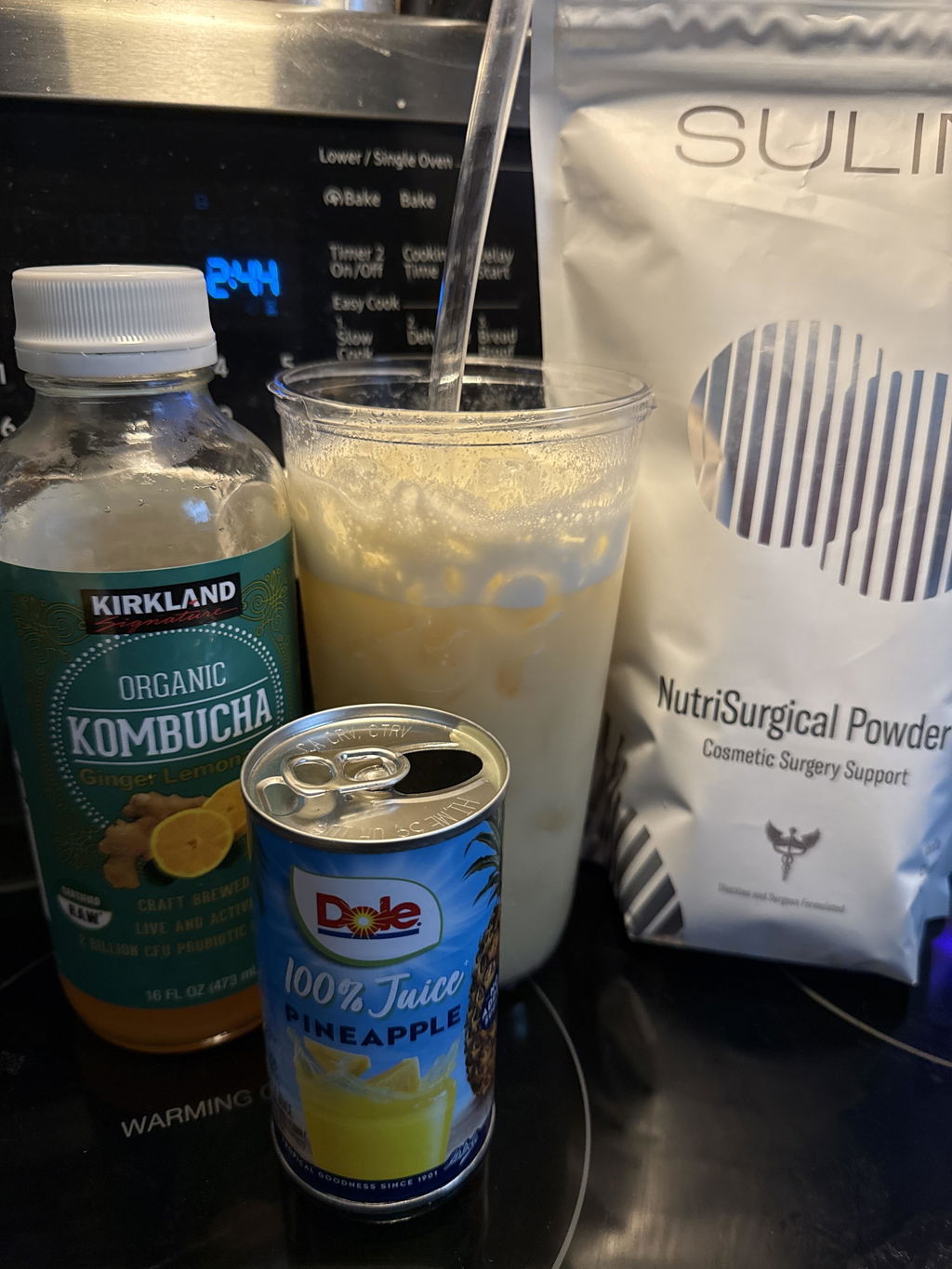
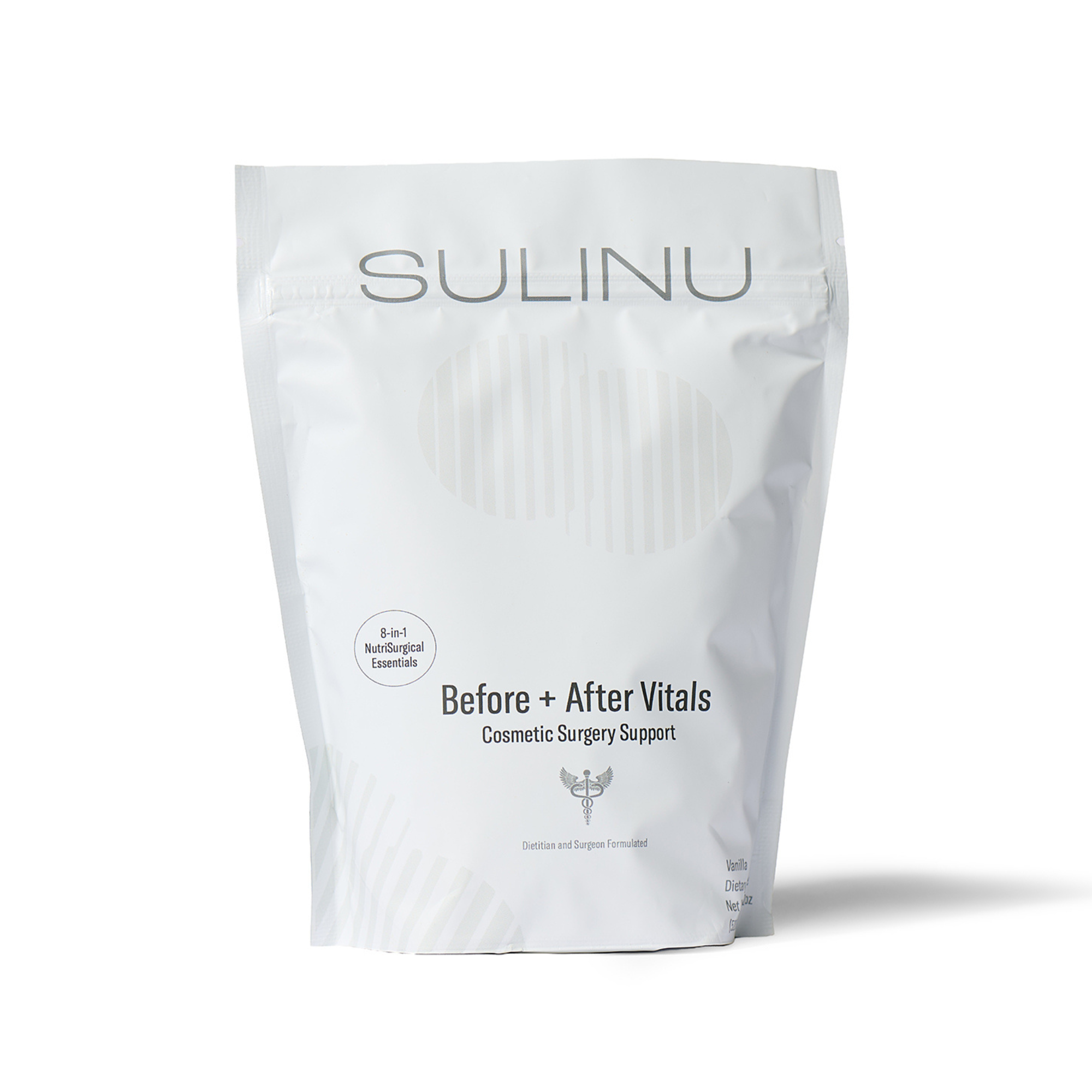
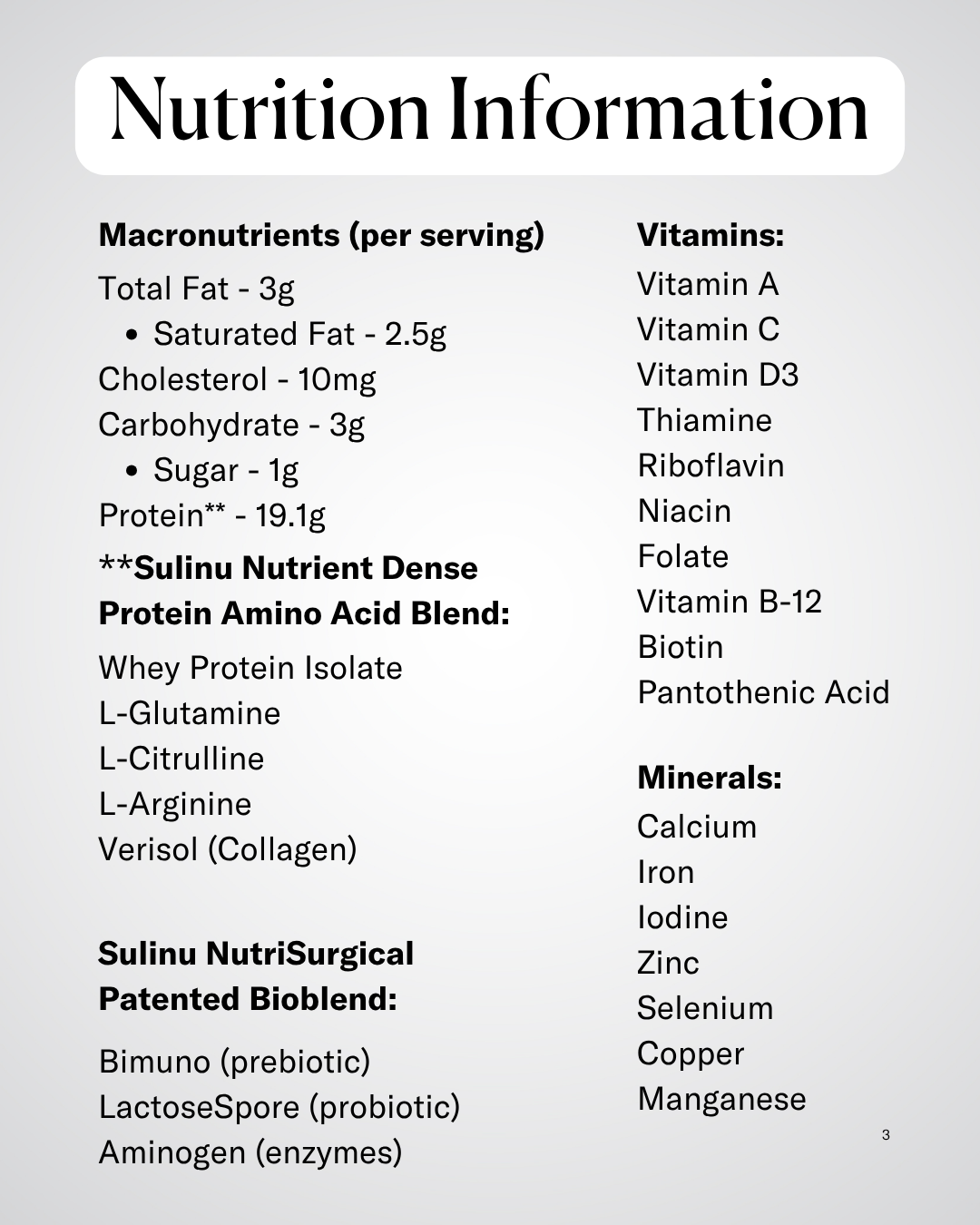
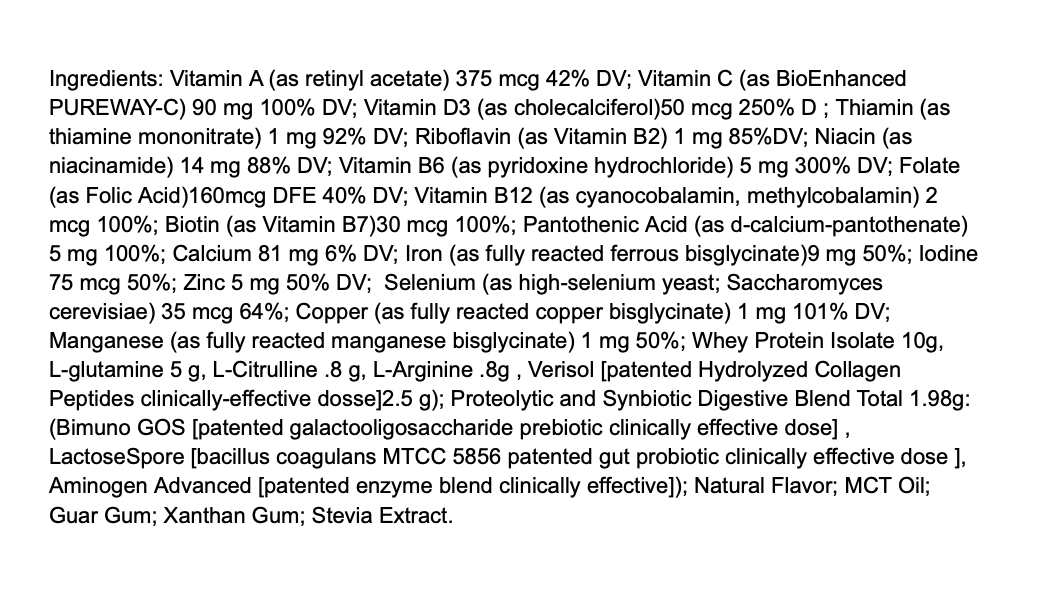
An all-in-one surgery nutrition powder formulated to support the body before and after cosmetic procedures — with a complete blend of protein, collagen, amino acids, micronutrients, synbiotics, and enzymes.
Free ground shipping on orders over $199 100% money-back guarantee Discreet shipping (privacy matters)
Why you'll love it
One scoop delivers targeted nutrition to support:
The body's natural recovery process
Tissue and skin nourishment
Digestive comfort and gut balance
Overall wellness during a demanding time
Peace of mind with tested, high-quality sourcing
"This became part of my daily routine after my procedure — I loved the vanilla flavor and how easy it was to mix in." — Jessie
What makes it different
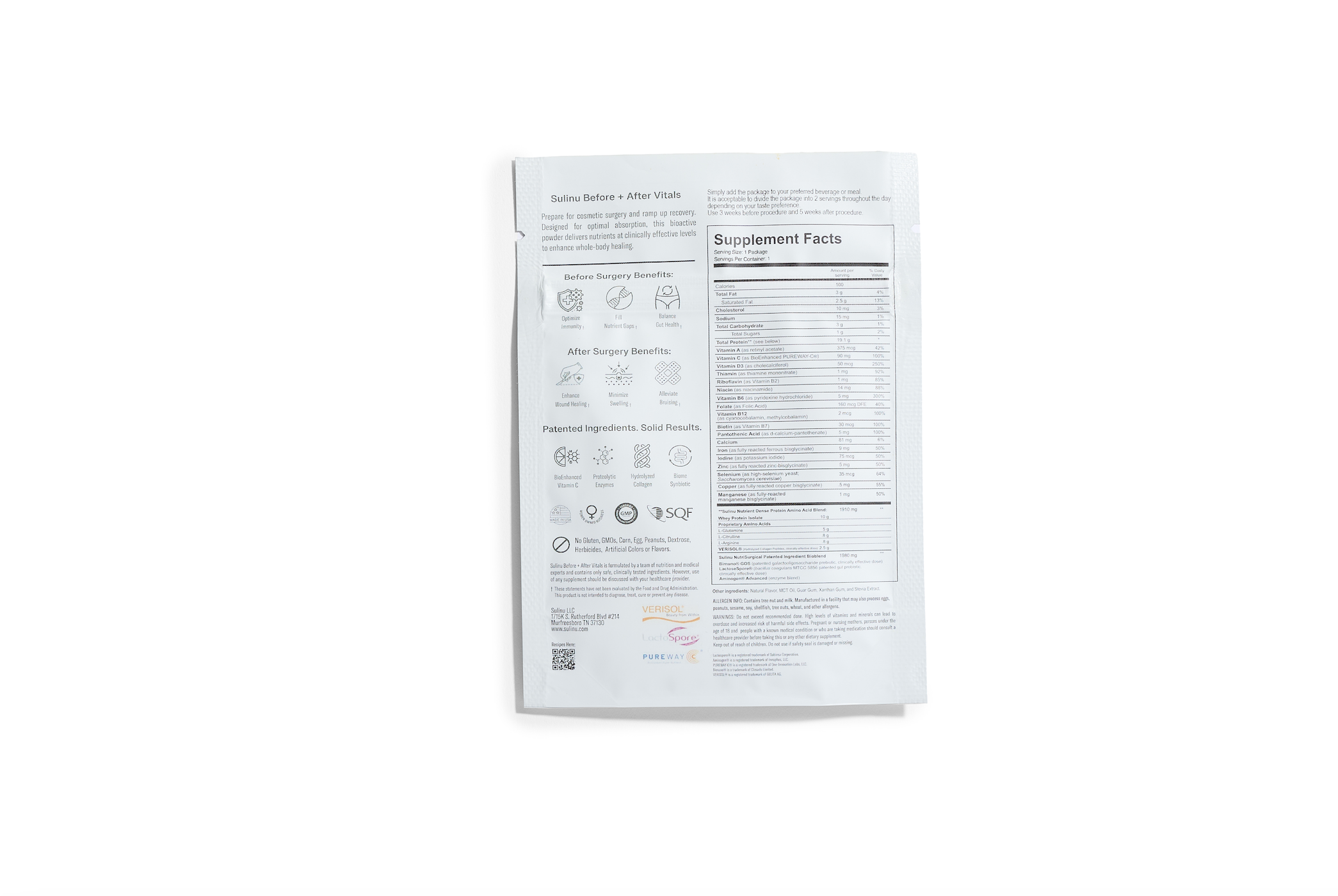
27 thoughtfully selected ingredients
Bioavailable forms designed for absorption
5 patented ingredients
Clinically studied ingredients
3rd-party tested
Sourced from Europe + international suppliers
Gluten-free, vegetarian whey
No gluten, soy, artificial colors/flavors, or GMOs
Good to know
You can start at any point in your nutrition journey — it's never too late to begin supporting your body with quality nutrition.
Directions
Take ½ to 1 scoop daily
Max: 1 scoop/day
Use daily for at least 6 weeks
Recommended protocol
We recommend 3 bags total for most timelines:
1 bag to start
2 bags to continue
What's included
1 pouch = 20 servings
Super-fine powder that dissolves quickly
Vanilla flavor — mix into cold or warm drinks, smoothies, or recipes
Customer feedback
90% of surveyed customers liked the taste.* *Based on our 2024 customer survey.
Allergy information
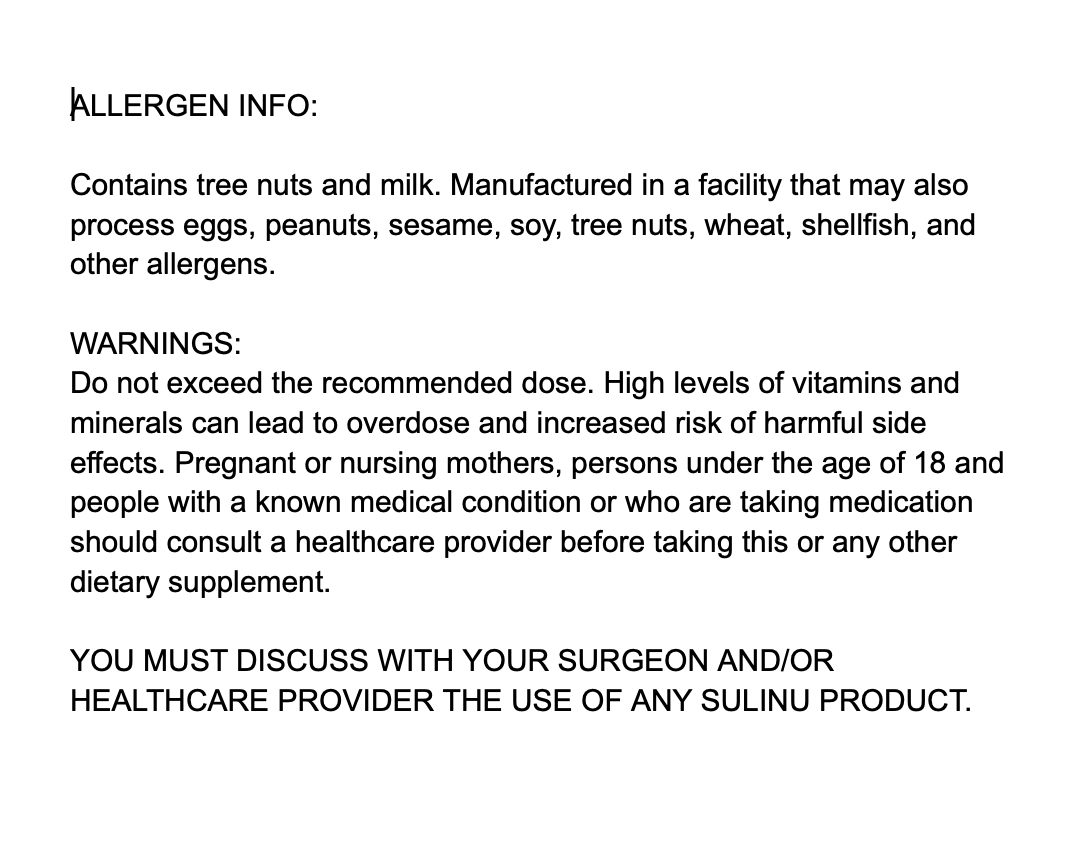
Contains lactose. Processed in a facility that may also process eggs, peanuts, sesame, soy, tree nuts, shellfish, and other allergens.
Eight Expert Guides on Healing - Ultimate Mocktail Recipes, Swelling Guide, Fast Food, How to Poop (You'll Thank Us!), Meal Guide, Protein Guide, Hydration Guide, and Smoothie Recipes - All Included!
You've booked the surgery. Now prepare like you mean it.
Most patients walk into surgery focused on the procedure — and walk out wishing someone had told them what to do next.The Ultimate Surgery Bundle is that someone.
Eight expert guides covering everything from what to eat and how to hydrate, to managing swelling, navigating fast food on a recovery diet, and keeping your digestion on track — all in one place, all designed to work together.
130+ pages of essential pre-and post-surgery guidance for optimizing recovery.
Pair it with Before + After Vitals for complete nutritional support from the day you book your procedure to the day you're back to yourself.
$57 (130 value) - Everything you need in one instant download.
What's included:
Mocktails & Nightcaps Guide ($20 value)
Swelling Guide ($20 value)
Fast Food Guide ($20 value)
Constipation Guide ($20 value)
Surgery Meal Guide ($20 value)
Protein Guide ($10 value)
Hydration Guide ($10 value)
Smoothie Recipes ($10 value)
Total value: $130 — yours for $57
The VIP Surgery Recovery Kit - Everything You Need for Surgery Recovery
Surgery is an investment. The VIP Surgical Recovery Kit is how you protect it.
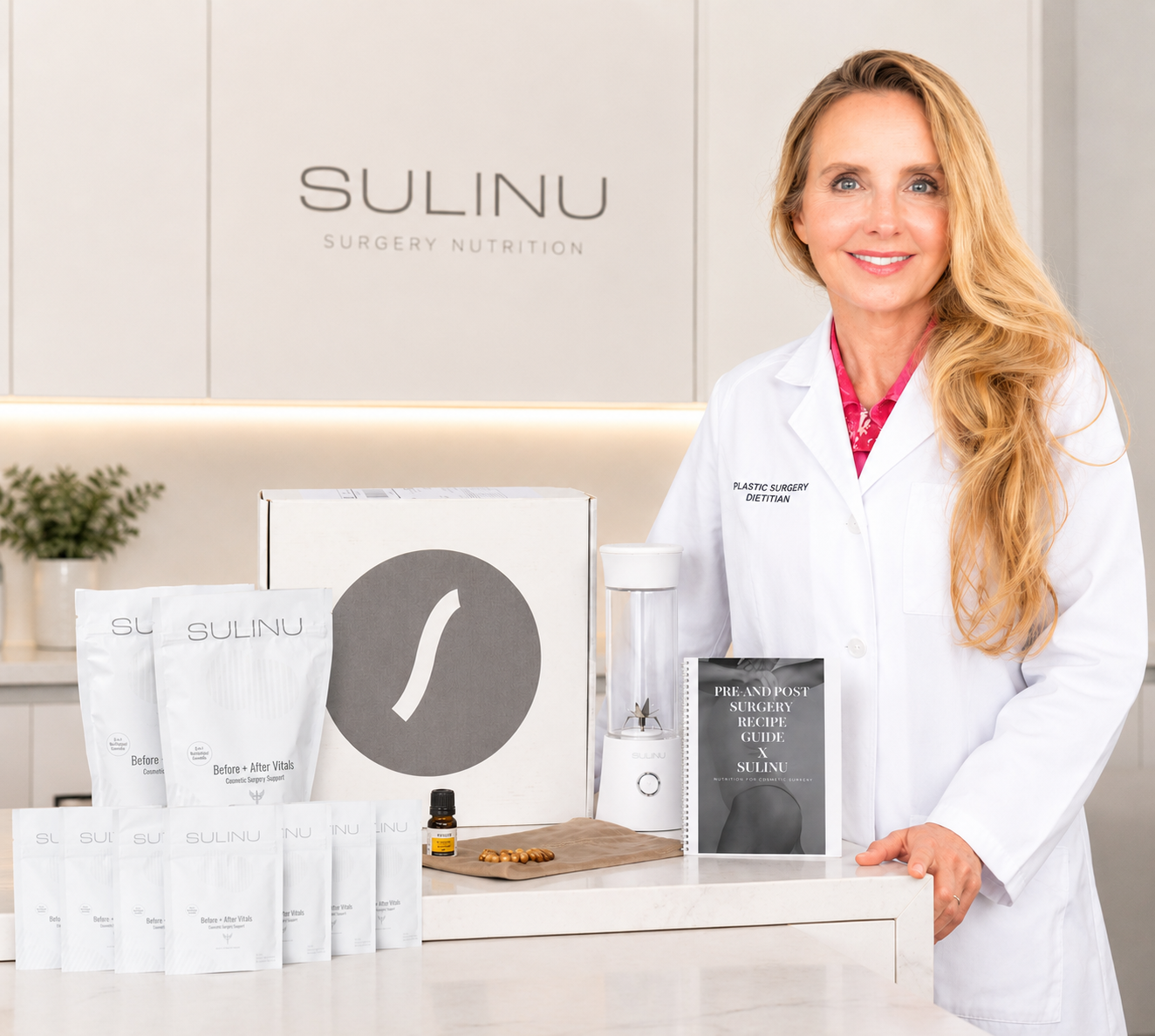
Designed specifically for cosmetic surgery patients, the VIP Surgical Recovery Kit gives you every tool to enter the OR prepared and come out healing faster.
What's in the box?
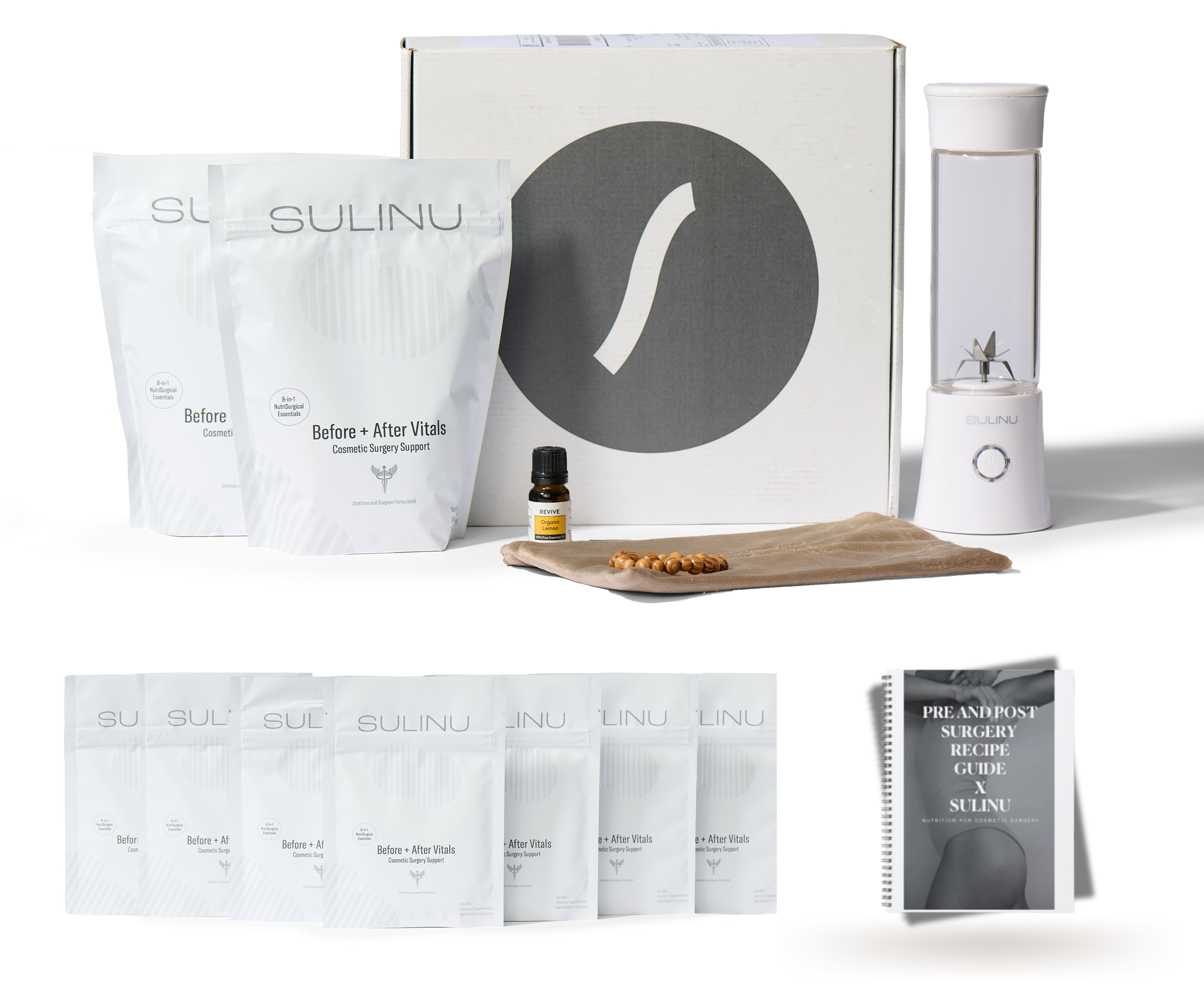
2 bags of Before + After Vitals — our clinically focused surgical supplement
1 highly requested Pre and Post Surgery Recipe Guide*
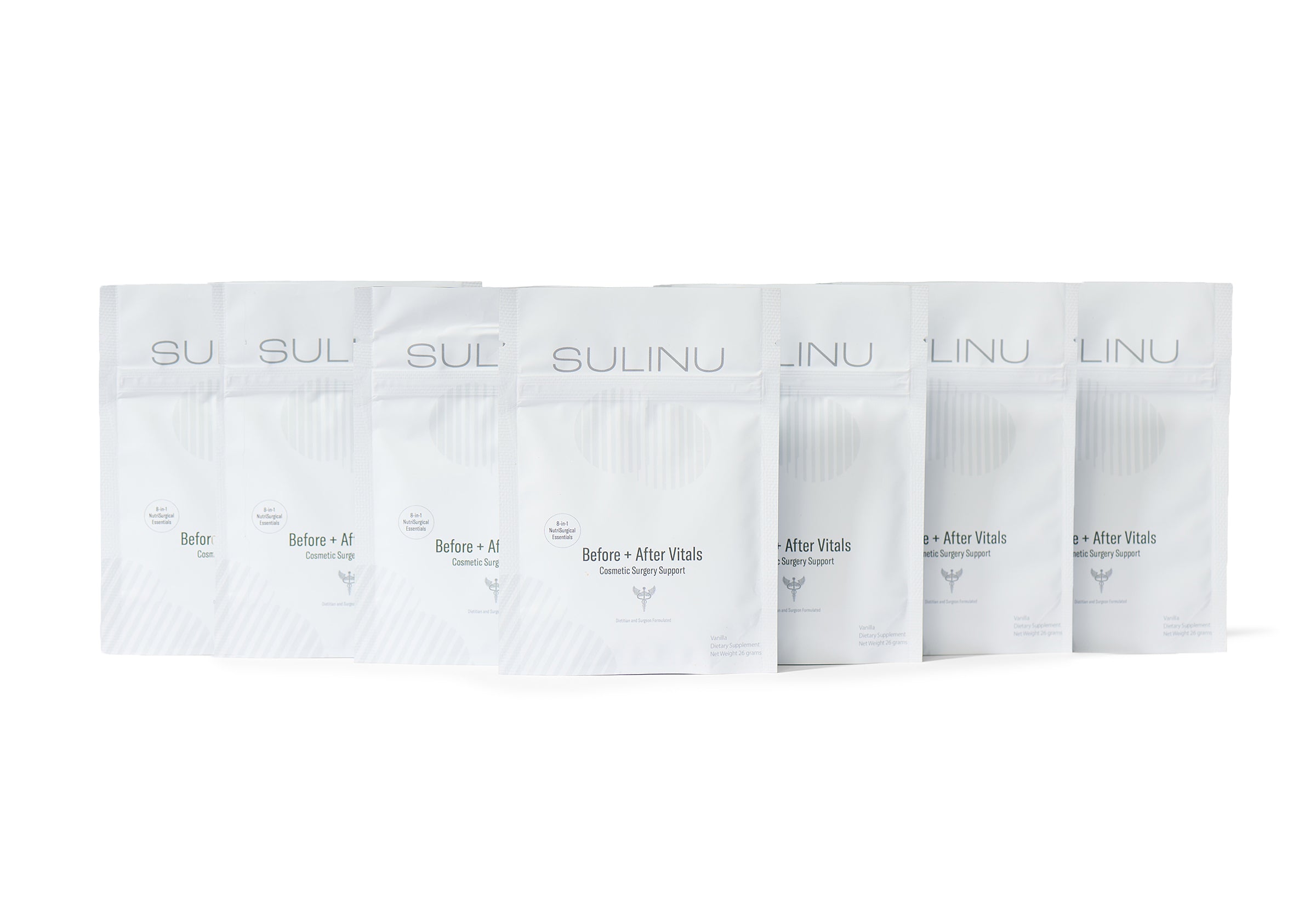
7 travel bagsfor on-the-go recovery
1 personal blender for mixing your daily supplement
1 personal bag
1
essential oil to support rest and recovery
1 essential oil recovery bracelet
No guesswork. No missing pieces. Just everything you need, in one kit, built around your results.
*Personal bag, essential oil, and essential oil bracelet all vary with each box
Scoop. Mix. Heal.
The Pre and Post Surgery Recipe Guide is a physical, exclusive book included only in the VIP kit. You won't find it anywhere else. Your recovery deserves something you can actually hold in your hands. Created and curated by a surgical dietitian, designed to take the guesswork out of eating for healing.
*Return Policy
This is a signature-upon-arrival purchase. Meal Guides, Bracelet, Personal Bag, Essential Oil, and Bracelet are final sale.
Wondering when to stop eating before your surgery? What happens if you eat after midnight before surgery? A common rule is to be NPO after midnight. NPO refers to the Latin abbreviation for...
Here's what nobody warns you about: the wrong foods after surgery can sabotage your entire recovery. Learn what to avoid eating after surgery in our full guide.
This is a great document… so I dont want to take away feom that… but it was very disappointing to pay $20 amd then realize rhat almost everything in rhe small file is information I’ve already gleaned from Sulinu’s instagram and information cards that come with the product. It would be fine if I’d bought the whole collection of guides but couldnt swing he almost $60 so just chose one. Again, I love this company and appreciate them! But you really dont need to buy this individual guide if uou follow the instagram.
On week 3 of taking it post-op. Healing has been solid, but I legitimately hate choking this down every day. A little gritty and tastes awful. PLEASE make an unflavored version.
We really feel this product aided in the fast healing for my husband after his rotator cuff surgery! He is 4 weeks post op and ahead of the curve in his healing!


![A promotional image for The PREP STARTER Kit [free shipping], showcasing its key benefits such as protein, vitamins, minerals, amino acids, probiotics, and enzymes. Featured as an essential pre-op supplement in your surgery prep kit, the product bag is displayed alongside fresh green vegetables on a light background.](http://www.sulinu.com/cdn/shop/files/12.jpg?v=1776452906&width=1080)
![A hand holds a scoop of white powder above an open bag of The PREP STARTER Kit [free shipping]. Text highlights that this research-based formula aids surgery recovery, delivers 19g of protein and 29 carefully selected ingredients per daily scoop—making The PREP STARTER Kit an essential addition to any surgery prep kit.](http://www.sulinu.com/cdn/shop/files/3.jpg?v=1776452906&width=1080)
![A ⭐BEST VALUE⭐ The Prep + Recovery Bundle [free shipping] package is displayed on a white background with text highlighting its clinical benefits and international sourcing, emphasizing improved nerve regeneration, better protein absorption, and faster healing—making it an ideal addition to any surgical recovery kit.](http://www.sulinu.com/cdn/shop/files/2.jpg?v=1776452906&width=1080)
![A woman’s face in close-up appears on the left. On the right, text explains post-surgery risks: metabolism rises, appetite drops, food intake falls, and nutrient needs soar. The message: your body needs more while you eat less—making The PREP STARTER Kit [free shipping] essential for recovery.](http://www.sulinu.com/cdn/shop/files/9.jpg?v=1776452906&width=1080)
![Text graphic explaining consequences of not fueling the healing body: slower wound healing, higher infection risk, more bruising, increased fatigue, pain, and constipation. Highlights that nutrition is essential for recovery but often overlooked—using The PREP STARTER Kit [free shipping] can help support your body and make all the difference for surgical recovery.](http://www.sulinu.com/cdn/shop/files/10.jpg?v=1776452906&width=1080)
![A smiling woman holding a box labeled The PREP STARTER Kit [free shipping] stands beside text explaining the purpose behind creating The PREP STARTER Kit: to support post-surgery recovery by providing targeted nutrition backed by real clinical data, serving as an essential surgery protein guide for patients seeking optimal outcomes.](http://www.sulinu.com/cdn/shop/files/14.jpg?v=1776452906&width=1080)
![A person in a fitted outfit poses against a neutral background. Text reads ⭐BEST VALUE⭐ The Prep + Recovery Bundle [free shipping]. Discover the ultimate surgery prep bundle—nutrition for cosmetic surgery and essential support for your recovery kit.](http://www.sulinu.com/cdn/shop/files/UltimateSurgeryBundle-Sulinu.png?v=1775162796&width=537)