Before body contouring after major weight loss, the most useful nutrition goal is to reach a steady protein intake and have your vitamin and mineral levels checked well ahead of surgery.
Surgeons see protein as the most common gap in people who have lost a lot of weight, and they often ask for lab work and a nutrition plan several weeks before an operation.¹ This guide covers what to eat, how to handle a small appetite and what to discuss with your surgeon. Your surgeon, dietitian and any prescriber guide the specifics, including any medication.
Quick Answers
What should I focus on eating before body contouring? Protein first, in small portions spread across the day, with fluids, fresh produce, and the vitamin and mineral supplements your care team recommends.
Do I need labs before body contouring? Often yes. Surgeons commonly check for nutrient deficiencies in patients who have lost significant weight, and results can affect timing.¹
When should I start preparing? As early as the consultation. Nutrient support, when needed, is typically started several weeks before surgery, and a stable weight is usually part of readiness.
Should I change my diet or medication on my own? No. Share your plan with your plastic surgeon, bariatric team, and prescriber, and let them coordinate anything related to medication.
Can food alone cover what I need? Sometimes, and sometimes not. A standard multivitamin may not be enough for every patient, which is why labs and a dietitian visit are useful. A comprehensive supplement designed to support nutrition both before and after surgery can help take the stress off while giving your body everything it needs to heal.
Comparison: how your starting point shapes your preparation
Your route to weight loss influences which nutrition questions matter most. The cards below summarize common focus areas for each starting point and who to ask. They are a conversation guide, not a plan.
Bariatric surgery
Common focus
Protein, B vitamins, vitamin D
Ask about
Labs and your vitamin plan
Guided by
Surgeon and dietitian
GLP-1 medication
Common focus
Protein with a small appetite
Ask about
Labs and a nutrient check
Guided by
Prescriber, surgeon, dietitian
Both surgery and a GLP-1
Common focus
Protein first, small portions
Ask about
Labs and one shared plan
Guided by
All three teams together
Diet and activity only
Common focus
Steady protein, no fad diets
Ask about
Labs and weight stability
Guided by
Surgeon and a dietitian
Why does nutrition matter before body contouring?
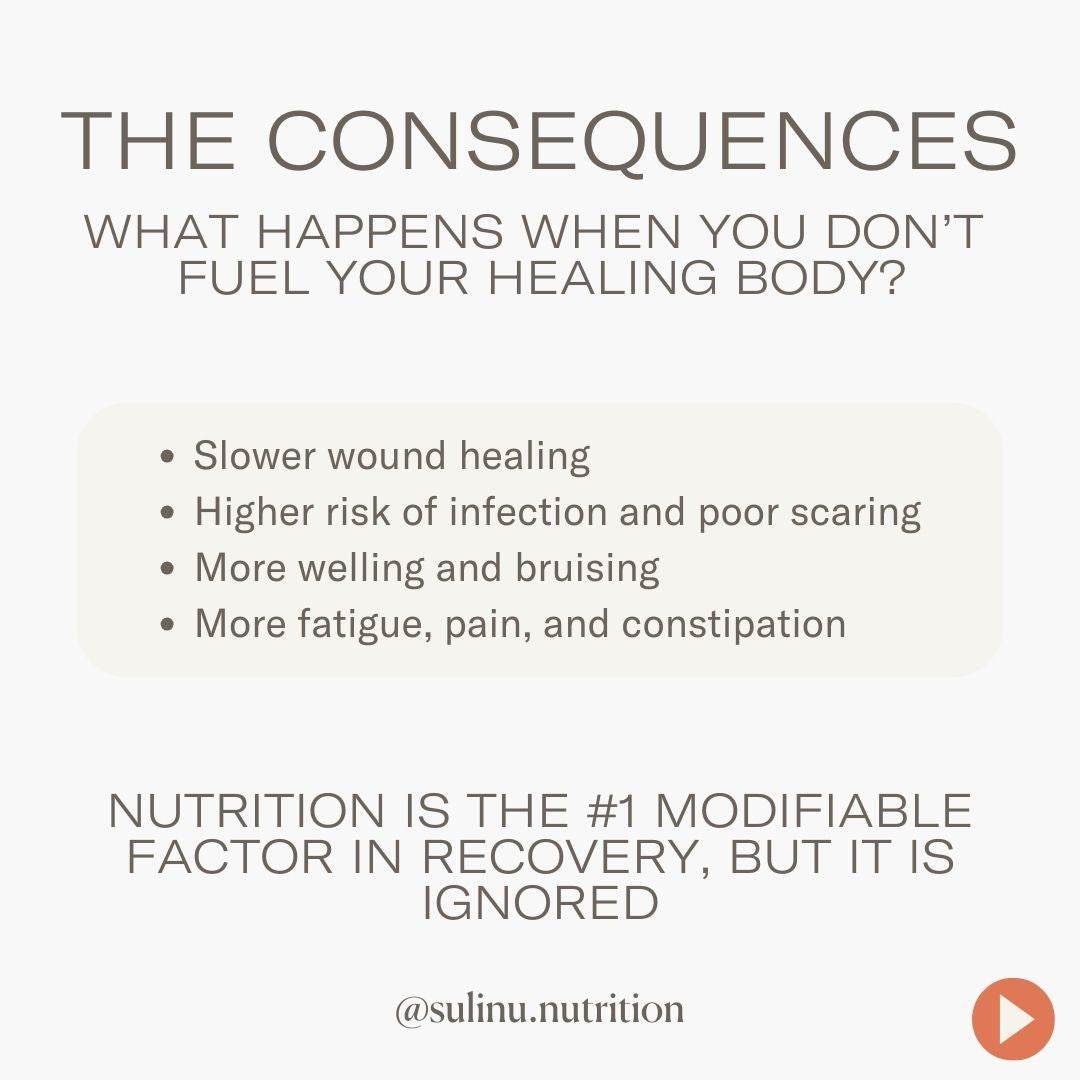
Because body contouring is a major operation with long incisions, and the body uses protein and other nutrients to repair tissue afterward. People who have lost a lot of weight may arrive at surgery with lower reserves than their weight suggests, particularly if their appetite has been low for a long time.
Plastic surgeons know this. A 2026 review of nutrition after major weight loss describes protein as the most common deficiency in this group, along with frequent shortfalls of B1, B6, B12 and vitamin D. The review recommends lab screening, an individualized plan with a dietitian and starting any supplementation several weeks before surgery. If tests show a patient is not ready, the operation may be delayed.¹
That last point can feel discouraging, so it helps to frame it correctly. A delay for nutrition is a planning decision made to support a safer recovery. It is not a verdict on the work you have already done.
How much protein should you eat before body contouring?
There is no single published number for body contouring candidates, so your surgeon or dietitian sets the goal. The best reference point many people have is the target from their bariatric program.
For bariatric patients, published ranges commonly start at about 60 grams a day, with many programs using 60 to 80 grams or 1.0 to 1.5 grams per kilogram of ideal body weight. The authors of a 2025 review note that these ranges rest on limited evidence and that individual needs vary.² That review does not address body contouring itself, so treat the figures as general background for weight-loss patients.
Ask your plastic surgeon directly: "What daily protein target do you want me to reach before surgery?" Then ask the dietitian how to reach it with your appetite and your stage of eating. Our article on getting enough protein after weight loss surgery when a GLP-1 lowers your appetite covers small-meal strategies in more depth.
What if your appetite is low?
Eat protein first, in small amounts, several times a day, and use drinkable protein when solid food is a struggle. The 2026 review gives similar advice: eat protein-rich foods when appetite is highest, and when it is low, take small protein portions often and add shakes.¹
Practical ways to apply that:
- Start each mini-meal with the protein food.
- Divide your daily goal by the number of times you eat. Ten grams six times is easier to picture than sixty grams once.
- Use reminders if hunger cues are quiet.
- Choose soft, moist foods such as yogurt, eggs, cottage cheese and flaked fish.
- Keep one or two protein drinks on hand for days when food is unappealing. Our guide to protein powder for bariatric patients explains what to look for on a label.
If you take a GLP-1 medication, it may be a major reason appetite is low. Do not adjust it yourself before surgery. Your prescriber and surgeon need to coordinate that decision. For more ways to reach your protein goal while a GLP-1 keeps hunger quiet, see our guide to getting enough protein after weight loss surgery on a GLP-1.
Which foods are worth building your plate around?
Build meals around a protein food, add produce for fiber and vitamins, and include fluids throughout the day. This is a general pattern, and your program's diet rules take priority.
Protein foods: eggs, fish, poultry, lean meat, Greek yogurt, cottage cheese, tofu, tempeh, beans and lentils (if tolerated), and protein shakes. Choose forms you can finish.
Produce: soft cooked vegetables, fruit and leafy greens in amounts you can manage. These bring vitamin C and fiber, and fiber can help with constipation if you eat little or take certain supplements. Introduce fibrous foods gradually if your stomach is sensitive after bariatric surgery.
Whole grains and other starches: small portions, after protein.
Fats: olive oil, avocado, nuts and seeds, as your program allows. Fats are calorie-dense, which helps when you can only eat small volumes.
Fluids: water, broth, milk or milk alternatives and unsweetened drinks. Hydration supports overall health, and your team can tell you how much to aim for. Some bariatric programs ask patients to separate fluids from meals.
Our broader article on what to eat before surgery covers general pre-operative eating habits and applies here as well.
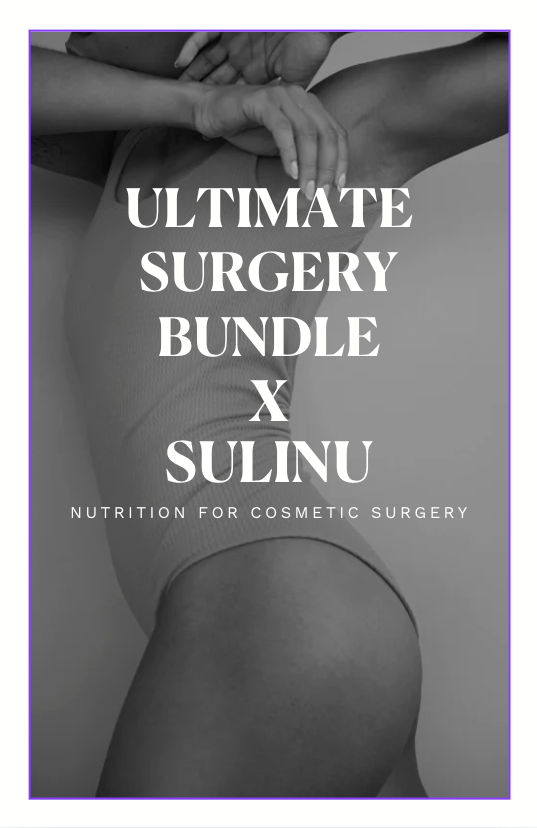
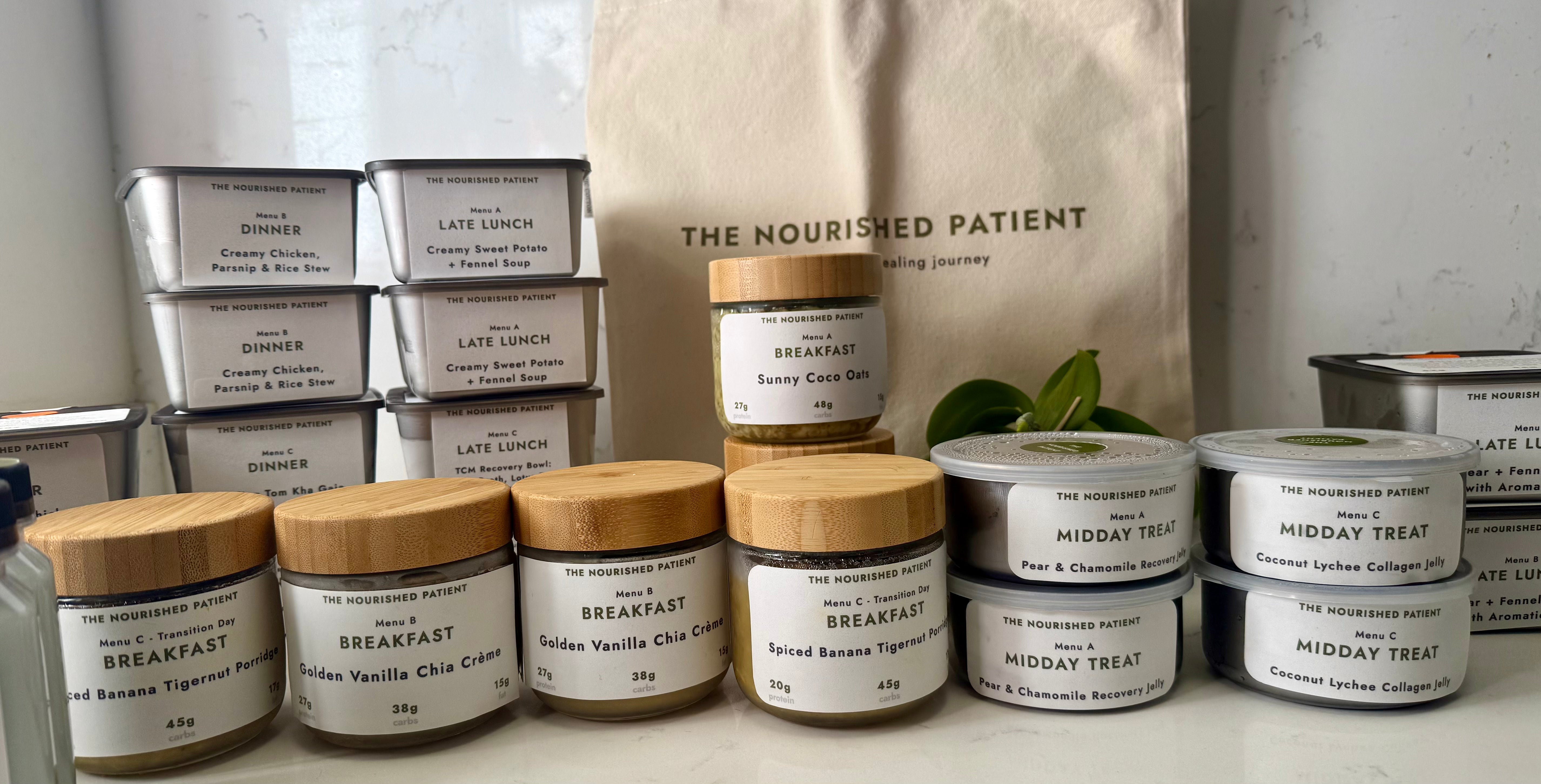
Not sure what to eat? Check out The Ultimate Surgery Bundle
Everything you need to keep your pre- and post-surgery nutrition on the right track.

The Ultimate Surgery Bundle hands you eight expert guides so nothing about recovery catches you off guard. It's packed with sample menus, foods to eat and avoid, how to deal with dreaded constipation, a protein guide, and more!
$57 ($130 value), all in one instant download
Why check vitamins and minerals?
Because low levels are common after rapid or large weight loss and are easy to miss without a blood test. The same 2026 review lists B1, B6, B12, and vitamin D as frequently low, and notes that bariatric-specific or GLP-1-specific formulations may be used in place of a standard multivitamin. Rarely, injections or intravenous nutrients are needed.¹
Two points follow from this:
- Keep taking the supplements your bariatric program prescribed, including during stretches of low appetite.
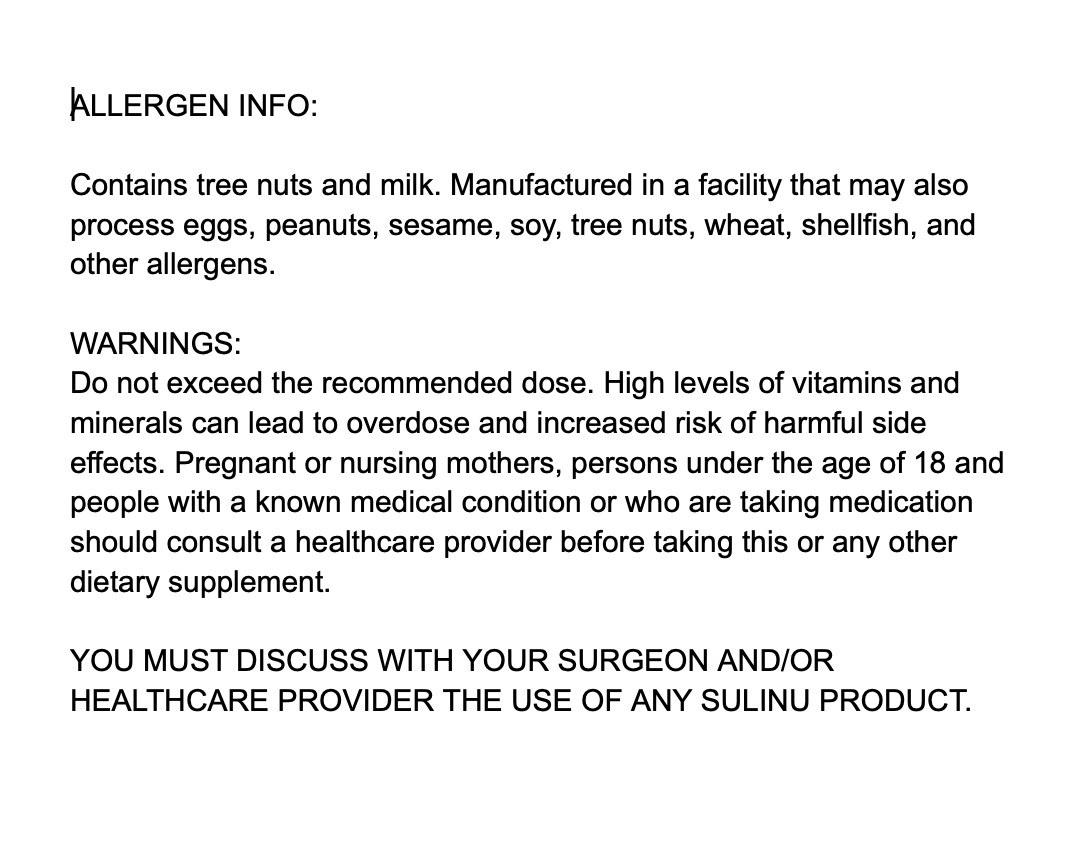
- Do not start high doses of anything without clearing it with your surgeon. Some supplements need to be stopped before surgery because they can affect bleeding, so your surgeon should see the complete list.
Bring every supplement bottle to a pre-operative visit, or photograph the labels. It saves time and prevents mistakes.
What does a pre-surgery preparation timeline look like?
Start at the consultation, work through labs and nutrition adjustments in the weeks before surgery and finish with practical logistics in the last days. Your surgeon's schedule governs the exact timing. The outline below is a general guide.
-
At the consultation: Tell the surgeon how you lost weight, what you eat, which medications and supplements you take and whether your weight is stable. Ask for a pre-operative lab list.
-
Several weeks before: Complete labs. If deficiencies are found, begin the supplementation your team prescribes. See a dietitian and set a daily protein target. Establish a food routine that you can sustain.
-
Two to three weeks before: Review the supplement and medication stop list with your surgeon, including over-the-counter items. Stock easy protein foods for the first recovery days.
-
The week before: Prepare and freeze simple meals. Confirm fasting instructions. Plan hydration and bowel routines for the days after surgery.
-
The day before: Follow your surgeon's instructions on eating and drinking. Do not start any new supplement or diet.
-
After surgery: Aim to resume protein as soon as your surgeon says you can. Small, frequent portions are often easier early on.
Does weight stability matter?
Yes. Surgeons generally prefer your weight to have stayed steady for a period before body contouring, because further loss after surgery can change the result. Our guide to body contouring after GLP-1 weight loss discusses the stability window many surgeons use. Your surgeon decides what applies in your case.
Nutrition ties in here. Trying to lose more weight right before surgery by cutting calories or protein works against the preparation described above. If you are unsure whether you should be eating to maintain, ask the surgeon and the dietitian to set the goal for this period.

Supporting Your Body's Recovery Before and After Body Contouring
Getting enough protein and nutrients around body contouring is hard when your appetite is small. Food comes first, but many people find it difficult to reach their protein and nutrient goals while they are eating very little. A structured supplement can help bridge the gap, as long as your surgeon approves it.
Your body uses protein, vitamin C and other nutrients to repair long incisions and the tissue beneath them, and a comfortable gut helps it make use of what you eat. Pairing a food-first plan with targeted support is a common way to cover the days when you cannot eat much. If you follow a bariatric vitamin plan, show the label to your team so they can fit it alongside what you already take.
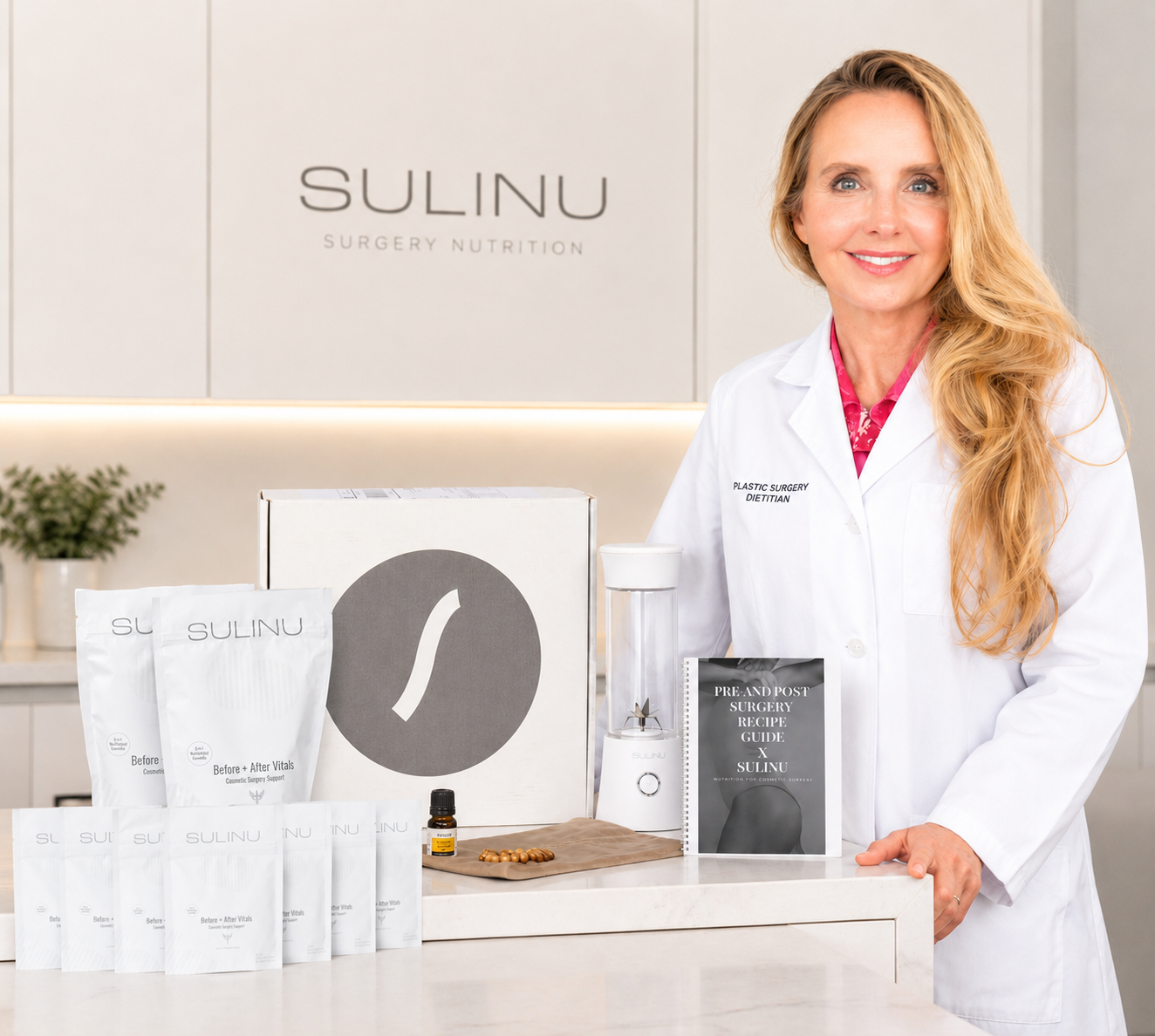
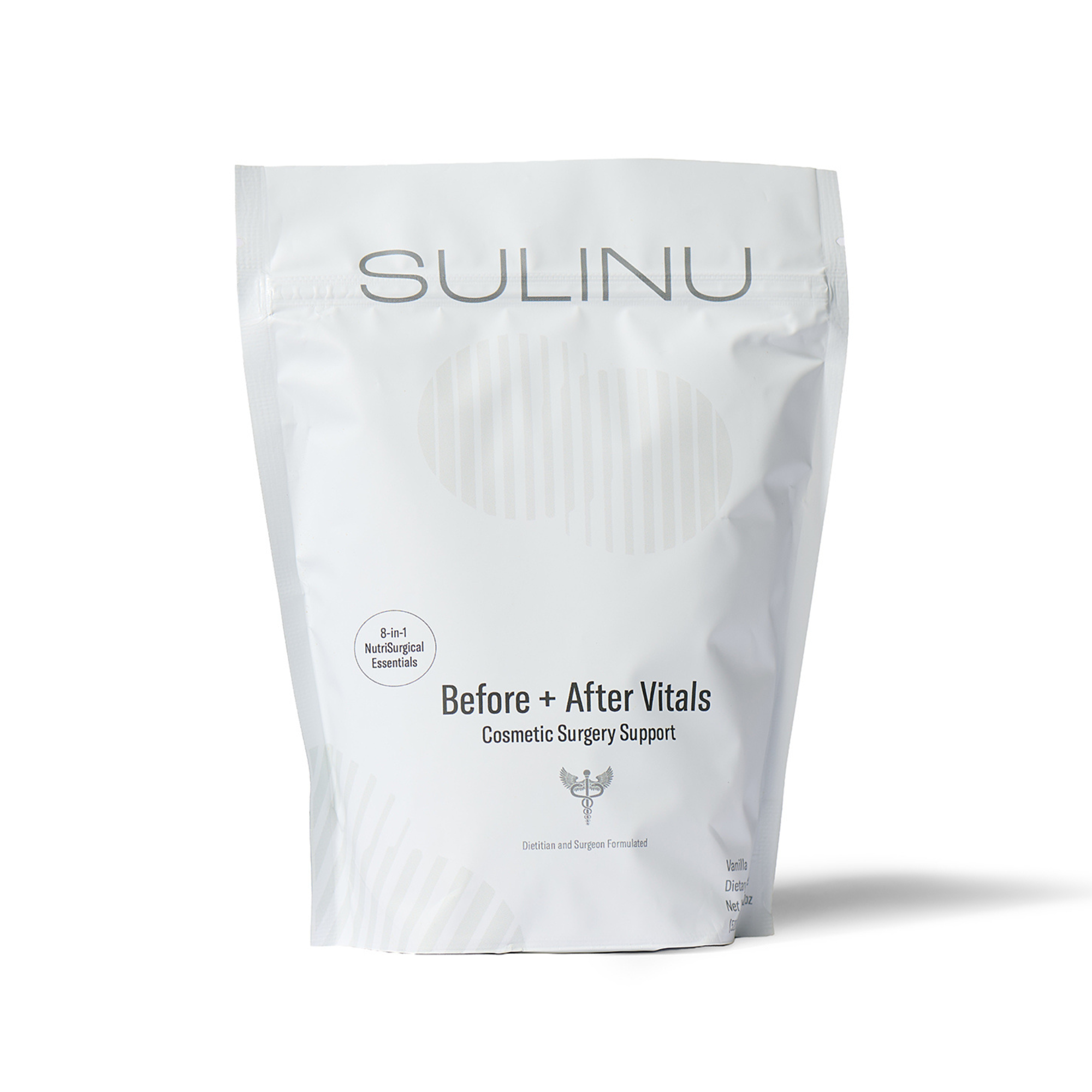
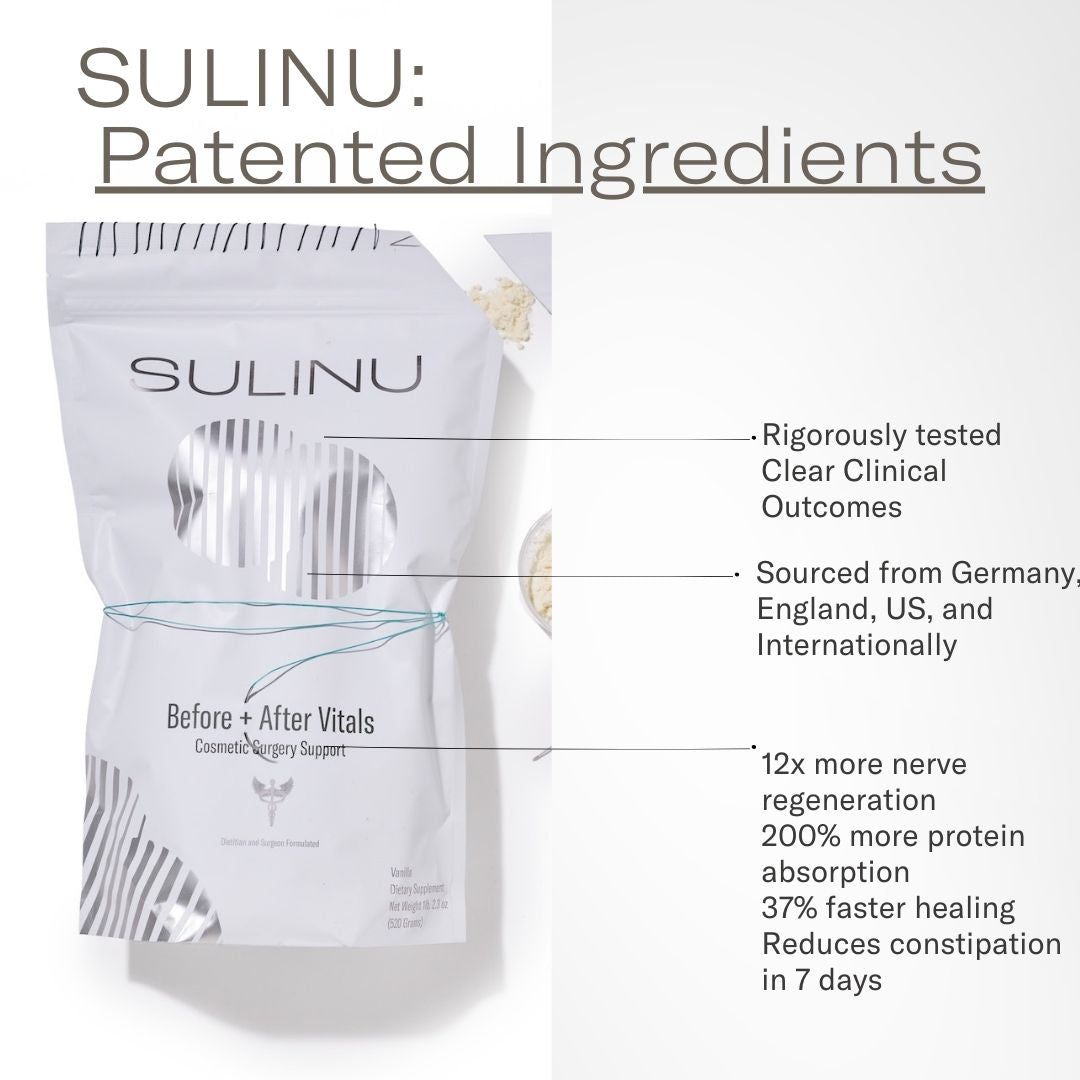
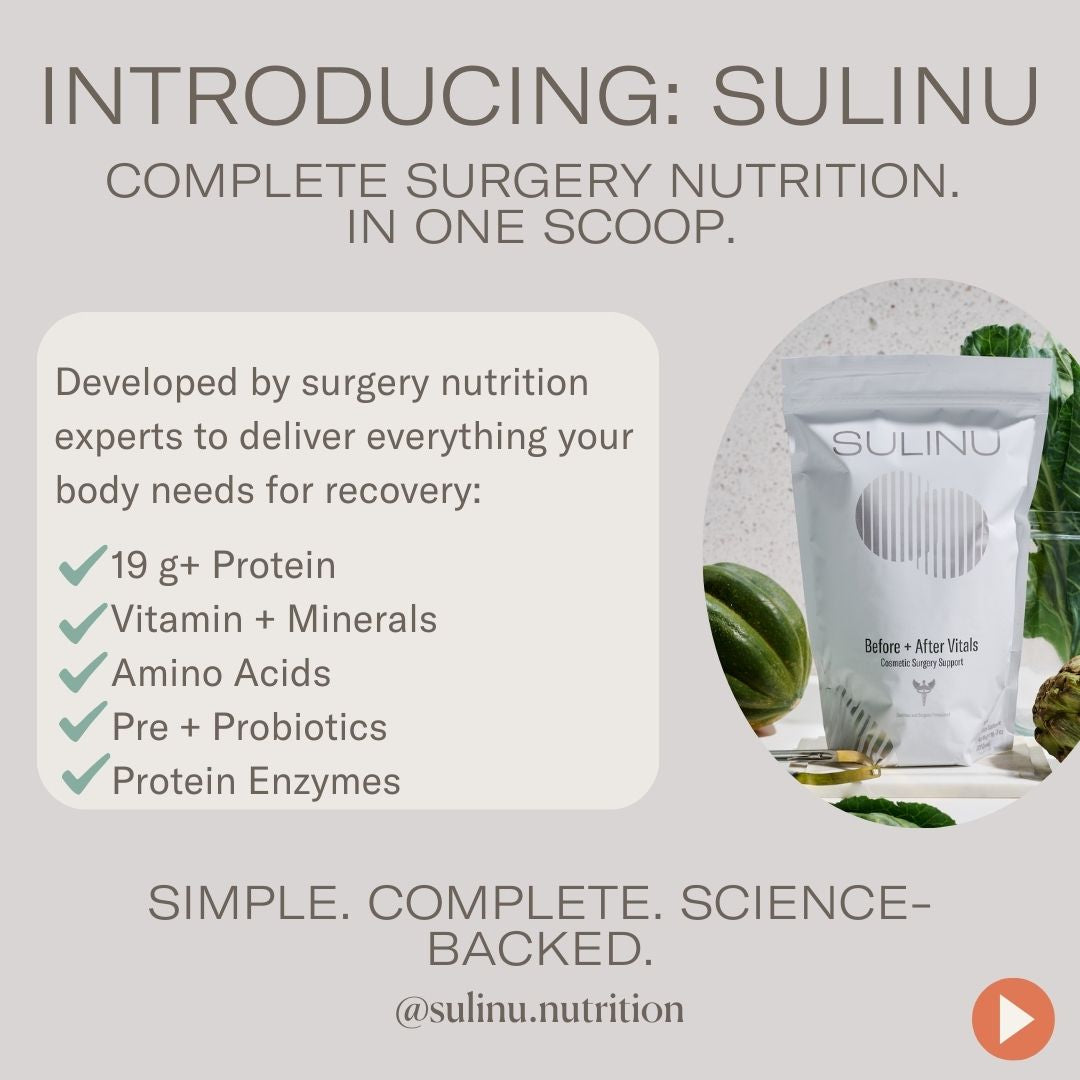
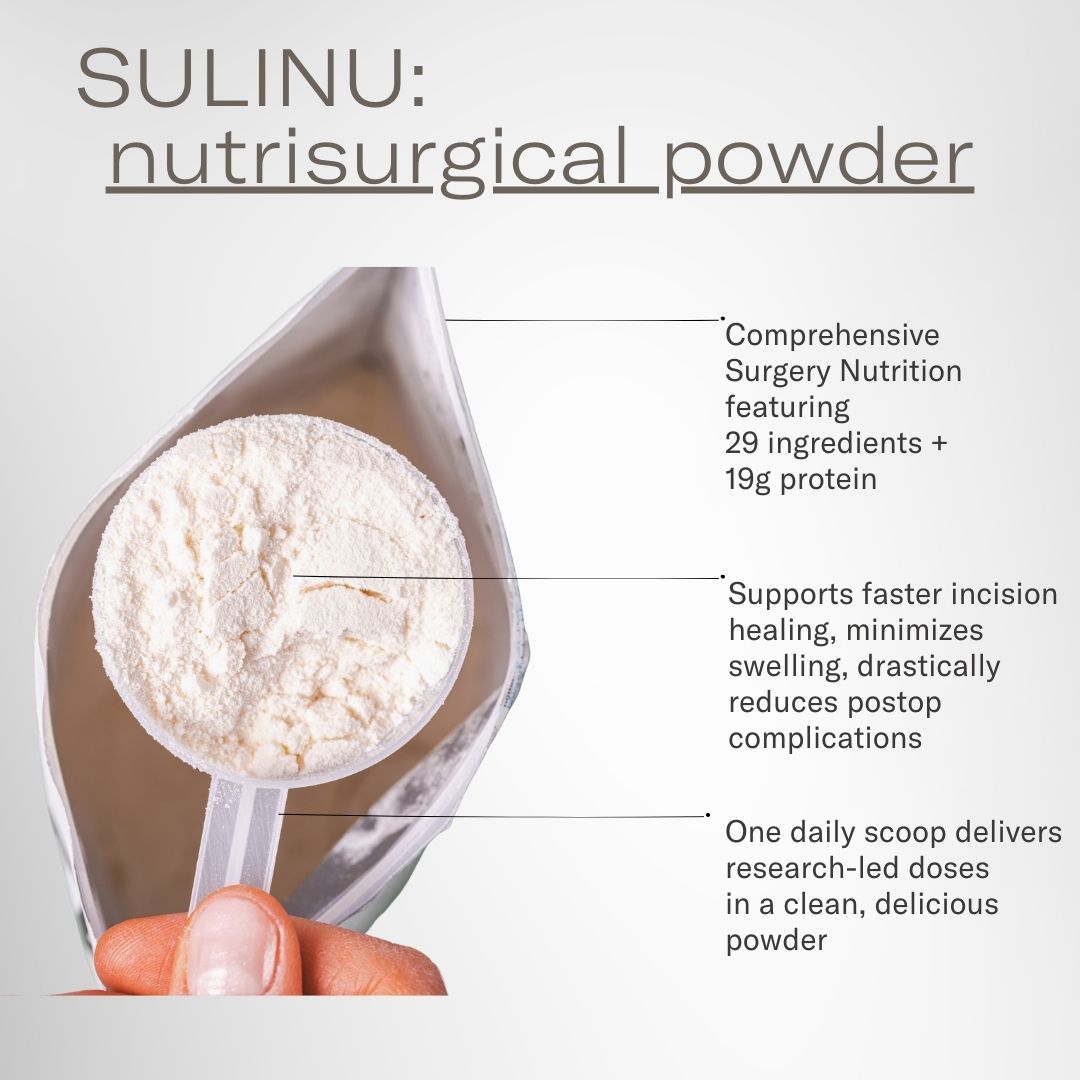
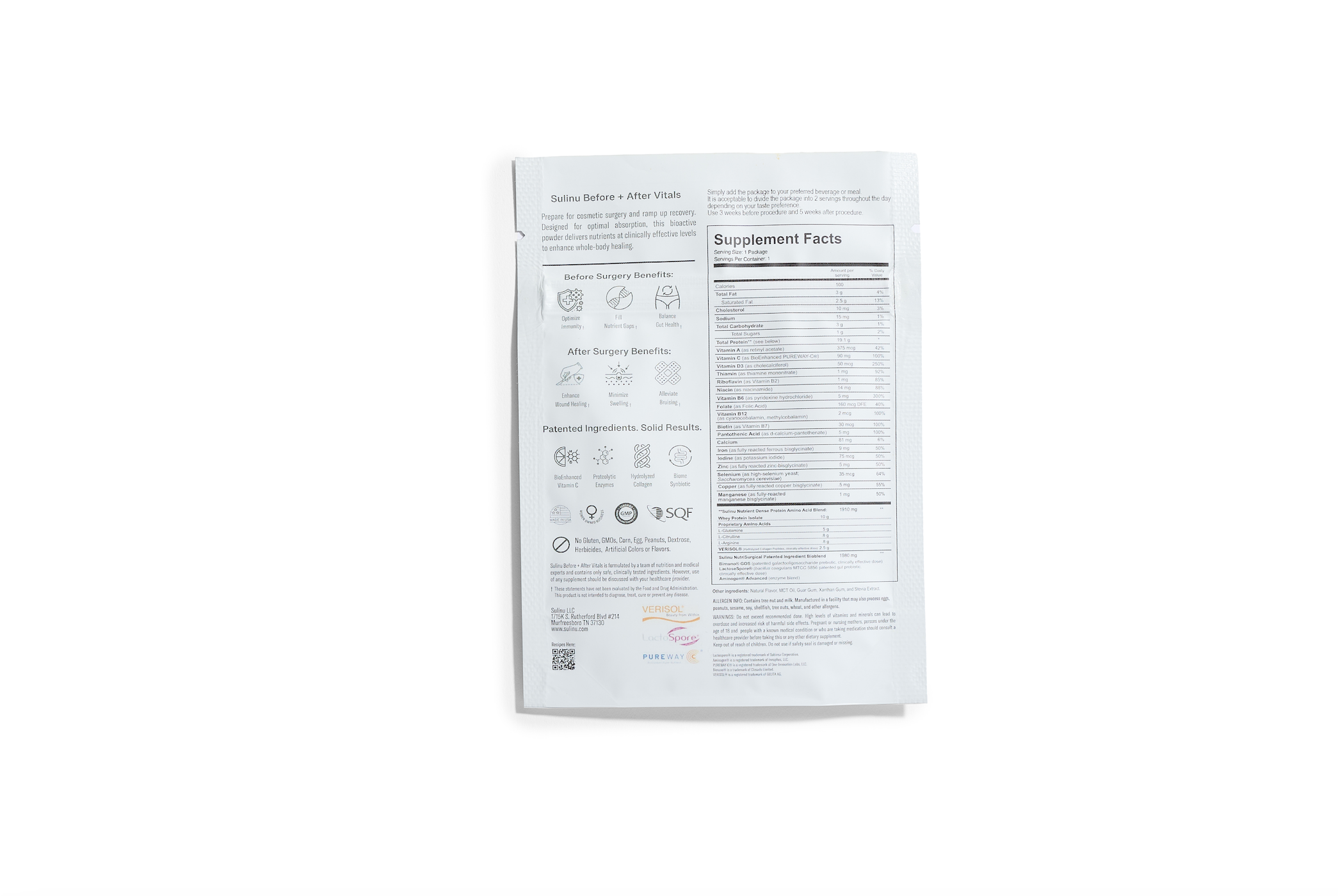
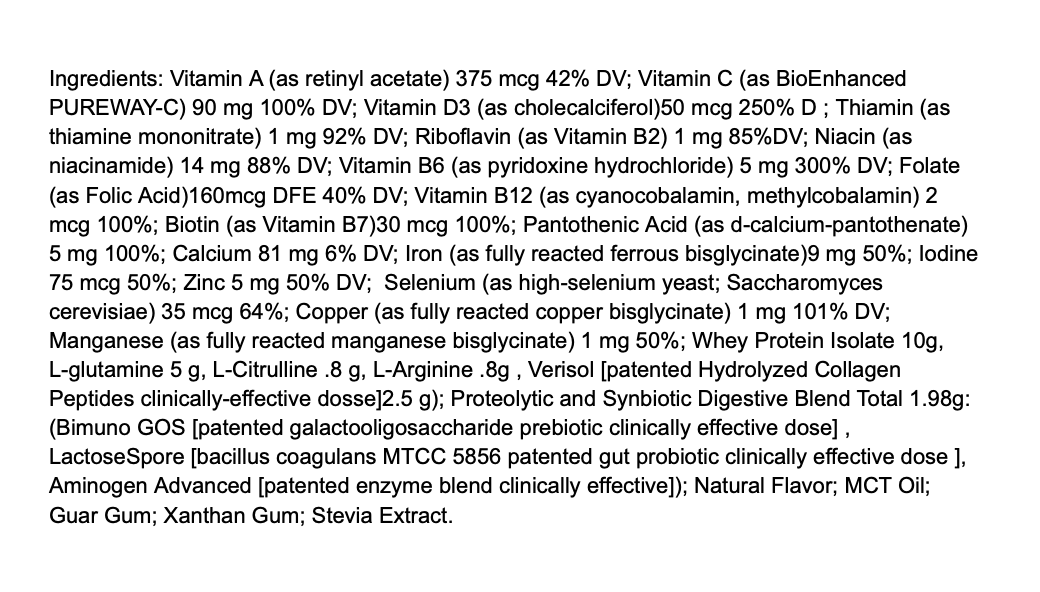
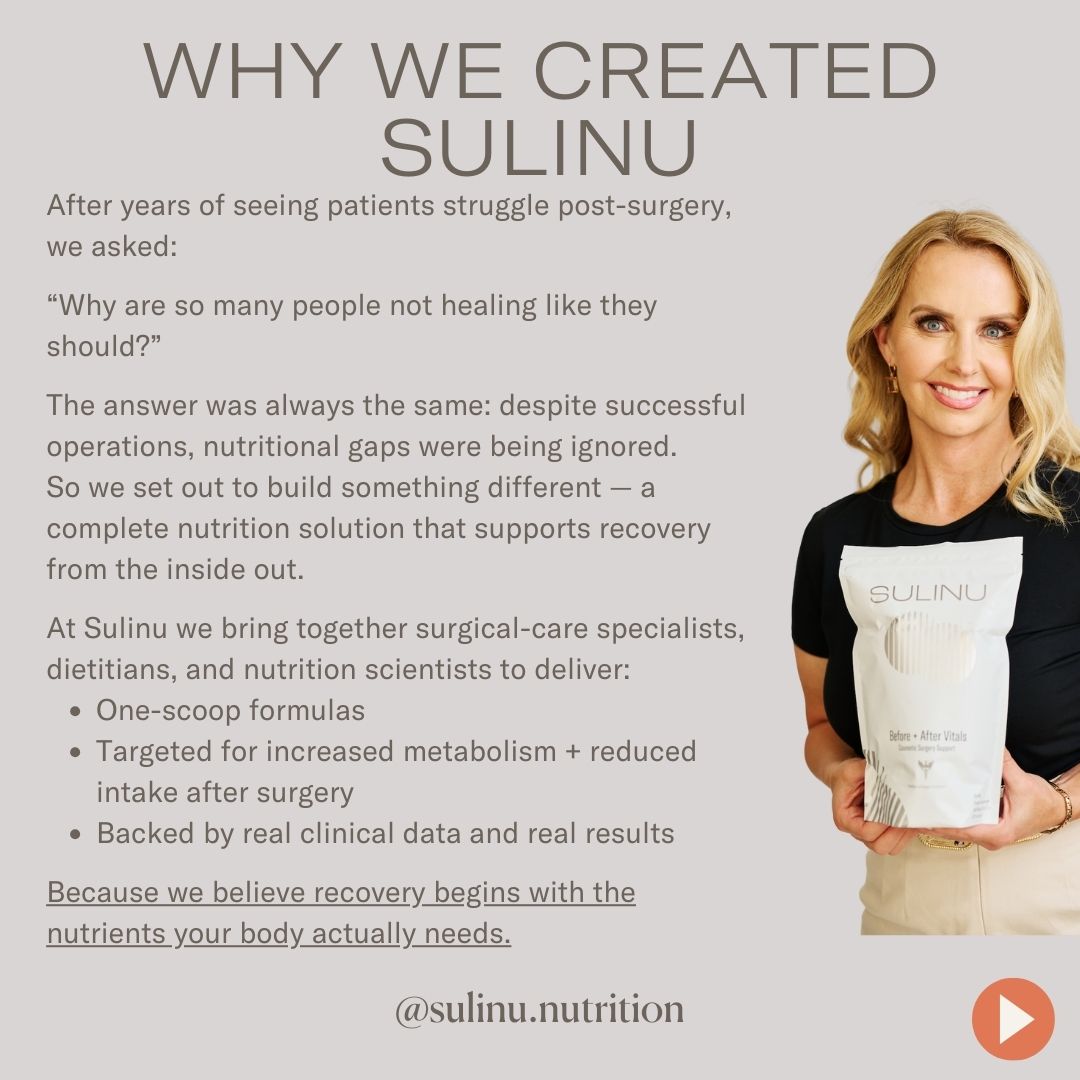
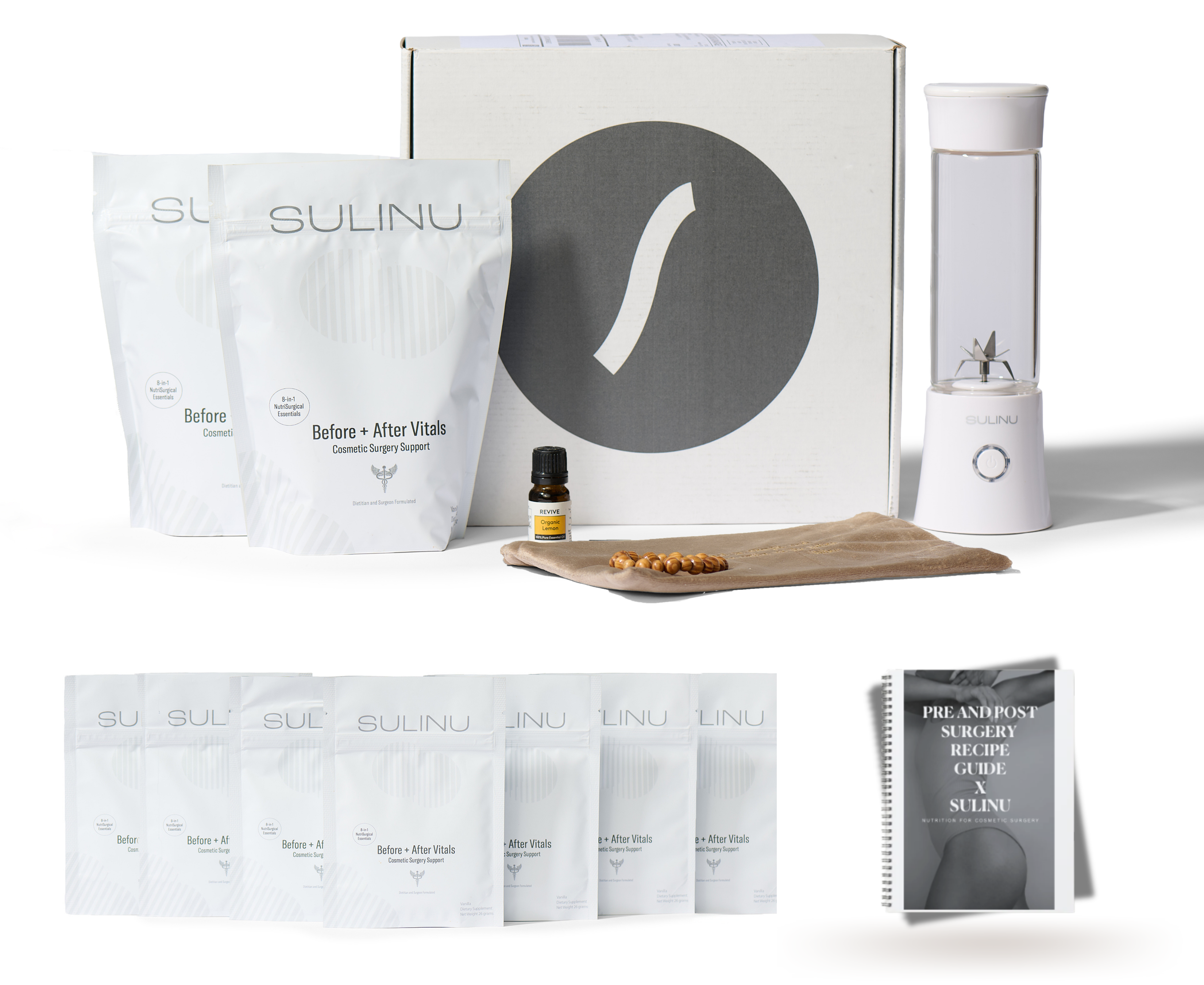
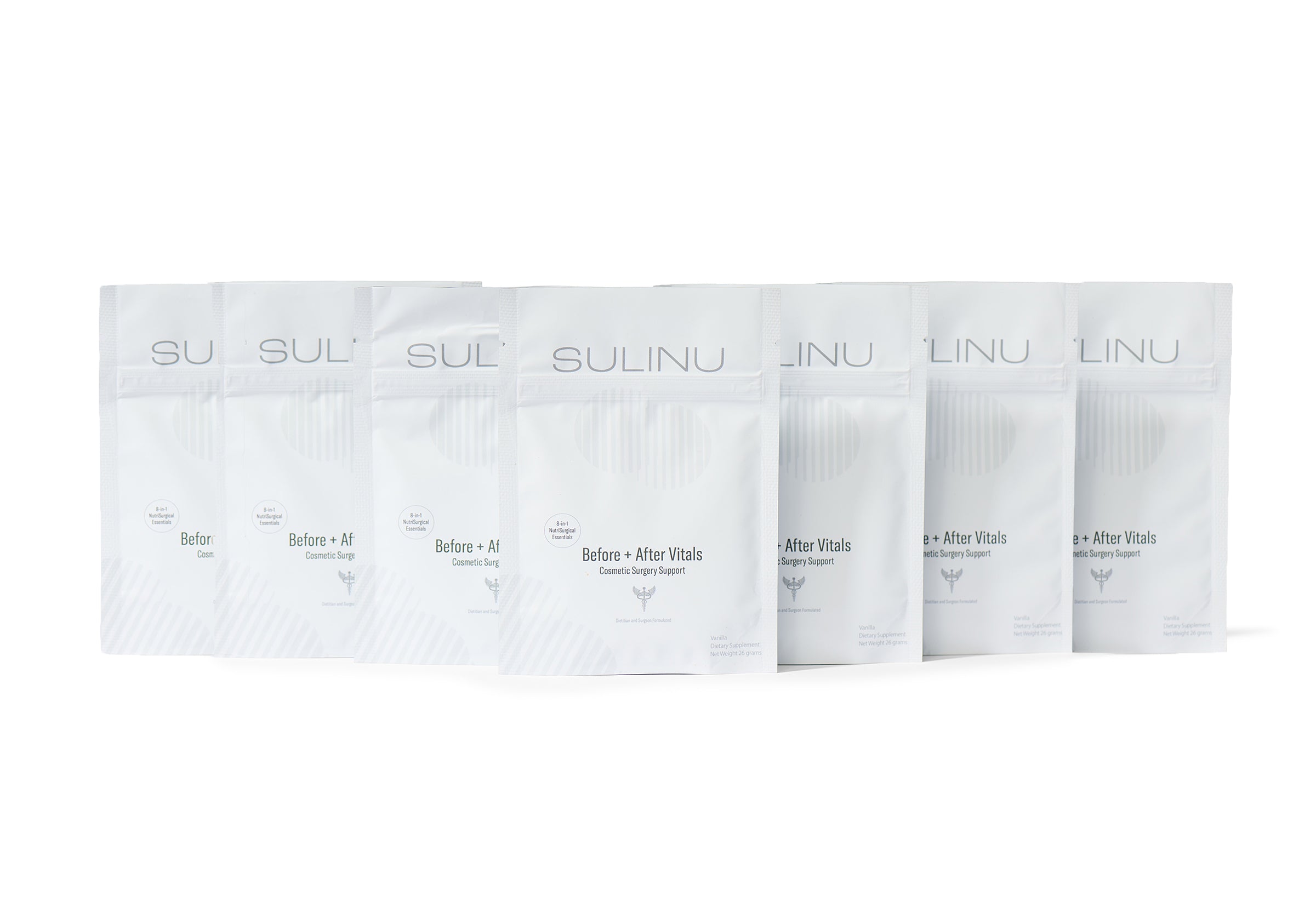
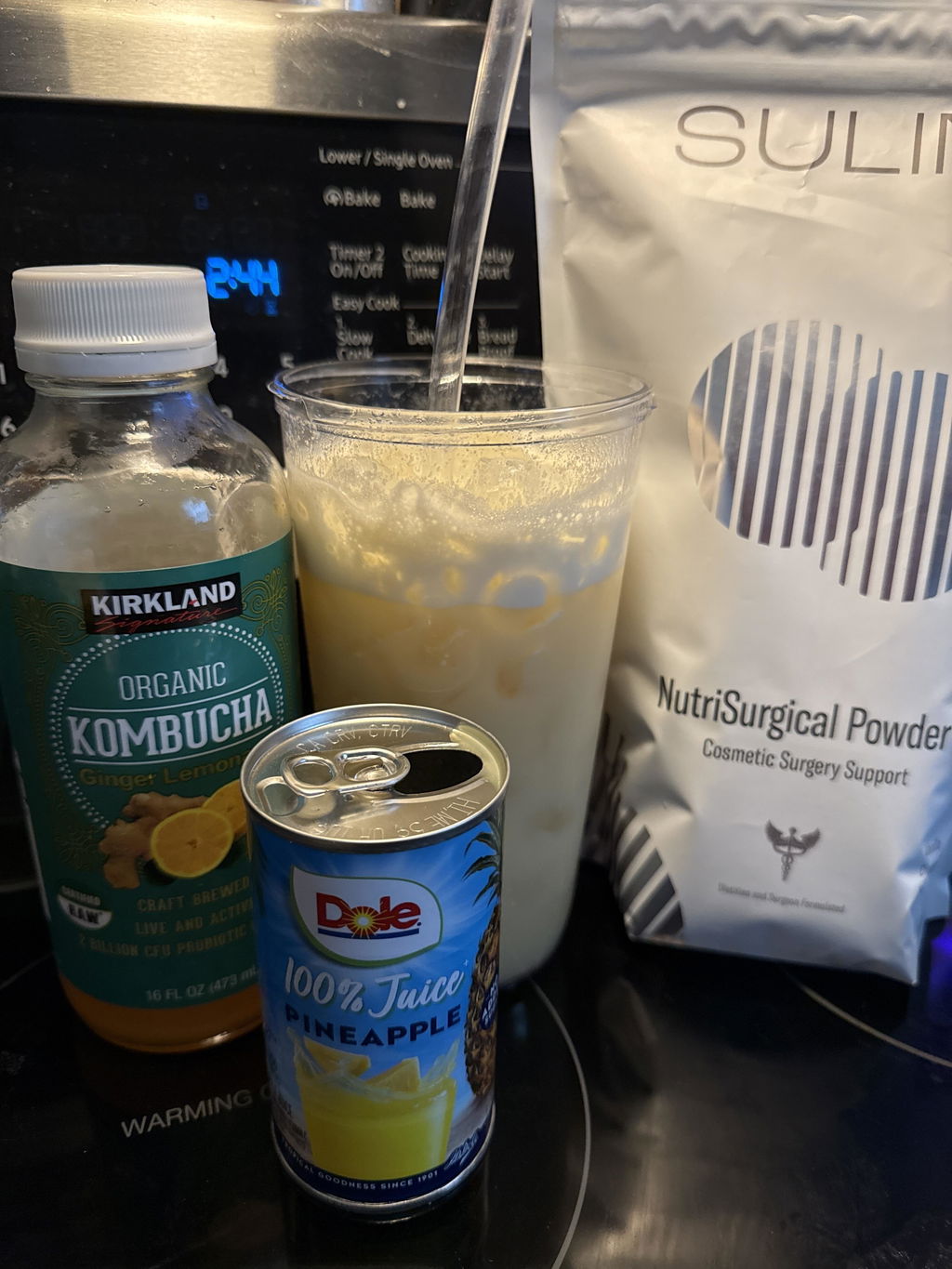
Sulinu’s Before + After Vitals is the world’s first comprehensive wound healing supplement built specifically for surgery recovery. It is a NutriSurgical formula, meaning it addresses the surgical healing process directly rather than working as a general multivitamin. The formula combines 29 surgeon-approved ingredients, among them patented ingredients and a few core components that matter most for your recovery.
The formula includes 29 surgical essentials:
BioEnhanced Vitamin C
A patented, rapid-absorbing form that some research suggests achieves significantly higher tissue retention than standard ascorbate formulations. Vitamin C is foundational to collagen synthesis, immune defense, and antioxidant protection during the inflammatory phase, all of which directly influence how your body manages bruising, swelling, and the quality of scar tissue over time. It's also formulated to avoid the GI side effects that typically make high-dose vitamin C difficult to tolerate post-surgery.
Hydrolyzed Collagen Peptides
A patented version that some studies indicate may support meaningful improvement in skin elasticity in a matter of weeks. Collagen peptides don't just add collagen. They signal skin cells to produce more of their own. This matters at every stage: for swelling resolution as tissues remodel, for bruising clearance as vascular integrity is restored, and for scar quality as new tissue architecture forms.
Proteolytic Enzymes
Patented enzymes that, when combined with protein, some research suggests, can help double total amino acid absorption. Amino acids are the building blocks your body uses to repair incision tissue, clear inflammatory debris, and build new scar architecture. Getting more of them absorbed, not just consumed, is the goal.
Biome Synbiotics
Surgery disrupts gut health, and disrupted gut health disrupts everything else: nutrient absorption, immune function, inflammatory response. Prolonged bruising and swelling are often downstream of a gut that isn't processing and delivering nutrients efficiently. This patented prebiotic and probiotic blend is designed to survive stomach acid and arrive active in the gut, supporting the digestive foundation that makes all other healing nutrients work.
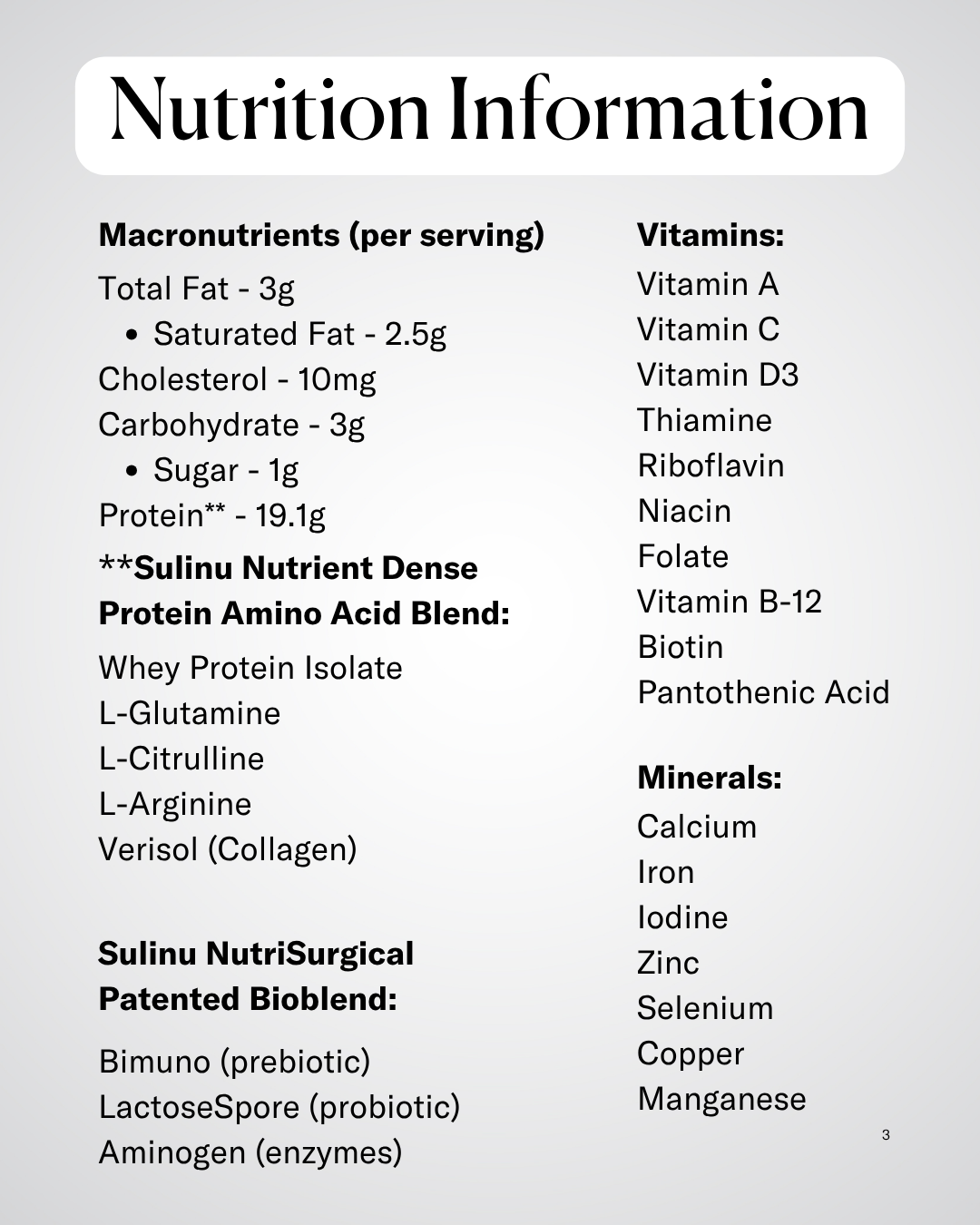
The formula also includes targeted amino acids (L-glutamine, L-citrulline, L-arginine), essential vitamins (A, B-complex, C, D3), and minerals (zinc, copper, manganese, iron) — all in clinically relevant dosages, not token inclusions.
No GMOs. No gluten. No artificial colors. No ingredients that interfere with each other. Everything in Before + After Vitals is there because it has a specific job in your recovery.
Scoop. Mix. Heal.
Check out more real-life stories of Before + After Vitals on our Instagram
How much do I need to support my body contouring recovery?
Our recommended protocol is two bags total for most surgeries.
1 bag for before surgery
1 bags for after surgery

Prepping for body contouring after weight loss?
Get everything you need to start prepping your body before surgery - our highly rated supplement, travel-ready packs, and the guide that tells you exactly how to eat right leading up to your procedure.
Already healing from surgery? You can still support your results!
Bruising, scarring, and swelling don't stop mattering after surgery. You've got up to a year to still influence how your tissue heals. Starting now still counts.
Practical tips for the weeks before surgery
Small, repeatable habits do more than a perfect plan that is hard to keep.
- Write your protein target on the fridge or in your phone.
- Keep a simple log for one week and take it to your dietitian.
- Prepare single-serving containers of yogurt, cottage cheese or boiled eggs.
- Keep a bendable straw and a cup you like for protein drinks.
- Stock a few soft, easy foods for the first days of recovery, since appetite and mobility are both limited after surgery.
- Ask a friend or family member to help with grocery shopping and cooking in the first week.
- Avoid crash diets, cleanses, and detox products. They can lower protein and nutrient intake at the wrong time.
- Tell your surgeon about any nicotine or alcohol use, and follow their instructions, since both can affect healing.
- Tell every provider about every supplement and medication, including herbal products.
For a wider checklist of supplies, see our guide to top plastic surgery supplies and essentials.
Questions to Ask Your Surgeon
- What labs do you want before surgery, and how far in advance?
- What is my daily protein goal before and after surgery?
- Which nutrients are most likely to be low for patients like me?
- Do you want me to take a specific bariatric or prescription-strength supplement, and when should I start?
- Which supplements, vitamins, and herbal products should I stop, and on what date?
- How stable does my weight need to be, and for how long?
- How will you coordinate my GLP-1 or other weight-management medication with my prescriber?
- If my labs are not ready, how will we adjust the timeline?
- Can you refer me to a dietitian who works with post-weight-loss patients?
- What should I eat on the day before and the first days after surgery?
When to Contact Your Surgical Team
Before surgery, contact your surgeon or care team if you have:
- Persistent vomiting, or you cannot keep fluids down
- Dizziness, fainting or severe weakness
- Rapid additional weight loss in the weeks before surgery
- A new illness, fever or infection
- Questions about a supplement or medication you were told to stop
After surgery, contact your team for fever, spreading redness, drainage, rapidly increasing swelling, severe pain, or an incision that opens. Seek emergency care for chest pain, shortness of breath or calf pain with swelling or redness.
FAQs: Eating Before Body Contouring After Weight Loss
What should I eat before a tummy tuck after weight loss? Build meals around protein, add soft produce and fluids, and follow your surgeon's rules for the final days. Our guide to eating after a tummy tuck continues from there.
How much protein do I need before body contouring? There is no single number. Bariatric ranges commonly cited begin near 60 grams a day, but your surgeon or dietitian sets your goal.²
Do I need labs before body contouring? Many surgeons order them to look for nutrient shortfalls such as B12 and vitamin D, and results can influence timing.¹
Can I take protein shakes before surgery? Many patients do. Check the label for protein per serving and sugar, and confirm with your surgeon, particularly for the last day or two before surgery.
Should I keep taking my bariatric vitamins? Usually yes, unless your surgeon gives a specific stop instruction. Bring the full list to your pre-operative visit.
What if I have no appetite before surgery? Use small protein portions several times a day and drinkable options. Tell your surgeon, since low intake can affect planning.
Should I stop my GLP-1 before body contouring? That is a decision for your prescriber and surgeon together. Do not stop or change it on your own.
Can I lose more weight right before surgery? Most surgeons want weight to be stable. Ask for your surgeon's guidance instead of dieting on your own.
How soon after bariatric surgery can I have body contouring? Timing varies by surgeon, procedure and weight stability. Our guide to body contouring after GLP-1 weight loss discusses common timing considerations. Your surgeon sets yours.
Is this advice different after a GLP-1 than after bariatric surgery? The core priorities are similar: protein, labs and coordination with your team. The card block above shows where questions differ. See also our companion article on protein with low appetite after weight loss surgery.
Medical Disclaimer
The information provided in this article is for general educational purposes only and is not intended to constitute medical advice, diagnosis, or treatment.
Every individual's healing process is unique, and outcomes vary based on a wide range of factors, including health status, surgical technique, and post-operative care. Always follow the specific guidance of your board-certified plastic surgeon and medical team.
If you experience any concerning symptoms during recovery — including signs of infection, wound separation, or unusual pain — contact your surgical team immediately.
These statements have not been evaluated by the Food and Drug Administration. Sulinu's Before + After Vitals is not intended to diagnose, treat, cure, or prevent any disease.
References
- American Society of Plastic Surgeons. New nutrition recommendations after major weight loss support recovery from body contouring. 2026. https://www.plasticsurgery.org/news/articles/new-nutrition-recommendations-after-major-weight-loss-support-recovery-from-body-contouring
- Ben-Porat T, et al. Is There a Need to Reassess Protein Intake Recommendations Following Metabolic Bariatric Surgery? Current Obesity Reports. 2025. https://pmc.ncbi.nlm.nih.gov/articles/PMC11779789/