Some swelling in the reconstructed breast, the underarm and the abdomen is expected after DIEP flap surgery, and it commonly eases over several weeks to a few months, with mild swelling lasting longer for some people.
Moderate swelling in the breast, underarm, and abdomen can continue for several months,¹ and the abdominal bloating and fluid, sometimes called "swelly belly," most often subsides by about the 12-week mark.² Your own timeline depends on your body and your surgeon's approach.
A DIEP flap rebuilds the breast using skin and fat from the lower abdomen, so two areas are healing at once. That is why swelling can feel confusing. The breast may look full or uneven in the first weeks, while the belly feels tight, rounded, and heavier than you expected.
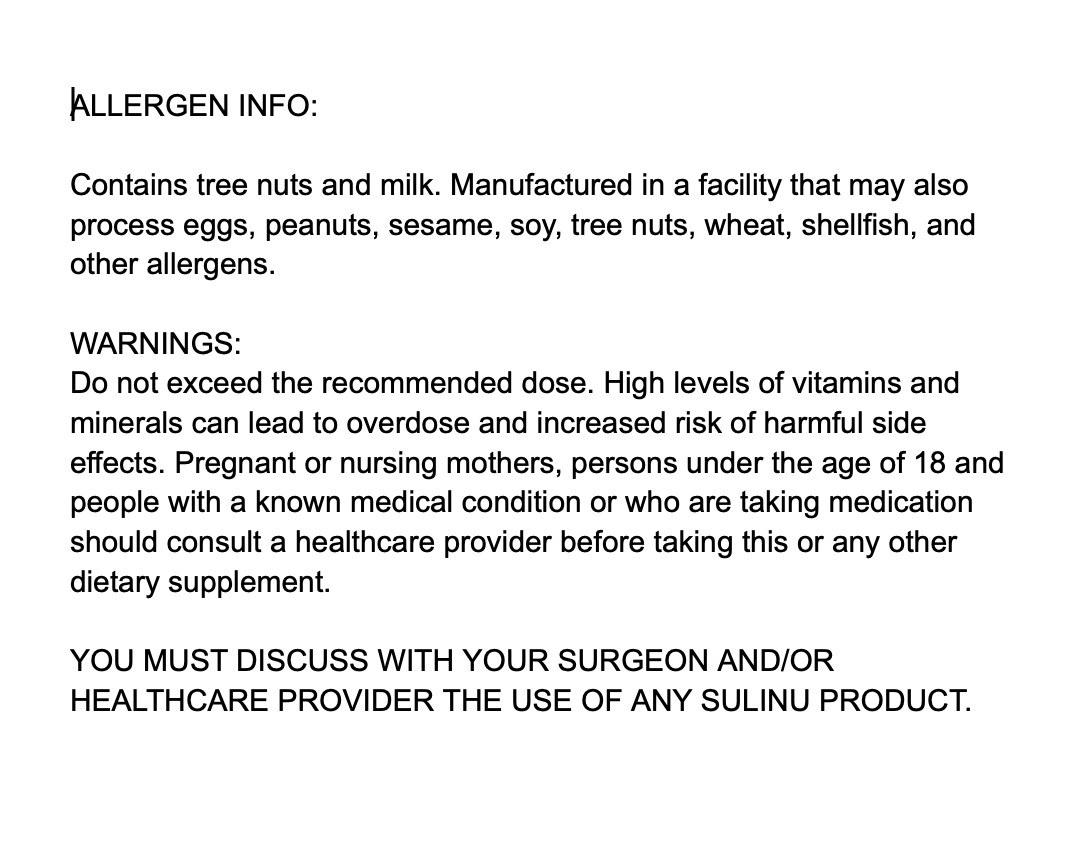
This is a lot to go through, and many people find it helps to know what is ordinary before it happens. If you are having reconstruction after breast cancer surgery, please also check any supplement, vitamin or over-the-counter remedy with your oncology team and your surgical team before starting it. Some cancer treatments interact with vitamins and antioxidants, and this article does not make any claims about cancer treatment or outcomes.
Quick Answers
How long does swelling last after DIEP flap surgery? Most of the heavy swelling eases over the first weeks, and abdominal bloating often improves by around three months.² Mild swelling in the breast, underarm, or abdomen can last longer.
Why is my belly so swollen after DIEP? Fluid collects under the abdominal skin after the tissue is removed and the incision is closed. This is common and is sometimes called swelly belly.
Is it normal for one breast to look bigger or different? Early on, yes. Swelling is often uneven, and the reconstructed breast settles gradually. Your surgeon will tell you what to watch for.
Does a binder or compression help? Many teams recommend abdominal support during healing. Follow your own surgeon's instructions on type, fit, and timing.
What swelling needs a call? Fast-growing swelling, a change in the color or feel of the flap, fever, spreading redness, and pain that is not controlled by your prescribed medication all need prompt attention.

Recovering from DIEP reconstruction means two surgical sites healing at once, and appetite is often low in the first weeks.
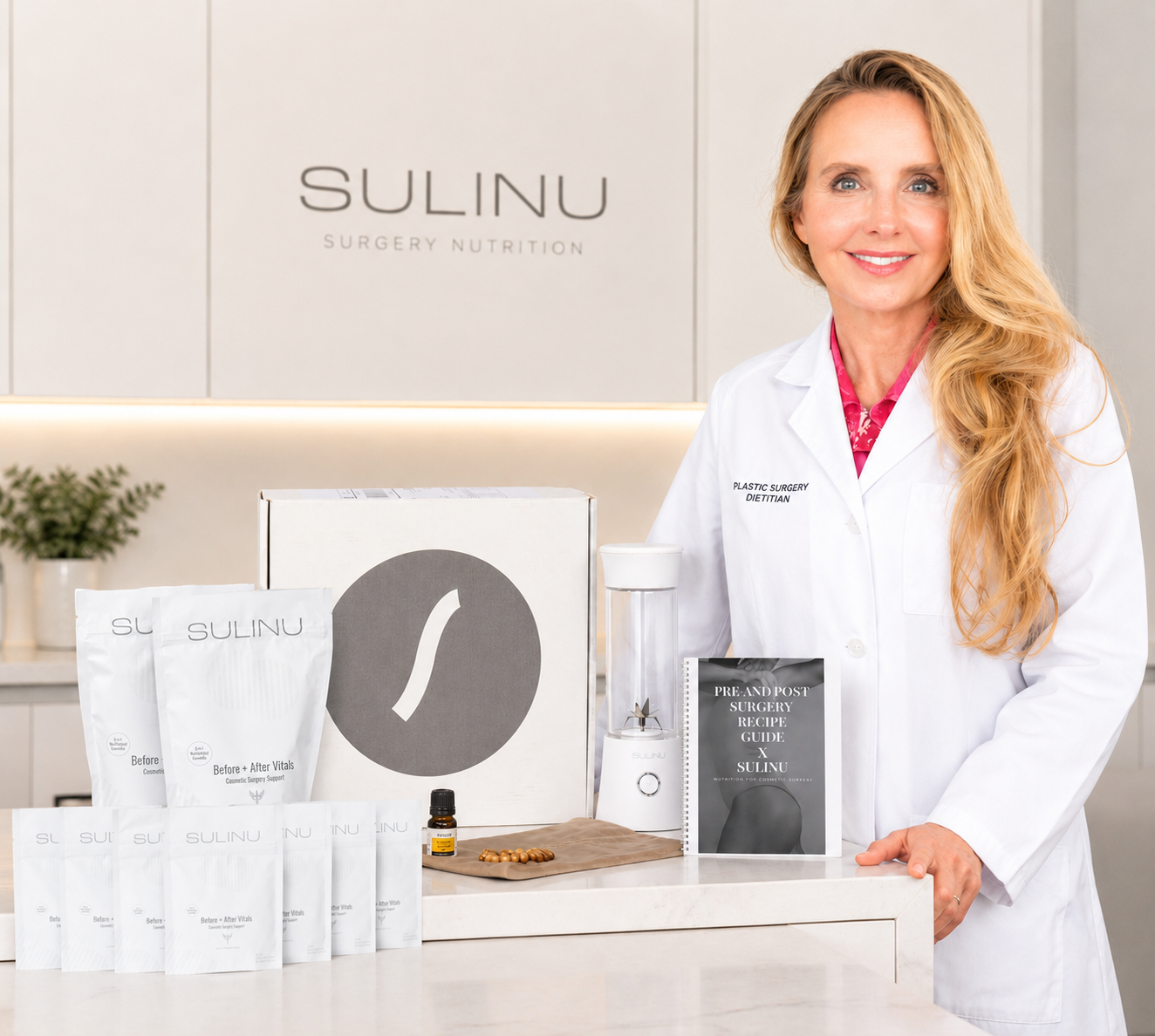
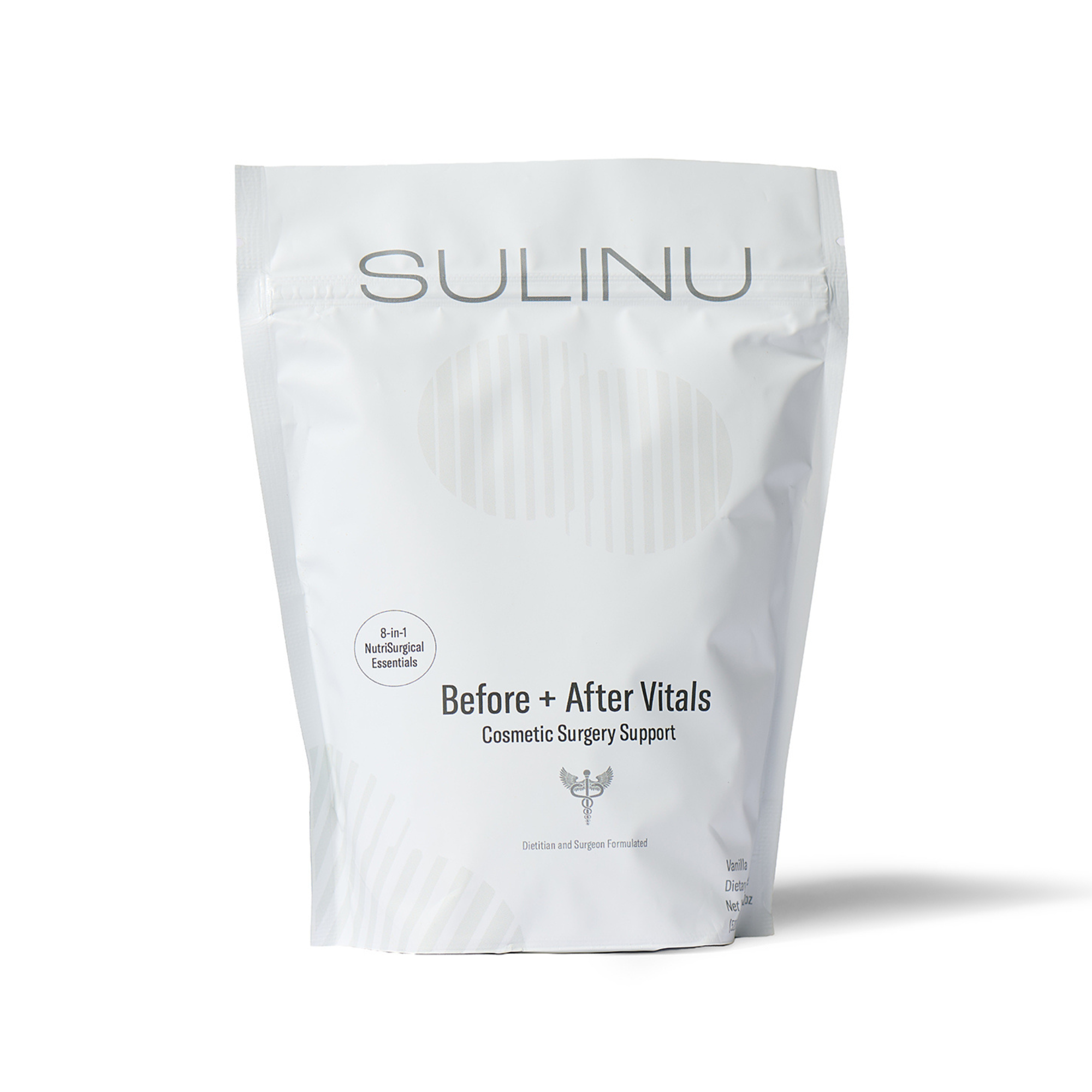
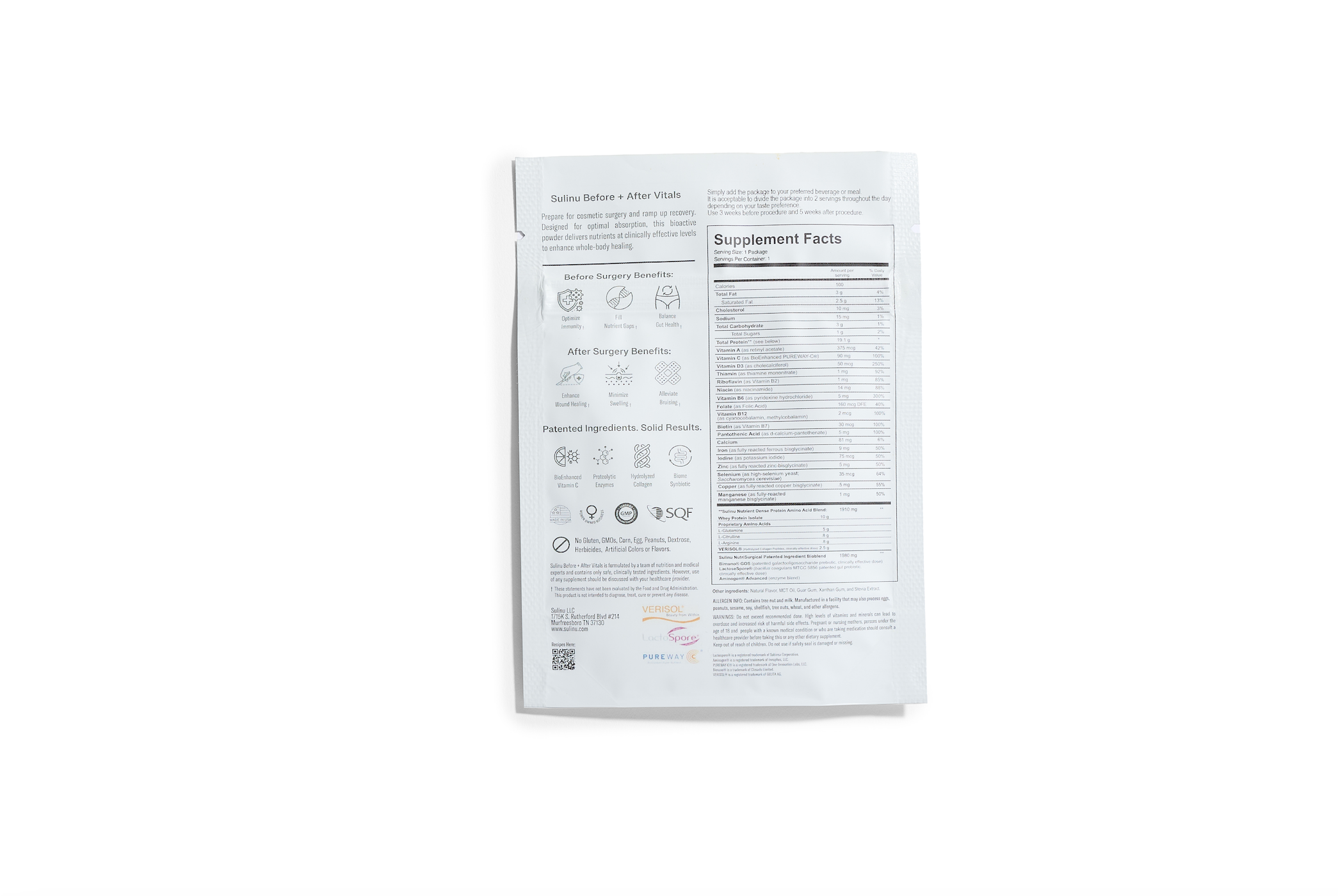
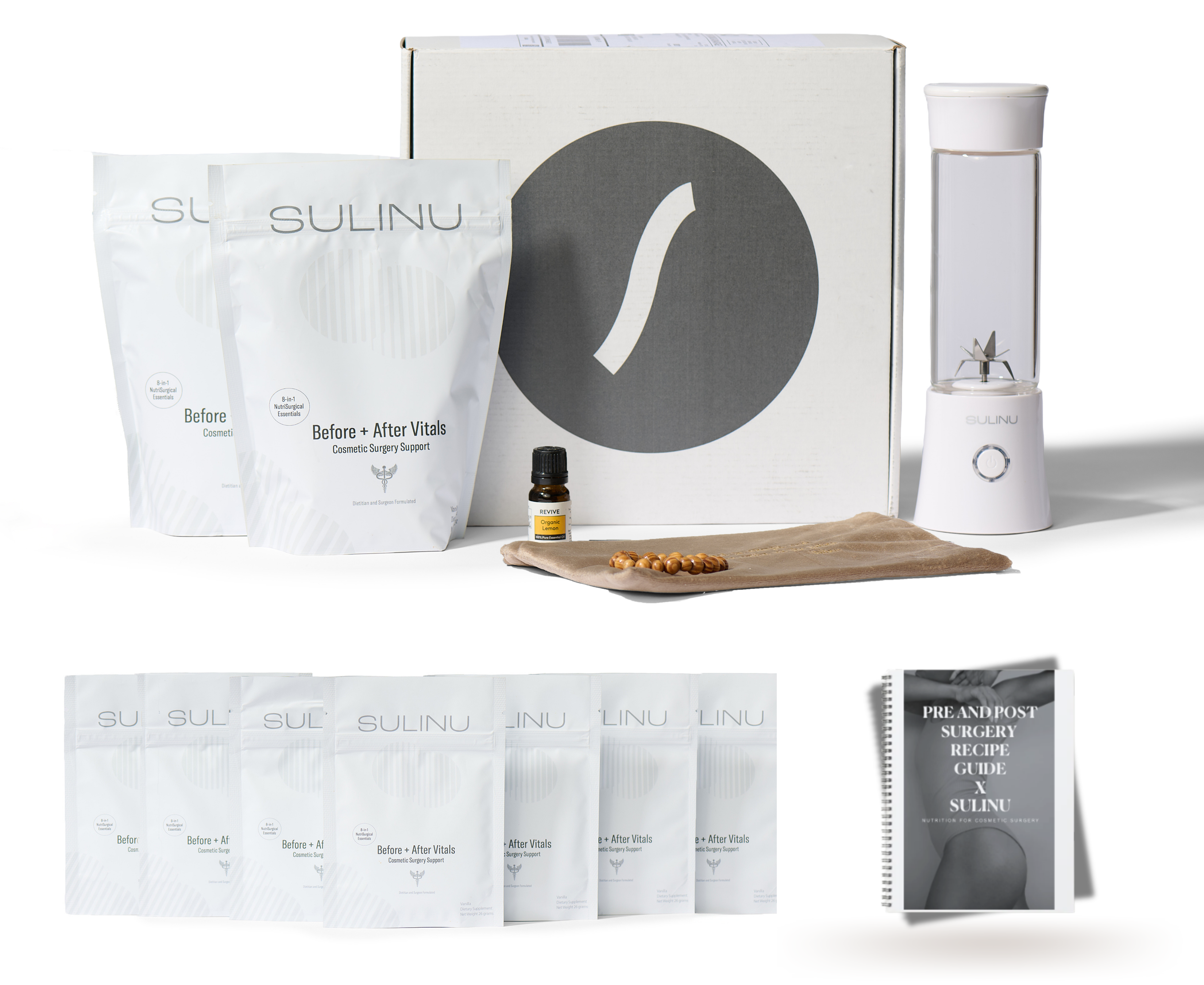
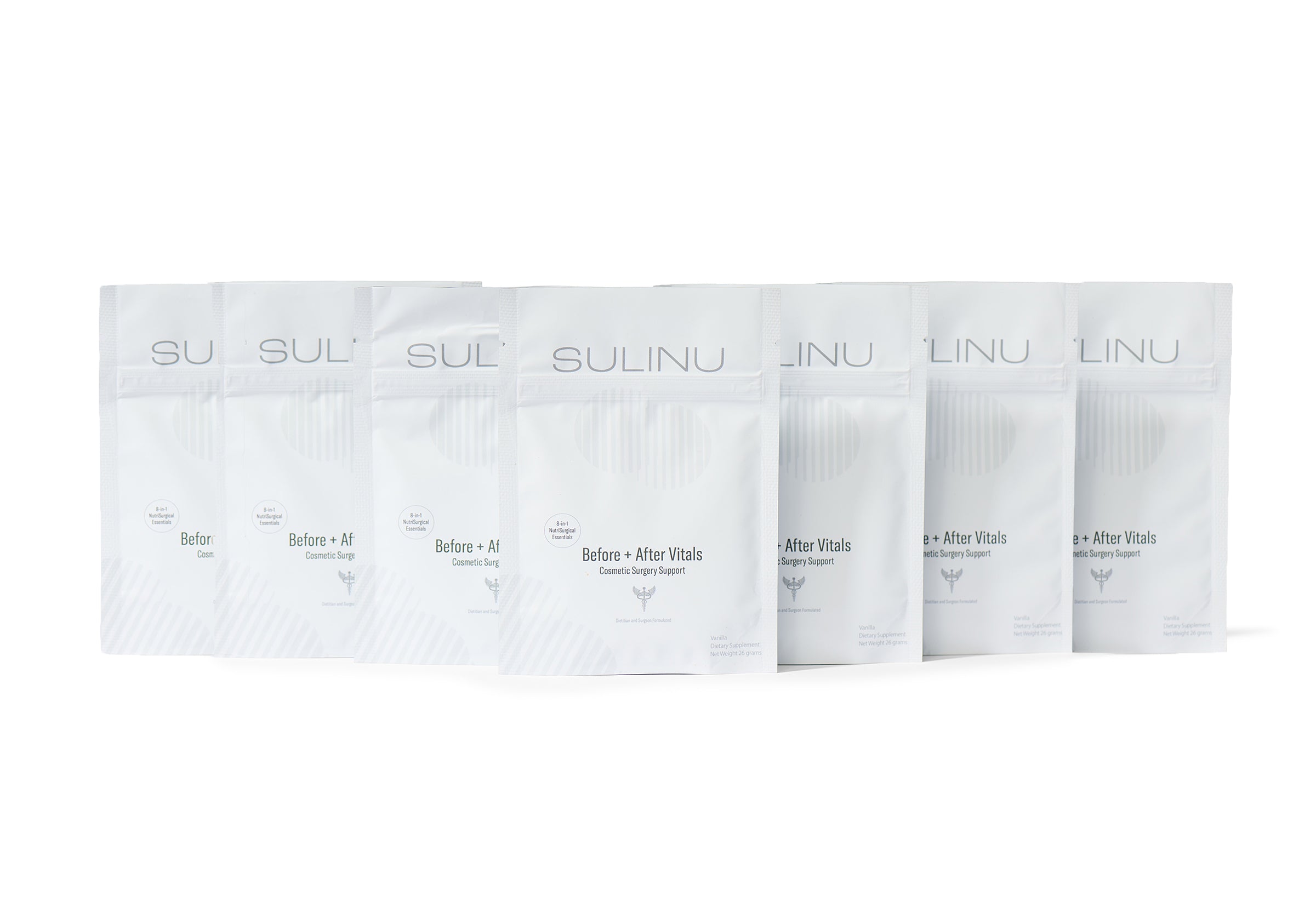
Before + After Vitals is a daily nutrition formula made for surgical recovery, designed to help fill the gaps on days when full meals are hard. Check with your oncology and surgical teams before adding it.
Comparison: Common Ways DIEP Swelling Is Managed
The measures below are the ones reconstruction teams most often build into DIEP recovery plans. The cards are a summary to bring to your appointments, not a schedule. Because two sites are healing, the rules for the breast and the abdomen can differ, and your surgical team sets the details. For scars and incision patterns, see our guide to how long breast reconstruction scars take to heal.
Abdominal support
How it helps
Supports the belly as fluid settles
Typical guidance
Binder or compression shorts
Check first
Type, fit and how long to wear
Walking
How it helps
Keeps circulation moving
Typical guidance
Short distances, often
Check first
When to walk farther
Positioning
How it helps
Eases pull on both incisions
Typical guidance
Back sleeping, hips and knees bent
Check first
How many weeks to keep it up
Fiber and fluids
How it helps
Eases bloating and constipation
Typical guidance
Smaller meals, steady fluids
Check first
Whether you need a stool softener
What Causes Swelling After DIEP Flap Surgery?
Swelling is the body's normal response to surgery, and a DIEP procedure involves a lot of surgery in two places. The breast is rebuilt with tissue that has been reconnected to blood vessels, and the abdomen has had skin and fat removed and the remaining tissue brought down and closed. Both areas hold extra fluid while the lymphatic system adjusts.
A few things add to it:
-
Fluid under the abdominal skin. This is the classic swelly belly. The skin can feel taut, and the lower abdomen may look rounded.
-
The underarm. If lymph nodes were removed or the underarm was part of your earlier surgery, swelling there can feel different from swelling in the breast.
-
Reduced movement. Early on, you are mostly resting and walking slowly, which means fluid moves less readily than normal.
-
Gravity. Swelling often looks better in the morning and heavier by evening.
Why Does My Abdomen Look and Feel So Swollen?
Fluid builds up under the abdominal skin, and it is one of the most common surprises of DIEP recovery. The tightness many people describe at the donor site can last about three months, and numbness in the breast and abdomen can last up to a year.¹
If you have read about tummy tuck recovery, the pattern may sound familiar, because the abdominal incision is closed in a similar way. Our guide to the stages of swelling after a tummy tuck shows how abdominal swelling typically peaks early, softens across the first month or two, and flickers up and down with activity and time of day. The details differ for DIEP, and you will have extra restrictions because the breast is healing too, so treat that guide as a comparison and not as a plan.
Bloating can also come from the digestive system. Pain medication and reduced activity can slow digestion. Guidance on swelly belly often suggests a fiber-rich diet, smaller and more frequent meals, and a short food diary to spot what makes bloating worse.² If digestion is a problem, tell your care team rather than managing it alone.
What Does Swelling in the Reconstructed Breast Look Like?
The reconstructed breast is commonly swollen, firm and a little uneven in the first weeks, and it changes shape as swelling settles. It may sit higher or look fuller than expected. Numbness is common, so you may not feel the swelling the way you see it.
Your team will check the flap regularly in the hospital, and they will tell you what to watch at home. Do not rely on your own judgement about color or temperature changes. If the skin of the reconstructed breast looks darker, paler, bluish, or feels unusually cool, call your surgical team immediately.
Tell your team if one breast is clearly much larger, hard or increasingly painful. A fluid collection or bleeding needs an exam, so speak up early.
What About Swelling in the Underarm?
Underarm swelling and tenderness are common, particularly if lymph nodes were checked or removed during your cancer surgery. Most people also feel tightness or numbness in the inner upper arm. Talk with your team about any new or worsening arm swelling, since they will want to examine it.⁴ Do not try to massage, wrap or treat arm swelling on your own.
DIEP Swelling Timeline
Swelling follows a rough arc: it is most pronounced in the first couple of weeks, improves across the first three months, and can linger in mild form beyond that. These ranges come from published practice and hospital recovery guides.¹ ² ³ Hospitals differ, so use your own team's schedule when it disagrees.
Hospital stay and the first days. Many patients go home a couple of days after surgery. You may have drains in the breast and abdomen, and your team will teach you how to empty and record the output. The abdomen often feels tight, so you may walk with a bent-forward posture for the first weeks.
Weeks 1 to 3. Swelling is usually at its most visible. Sleeping on your back with your hips and knees slightly bent is common, and lifting limits are strict. Soreness often improves a little each week.
Weeks 3 to 6. You may begin standing a little straighter, and gentle range-of-motion work may start with your team's guidance. Your team may advise a soft, wire-free, front-closure bra from around week four.³ Swelly belly often feels most prominent in this window, since you are moving more but still healing.
Weeks 6 to 12. Lifting and exercise restrictions often begin to loosen, but only when your surgeon says so. Abdominal bloating often eases by about 12 weeks.²
Months 3 to 12. Mild swelling in the breast, underarm or abdomen can continue to change. Tightness at the donor site may fade around the three-month mark, and numbness can last up to a year.¹ Scar maturation continues for a year or more.
Is My Swelling Normal?
Swelling that is gradual, roughly proportionate to your surgery, and is slowly improving over weeks is typically normal. A tight, rounded belly, a full or uneven breast, and a puffy underarm all fall within what many patients experience. Mild bruising, firmness, and numbness are also expected.
Signs that go beyond normal are listed below under when to contact your surgical team. When in doubt, call. Your team would rather hear from you early.
What Helps Swelling After DIEP Flap Surgery?
The most reliable supports are the ones your surgical team already gave you: the abdominal binder or compression garment, the positioning rules, the walking plan and the lifting limits. None of the following replaces your team's instructions.
Abdominal support. After the abdominal drains are removed, one hospital handout advises compression shorts with the elastic band kept off the belly incision and the navel.³ Others use a binder. Ask which one is right for you and how long to wear it.
Short, frequent walks. Walking helps circulation and lowers the risk of blood clots. The same handout advises walking short distances often.³ Many teams suggest working up toward longer walks once cleared, and one practice mentions about 30 minutes a day for swelly belly.²
Sleeping position. Back sleeping with a bend at the hips and knees is common for the first weeks, with a pillow under the knees and another to support the breast and arm. Side sleeping, when allowed, may be easier with a pillow between the knees.
Fiber, fluids and smaller meals. Constipation and bloating can make a swollen abdomen feel worse. Ask your team about stool softeners if you are on pain medication. Spreading food over smaller meals can feel more comfortable than large ones. Our mastectomy nutrition guide covers eating when your appetite is low.
Eat for repair, even when appetite is low. What you eat will not take swelling away, but it gives your body the materials it needs to heal. After DIEP reconstruction, the body is repairing the breast and the abdomen at the same time, often during weeks when you are tired, moving less and not very hungry. A protein food at each meal, plenty of fruit and vegetables, and steady fluids through the day give that repair work a better foundation. If full meals are hard, smaller and more frequent snacks can help you keep up.
When eating well feels like one more thing to manage, Before + After Vitals can help fill the gaps. It is a daily nutrition formula made for surgical recovery. Because some cancer treatments interact with vitamins and antioxidants, please check with your oncology and surgical teams before adding it or any other supplement.
Heat and ice, with care. The sensations in the breast and abdomen are not reliable after surgery, so a heating pad or ice pack can injure skin without you noticing. One hospital handout allows a heating pad on the back but never on the flap or the incisions.³ Ask your team before using either.
Pacing. Rest is part of the plan. If swelling is worse at the end of a busy day, the answer is usually to adjust the next day, not to push through.
Why Does Swelling Come and Go?
Fluctuation is normal and does not mean you are going backward. Swelling often looks worse at the end of the day, after a long outing, after a salty meal or during a hormonal shift. It may also feel more noticeable once you are moving around more, because you are suddenly aware of the area again.
Look at the trend across weeks, not any single day. If the direction is up, or something suddenly changes, call your team.

Supporting Your Body's Healing After DIEP Reconstruction
Good nutrition supports the body's normal wound healing, but it does not replace your care team's instructions, and it should always be checked with your oncology and surgical team.
In the first weeks, appetite can be low, constipation is common, and meals are easy to skip. Protein-forward, easy-to-digest foods and steady fluids are usually the most practical focus.
Because some cancer treatments interact with vitamins and antioxidants, please do not start or stop any supplement without your oncology and surgical teams agreeing. That includes products you might already take, such as multivitamins, herbal remedies, and protein powders. Bring the actual labels to your appointment.
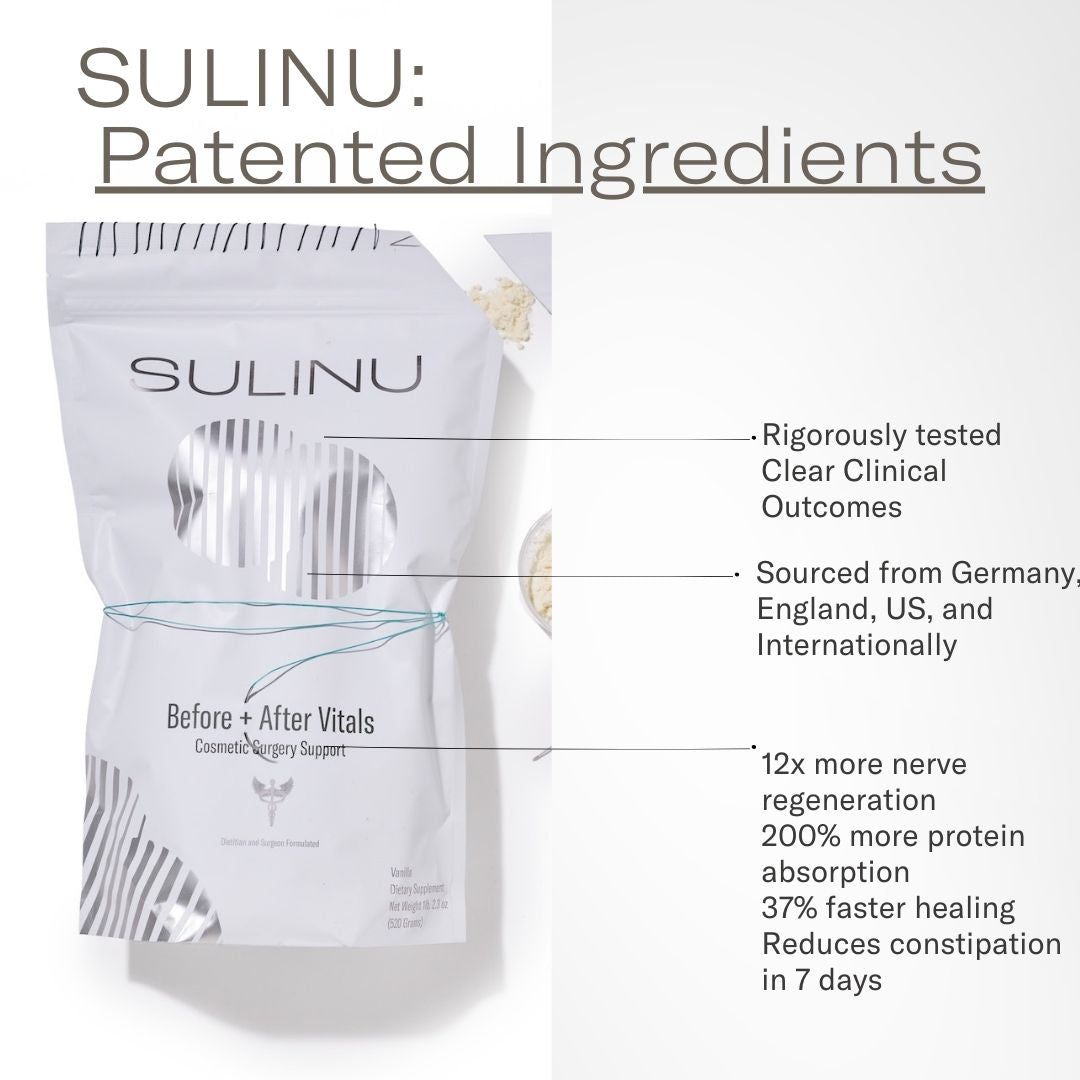
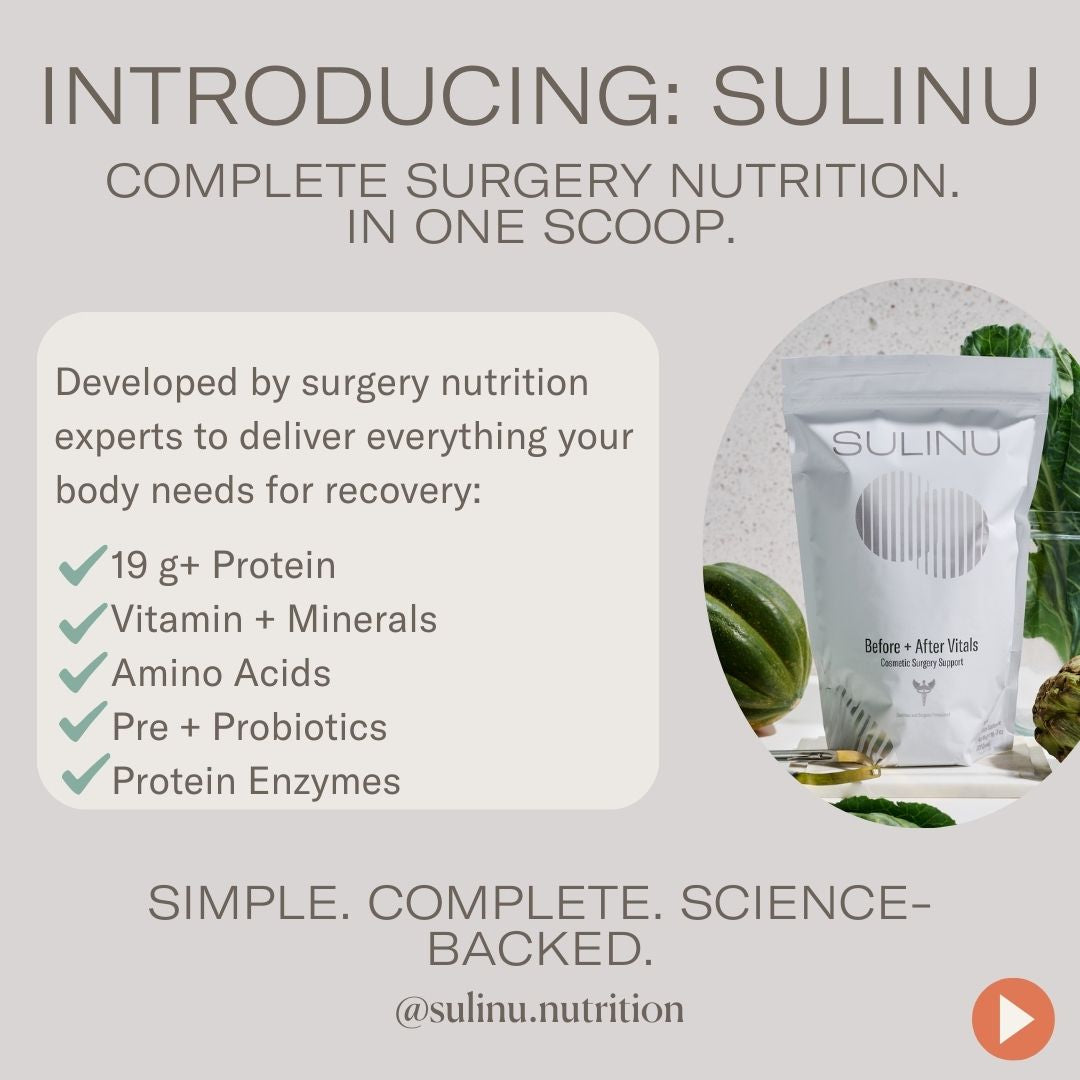
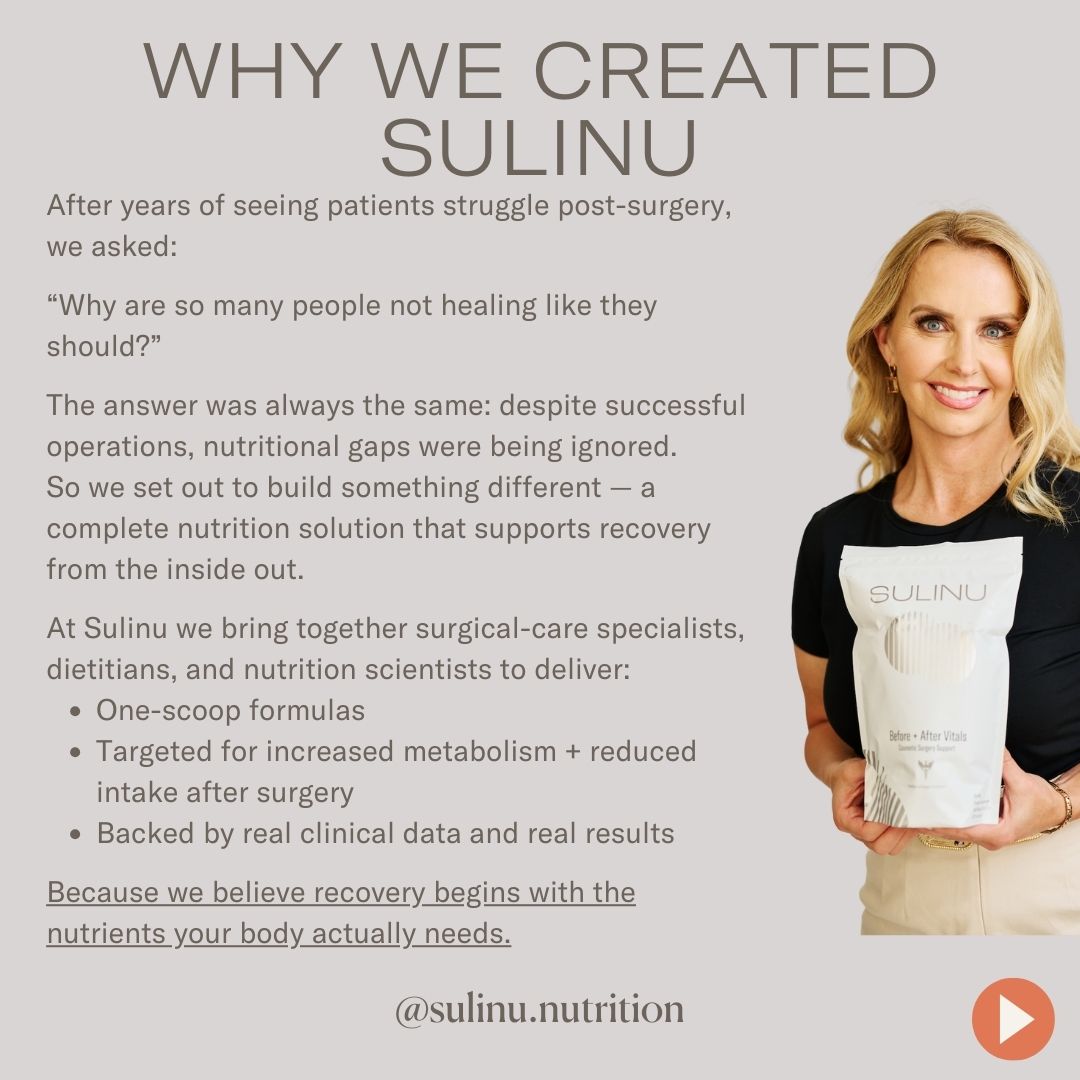
Sulinu's Before + After Vitals is the world's first comprehensive wound healing supplement built specifically for surgical recovery — a NutriSurgical formula, meaning it addresses the surgical healing process directly rather than functioning as a general multivitamin.
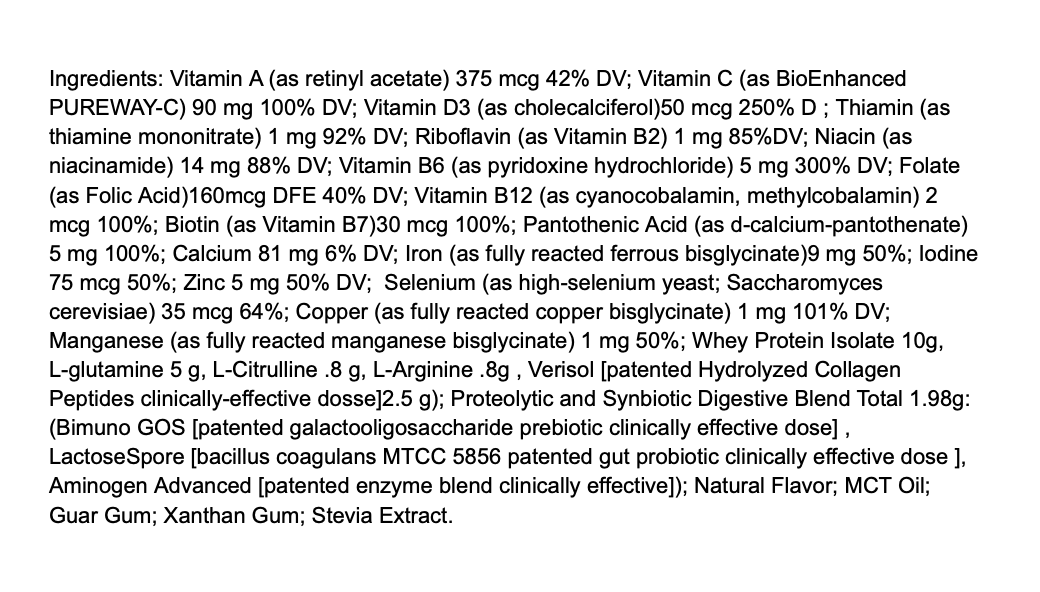
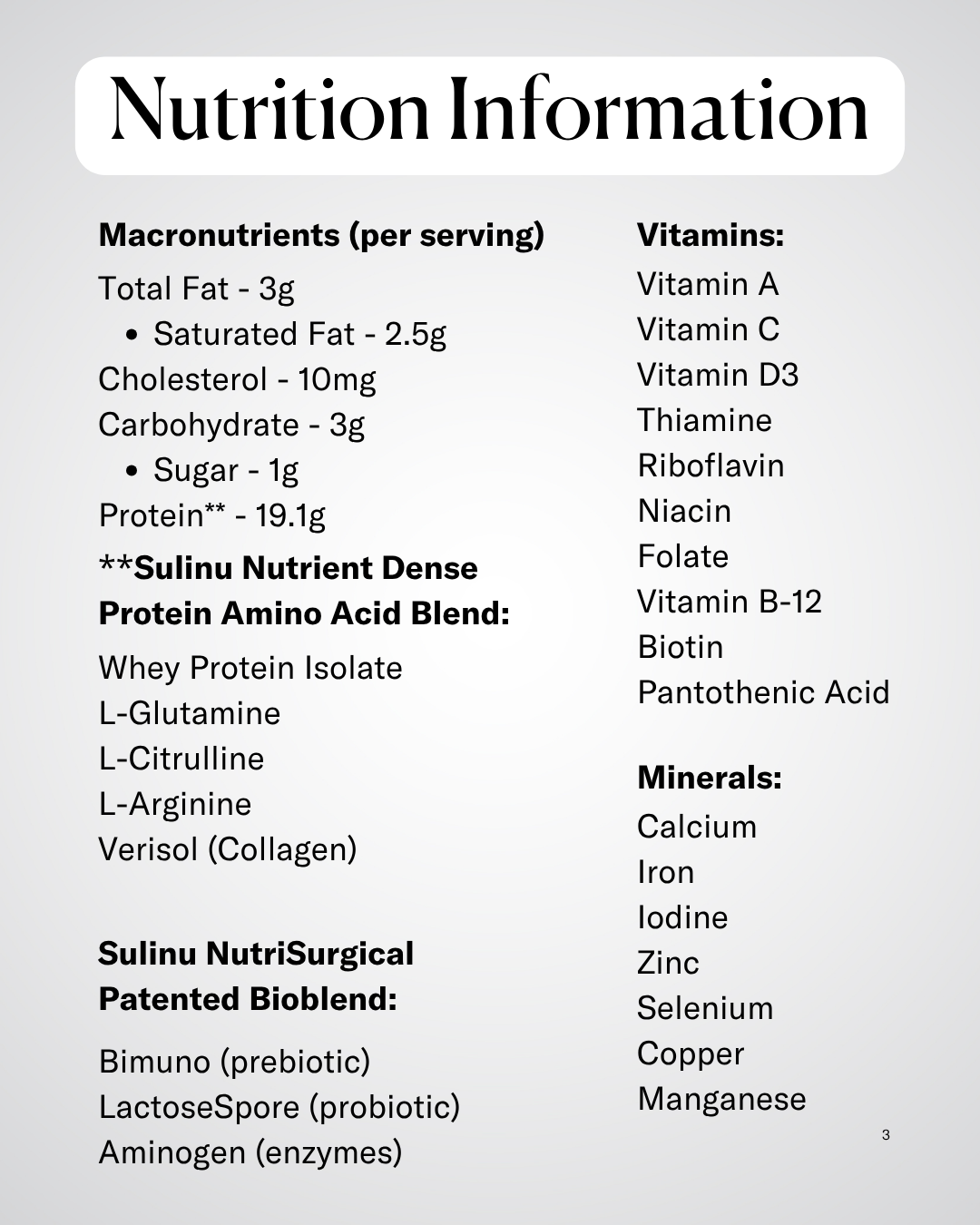
The formula includes 29 surgeon-approved ingredients, including patented ingredients and a few core components that impact your recovery.
The formula includes 29 surgical essentials:
BioEnhanced Vitamin C
A patented, rapid-absorbing form that some research suggests achieves significantly higher tissue retention than standard ascorbate formulations. Vitamin C is foundational to collagen synthesis, immune defense, and antioxidant protection during the inflammatory phase, all of which directly influence how your body manages bruising, swelling, and the quality of scar tissue over time. It's also formulated to avoid the GI side effects that typically make high-dose vitamin C difficult to tolerate post-surgery.
Hydrolyzed Collagen Peptides
A patented version that some studies indicate may support meaningful improvement in skin elasticity in a matter of weeks. Collagen peptides don't just add collagen. They signal skin cells to produce more of their own. This matters at every stage: for swelling resolution as tissues remodel, for bruising clearance as vascular integrity is restored, and for scar quality as new tissue architecture forms.
Proteolytic Enzymes
Patented enzymes that, when combined with protein, some research suggests, can help double total amino acid absorption. Amino acids are the building blocks your body uses to repair incision tissue, clear inflammatory debris, and build new scar architecture. Getting more of them absorbed, not just consumed, is the goal.
Biome Synbiotics
Surgery disrupts gut health, and disrupted gut health disrupts everything else: nutrient absorption, immune function, inflammatory response. Prolonged bruising and swelling are often downstream of a gut that isn't processing and delivering nutrients efficiently. This patented prebiotic and probiotic blend is designed to survive stomach acid and arrive active in the gut, supporting the digestive foundation that makes all other healing nutrients work.
The formula also includes targeted amino acids (L-glutamine, L-citrulline, L-arginine), essential vitamins (A, B-complex, C, D3), and minerals (zinc, copper, manganese, iron) — all in clinically relevant dosages, not token inclusions.
No GMOs. No gluten. No artificial colors. No ingredients that interfere with each other. Everything in Before + After Vitals is there because it has a specific job in your recovery.
Scoop. Mix. Heal.


Practical Tips for the Weeks of Swelling
A few small preparations make a swollen, tender recovery easier.
-
Dress for a changing shape. Loose, soft tops that open at the front and high-waisted, stretchy bottoms that do not press on the belly incision usually work best.
-
Set up one resting spot. A bed or couch with several pillows lets you rest at a bend without hunting for support.
-
Keep a log. Note drain output if you have drains, plus pain, swelling and temperature. It gives your team clear information.
-
Take photos on a schedule. Same light, same angles, about once a week. Do this for your own reassurance, not to compare yourself to others.
-
Accept help. Lifting limits mean you cannot carry groceries, children or pets. Ask for help early.
-
Plan a gentle meal rhythm. Small, protein-containing snacks across the day often work better than three big meals.
-
Be patient with the reflection in the mirror. Swelling hides the shape that is coming. Both sites need time.

How much do I need to support my DIEP flap surgery recovery?
Our recommended protocol is two bags total for most surgeries.
1 bag before surgery
1 bag after surgery

Prepping for a DIEP flap surgery?
Get everything you need to start prepping your body before surgery - our highly rated supplement, travel-ready packs, and the guide that tells you exactly how to eat right leading up to your procedure.

Already healing from surgery? You can still support your results!
Bruising, scarring, and swelling don't stop mattering after surgery. You've got up to a year to still influence how your tissue heals. Starting now still counts.
Should I Do Anything for Scars While I'm Swollen?
Scar care starts later than swelling care. Silicone products and massage are only appropriate once the incisions are fully closed and your surgeon approves. For a closer look at what scars to expect and when scar care typically begins, read our guide to breast reconstruction scars and the companion post on mastectomy scars.
What If Swelling Doesn't Settle?
Persistent or worsening swelling deserves an exam, not a wait-and-see. Your surgeon can check for a fluid collection, adjust your compression plan, refer you to a physical therapist or lymphedema therapist, or simply reassure you. Some reconstruction teams suggest asking for a physical therapy evaluation if swelling affects your quality of life or makes daily activities uncomfortable.² Many people find that support helpful, and there is no reason to suffer through it on your own.
Questions to Ask Your Surgeon
- Which compression garment or binder should I wear, and for how long?
- How should I sleep and in what position, and for how many weeks?
- When will my drains come out, and what output means I should call?
- What should I expect for swelling in the breast, the abdomen and the underarm?
- When can I start walking longer distances, and when can I start driving?
- Which bra should I wear, and when can I begin?
- Should I see a physical therapist for abdominal or arm swelling?
- Which supplements, vitamins or over-the-counter products are safe for me, given my cancer treatment plan?
- When can I begin scar care, such as silicone or massage?
- Who do I call after hours?
When to Contact Your Surgical Team
Call your surgical team promptly for anything that worries you, and call emergency services for chest pain or trouble breathing.
- A change in the color, temperature or appearance of the reconstructed breast.
- Swelling that increases quickly or is much greater on one side.
- Significant redness, warmth or swelling around an incision or drain.
- Fever or chills. Many teams use 100.4°F (38°C) as the number to report.
- Bright red bleeding that does not stop, or drain output that turns bloody, creamy or foul-smelling.
- Pain that your prescribed medication does not relieve.
- Calf pain, swelling or redness, particularly in one leg.
- Opened incisions or tissue that looks like it is separating.
- New or worsening swelling in the arm.⁴
- Chest pain, shortness of breath or fainting. Call emergency services.
DIEP Swelling FAQs
How long does swelling last after DIEP flap surgery? Heavy swelling usually eases over the first several weeks. Abdominal swelling often improves by around 12 weeks, and mild swelling in the breast, underarm or abdomen can last for months.¹ ²
What is swelly belly? It is the term some surgical teams use for the swollen, bloated feeling in the abdomen after DIEP surgery, caused by fluid under the abdominal skin. It tends to improve gradually.
Why does my belly feel so tight? Tightness at the donor site is common, can last around three months, and is part of the healing process.¹ Binders, positioning and gentle walking, as your team allows, may make it more comfortable.
Is it normal for my reconstructed breast to look different from my other breast? Yes. Swelling can be uneven, and the shape continues to change for months. Your surgeon will assess when to judge the final result.
Can I use a heating pad or ice? Ask your team first. Numbness can make it hard to feel when skin is too hot or too cold. One hospital handout permits a heating pad on the back but never on the flap or incisions.³
Can I take a supplement for swelling? Please talk with your oncology and surgical teams before taking any supplement. Some cancer treatments interact with vitamins and antioxidants, and nothing replaces your team's instructions.
When can I wear a bra? It depends on the surgeon. One hospital handout suggests waiting until about four weeks and then choosing a soft cotton bra with a front closure and no underwire.³ Follow your own plan.
Does DIEP swelling come back after it improves? It can fluctuate, especially at the end of the day or after more activity. A slow downward trend over weeks is what to look for.
How is DIEP swelling different from tummy tuck swelling? The abdominal incision is closed in a similar way, so some patterns overlap. DIEP also involves the breast and often the underarm, and the restrictions are different. Use your surgeon's guidance.
Should I see a therapist about the swelling? If swelling affects daily life, ask your team about physical therapy or lymphedema therapy. A referral is a reasonable thing to ask for.
Medical Disclaimer
The information provided in this article is for general educational purposes only and is not intended to constitute medical advice, diagnosis, or treatment.
Every individual's healing process is unique, and outcomes vary based on a wide range of factors, including health status, surgical technique, and post-operative care. Always follow the specific guidance of your board-certified plastic surgeon and medical team.
If you experience any concerning symptoms during recovery — including signs of infection, wound separation, or unusual pain — contact your surgical team immediately.
These statements have not been evaluated by the Food and Drug Administration. Sulinu's Before + After Vitals is not intended to diagnose, treat, cure, or prevent any disease.
References
- Breast Reconstruction Denver. Frequently Asked Questions About DIEP Flap Recovery. https://breastreconstructiondenver.com/blog/frequently-asked-questions-about-diep-flap-recovery/
- PRMA Plastic Surgery. Defining Swelly Belly and What to Expect. https://prma-enhance.com/breast-reconstruction-blog/defining-swelly-belly-and-what-to-expect/
- AdventHealth. DIEP Flap Patient Information. https://adventhealth.com/sites/default/files/assets/4-23-plastics-01090-ahmg_prs_diep_patient_information_flyer_f2_w_o_crops_1_.pdf
- Kaiser Permanente. Lumpectomy: What to Expect at Home. https://healthy.kaiserpermanente.org/health-wellness/health-encyclopedia/he.Lumpectomy-What-to-Expect-at-Home.ug3388