Your surgeon spent hours repositioning tissues, tightening muscles, and sculpting the version of your face you've been envisioning. The procedure is complete. Now the recovery work begins, and it demands more from your body than most patients expect.
Surgery is a nutritional event. The moment your body goes under anesthesia, it shifts into repair mode and needs real resources to do the job. Without them, healing slows, bruising lingers, and the results you invested in take longer to show.
Choosing the right supplements for facelift recovery isn't about stocking up on every bottle at your local health food store. It's about understanding what your body actually needs, when it needs it, and what it absolutely doesn't.
Why Facelift Recovery Is Harder on Your Body Than You Think
There's a common misconception that because a facelift is "elective," recovery must be relatively straightforward. Physiologically, that's not the case.
Surgical trauma creates a full-body physiological response regardless of how skilled your surgeon is. Anesthesia taxes your liver and gut. The inflammatory cascade that follows incision is the same one your immune system uses to fight illness. Even minor blood loss depletes iron and key micronutrients. Post-op medications — particularly antibiotics and pain relievers — can disrupt your gut microbiome, which may affect how well your intestinal tract absorbs the nutrients you're consuming.
Many facelift patients also experience reduced appetite and jaw tenderness in the first week post-op. The result: your body is working to heal while running low on the fuel it needs to do so. This is where targeted supplementation earns its place.
The Core Supplements for Facelift Recovery
Not all supplements are created equal, and not all of them belong in a post-facelift protocol. Here's a breakdown of the nutrients with the strongest rationale for supporting facial surgery recovery.
Vitamin C: The Non-Negotiable
Vitamin C is widely recognized for its role in collagen synthesis — the structural protein responsible for your skin's strength, texture, and elasticity. After a facelift, your body is in active collagen construction mode, and vitamin C is a critical part of that process.
Beyond collagen, vitamin C functions as an antioxidant, helping to neutralize oxidative stress generated by surgical trauma. Some research suggests that patients with adequate vitamin C levels tend to see improvements in wound healing outcomes, though individual results vary.
Not all forms absorb equally. Standard ascorbic acid in capsule form often passes through the body before it can be fully utilized. Enhanced-absorption forms are worth seeking out during recovery when digestive function is already compromised.
Proteolytic Enzymes: Your Bruising's Worst Enemy
Bromelain (derived from pineapple) and other proteolytic enzymes have become something of a staple in plastic surgery recovery circles, and for good reason. These enzymes are thought to help break down excess proteins that accumulate in tissues during the inflammatory response. Some practitioners report that patients using them tend to see faster resolution of bruising and swelling, two of the most visible and frustrating parts of facelift recovery — though individual responses vary.
Some practitioners suggest starting proteolytic enzymes a few days before surgery and continuing for several weeks post-op. Timing and dosage matter here, so always loop in your surgeon before adding them to your protocol.
One commonly cited nuance: enzymes are generally suggested to be taken on an empty stomach so they can be absorbed systemically rather than simply acting as digestive aids with food. Taken with a meal, they may function more as digestive enzymes — useful, but not the goal here.
Zinc: Quiet, Underrated, Essential
Zinc doesn't get the same attention as vitamin C or collagen, but it's present throughout the healing process. It's thought to play a role in cell division, immune function, protein synthesis, and wound closure — all of which are elevated demands after a facelift.
Many people are already mildly zinc-deficient without knowing it, and surgical stress can deplete stores further. Some studies suggest adequate zinc levels are associated with better tissue repair and reduced infection risk, though the relationship is nuanced and individual.
One practical note: zinc competes with copper for absorption, which is why formulations that include both in calibrated ratios are preferable to high-dose zinc alone.
Hydrolyzed Collagen and Protein: Building Material for Healing Tissue
Adequate protein is non-negotiable for tissue repair. It provides the amino acids required to manufacture new tissue, and surgery increases protein demands significantly at the exact moment when eating normally becomes difficult.
Hydrolyzed collagen is a particularly relevant form — the hydrolysis process breaks it into smaller peptide fragments that absorb more readily, and some research suggests these peptides may support skin elasticity and structural integrity. For a patient whose recovery goal is healthy, resilient facial skin, that distinction matters.
Whey protein isolate is another practical option, high in branched-chain amino acids and easier to digest than concentrate. Consistent protein intake throughout recovery is one of the most impactful nutritional decisions you can make.
B Vitamins: The Energy Crew
B vitamins — particularly B1, B2, B5, B6, B7 (biotin), B9 (folate), and B12 — are thought to support the cellular energy production that makes tissue repair possible. They're also commonly associated with nerve health, which becomes relevant during the period when facelift patients sometimes experience temporary numbness or altered sensation.
Some sources suggest B12 may be less readily absorbed in standard oral supplement forms, particularly in older patients or those with compromised gut function. Methylated forms of B vitamins are often considered more bioavailable and are worth looking for on supplement labels.
Gut Support: The Overlooked Foundation
Here's the piece most supplement guides skip entirely: none of the above matters much if your gut isn't absorbing properly.
Post-surgical antibiotic use is common practice, and while antibiotics are often necessary, they can disrupt the balance of both beneficial and harmful gut bacteria that your intestinal tract relies on for nutrient absorption. Pain medications may compound this by slowing gut motility — which, beyond being deeply uncomfortable, suggests your digestive system isn't operating at its best.
Probiotic and prebiotic support during recovery may help support microbiome balance and gut integrity — because even the best supplement protocol has limited value if the body isn't in a position to absorb it properly.
What to Put Down Before Surgery
Equally important is knowing what to avoid before surgery.
Several commonly used supplements are flagged by many surgical teams as potentially associated with increased bleeding risk when taken in the weeks leading up to surgery. This list includes vitamin E (in higher doses), fish oil, turmeric/curcumin, garlic supplements, ginkgo biloba, and St. John's Wort. Most surgeons ask patients to discontinue these at least two weeks before their procedure date.
This is one of the more important distinctions between a general wellness supplement routine and a surgery-specific one. Something that supports general cardiovascular health in everyday use may not be appropriate in the weeks surrounding a surgical procedure.
The takeaway: don't assume your current supplement stack is surgery-safe. Run it by your surgeon, and if you're building a recovery protocol from scratch, start with formulations designed specifically for surgical patients.
Timing Your Protocol: Before and After
One of the most common mistakes facelift patients make is waiting until after surgery to think about supplementation.
Starting key nutrients two to four weeks before your procedure allows your body to build reserves it will draw on heavily during the acute healing phase. Vitamin C and gut support are particularly valuable to establish early.
Post-operatively, the goal is maintaining those levels through the most demanding phases — typically the first four to six weeks, though tissue remodeling continues for months. Collagen synthesis is an ongoing process. Staying consistent with your protocol well beyond when you feel recovered is what supports the best long-term outcome.
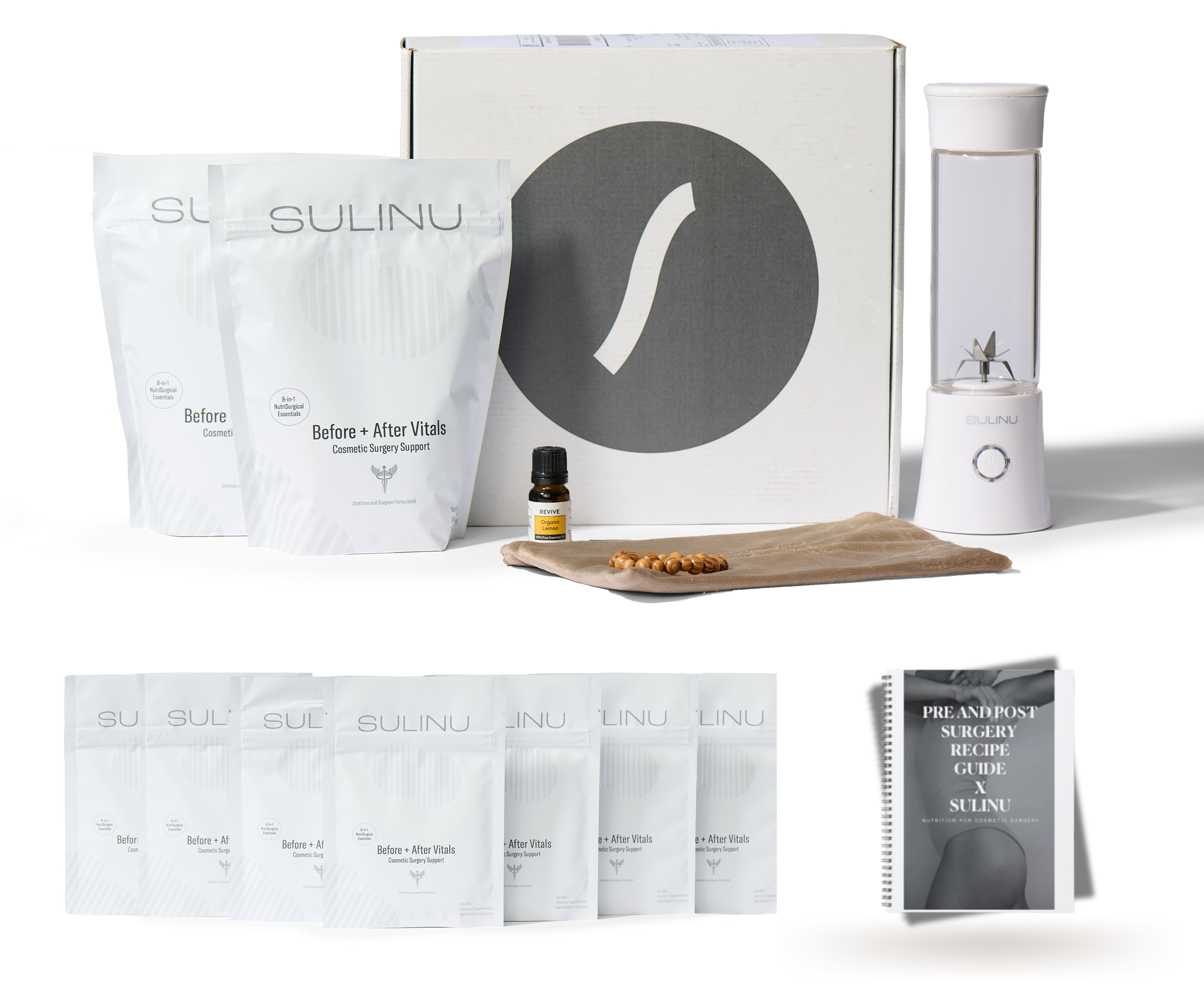
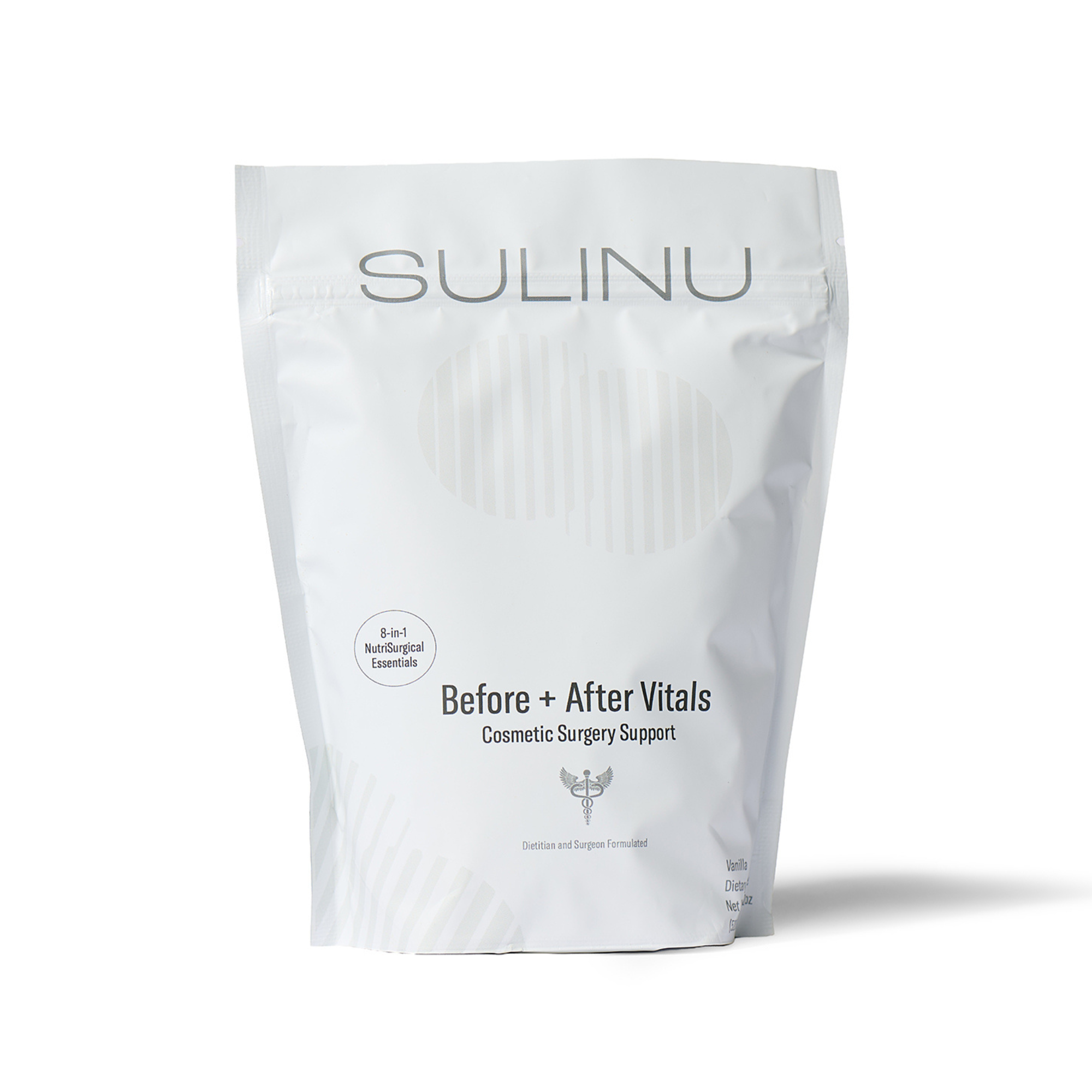
Before and After Vitals: Built for Facelift Recovery
Assembling a facelift recovery protocol from individual bottles is possible, but it's genuinely complicated. You're navigating timing conflicts, absorption interactions, ingredient quality variation across brands, and pill fatigue on top of an already demanding recovery. This is the problem Before + After Vitals was built to solve.
PureWay-C® is a clinically studied, enhanced-absorption form of vitamin C shown to be retained more effectively than standard ascorbic acid. For facelift patients, the timing matters: digestive function is often compromised by post-op medications at the exact moment collagen synthesis demands are at their peak. A form of vitamin C the body can actually absorb and utilize during that window isn't interchangeable with a standard capsule.
LactoSpore® is a spore-forming probiotic backed by clinical research showing faster gut recovery and fewer GI complications after surgery. Unlike standard probiotic strains, it survives both antibiotics and stomach acid — arriving where the body needs it most. For facelift patients managing post-op antibiotic protocols, gut integrity is the foundation every other supplement depends on.
Bimuno® GOS is the world's most researched prebiotic, supported by 130+ scientific publications and proven effective in as little as seven days. It works in tandem with LactoSpore® to restore the beneficial bacteria depleted by antibiotics and rebuild the gut barrier during the recovery window — because even the most carefully formulated supplement protocol has limited value if absorption is compromised.
Aminogen® is a patented enzyme complex clinically shown to double amino acid absorption from protein. Surgical stress significantly increases protein demand at the exact moment gut function is already under pressure. How much the body actually absorbs matters as much as how much is consumed — and Aminogen® ensures the protein in every scoop is fully available for tissue repair.
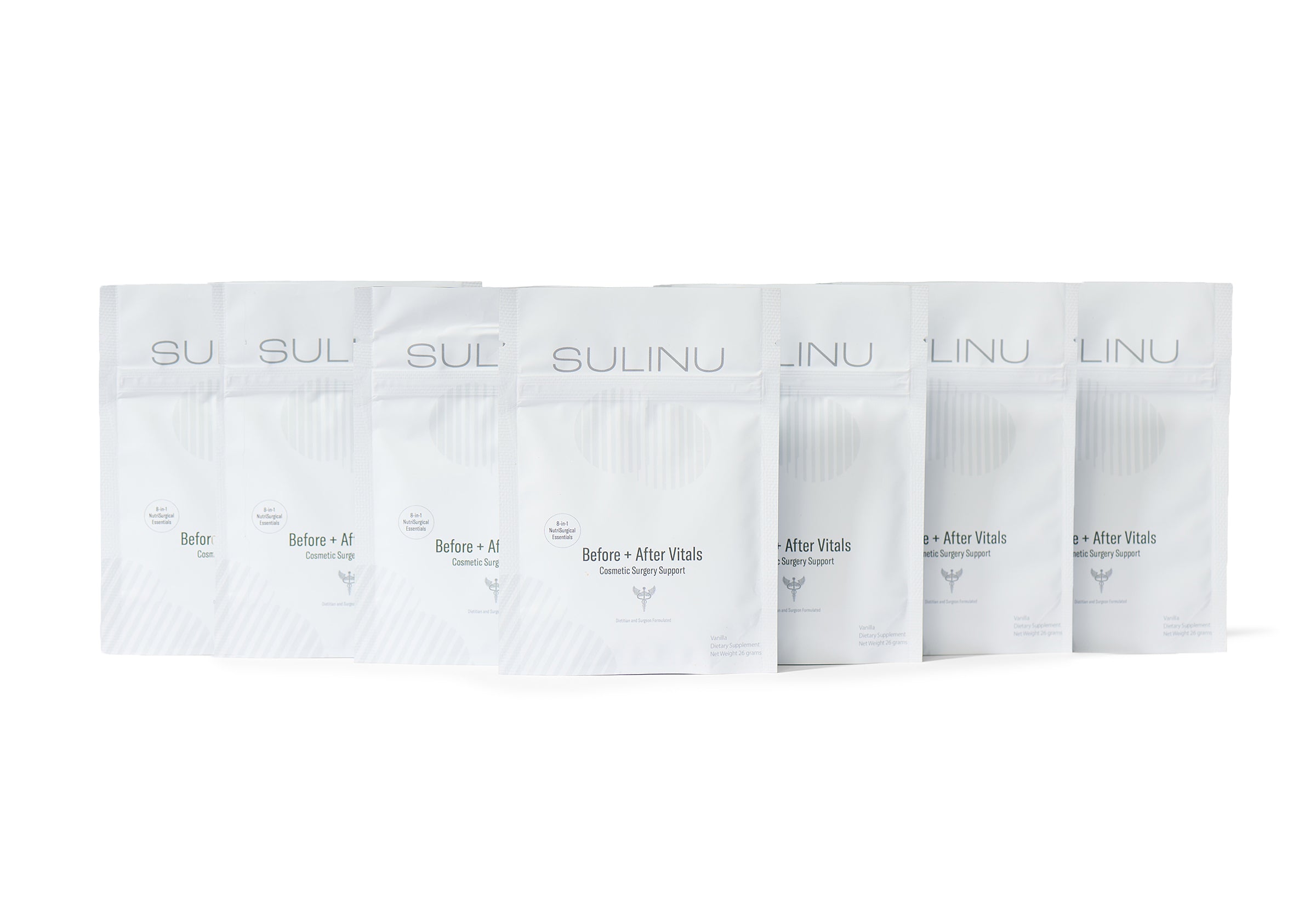
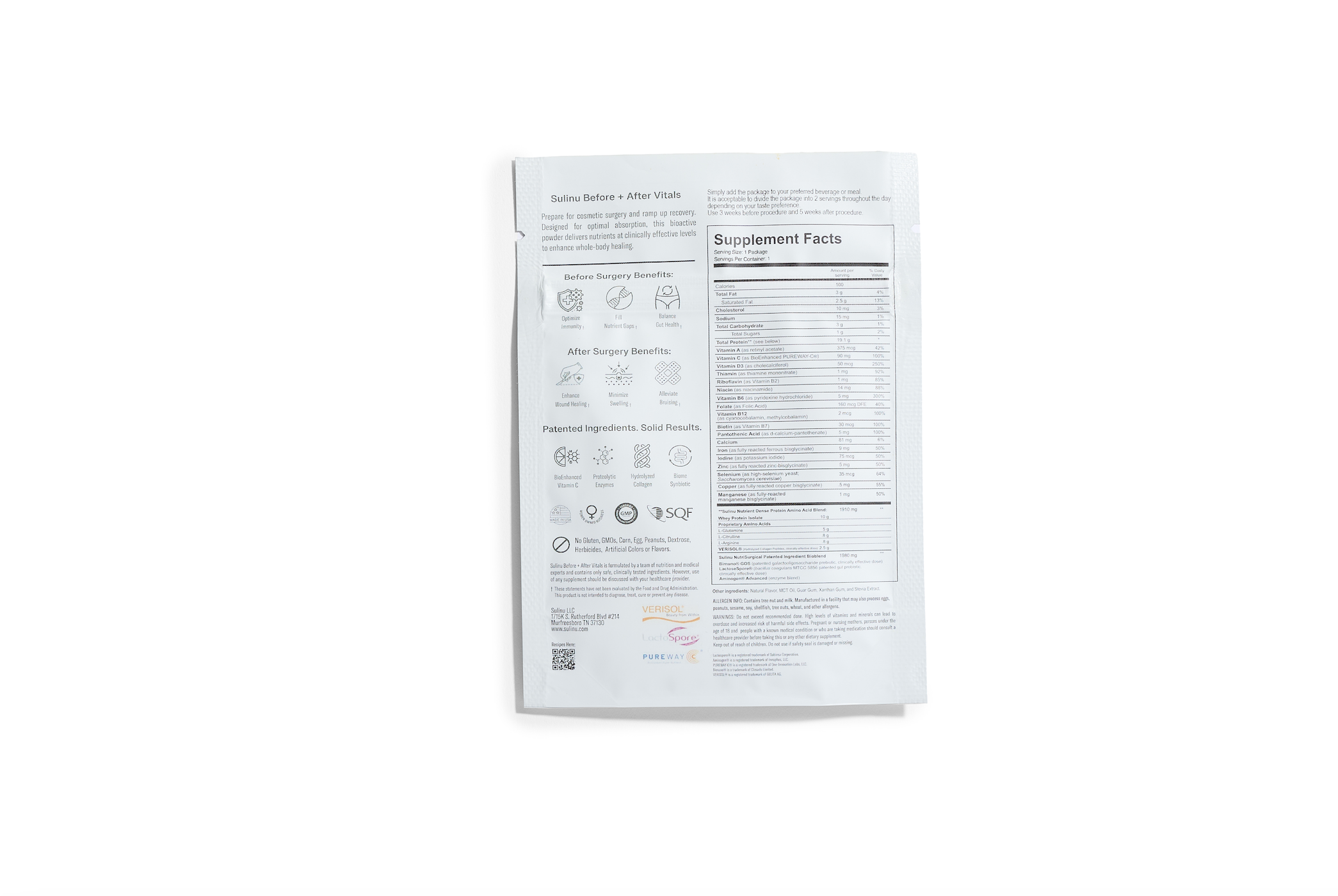
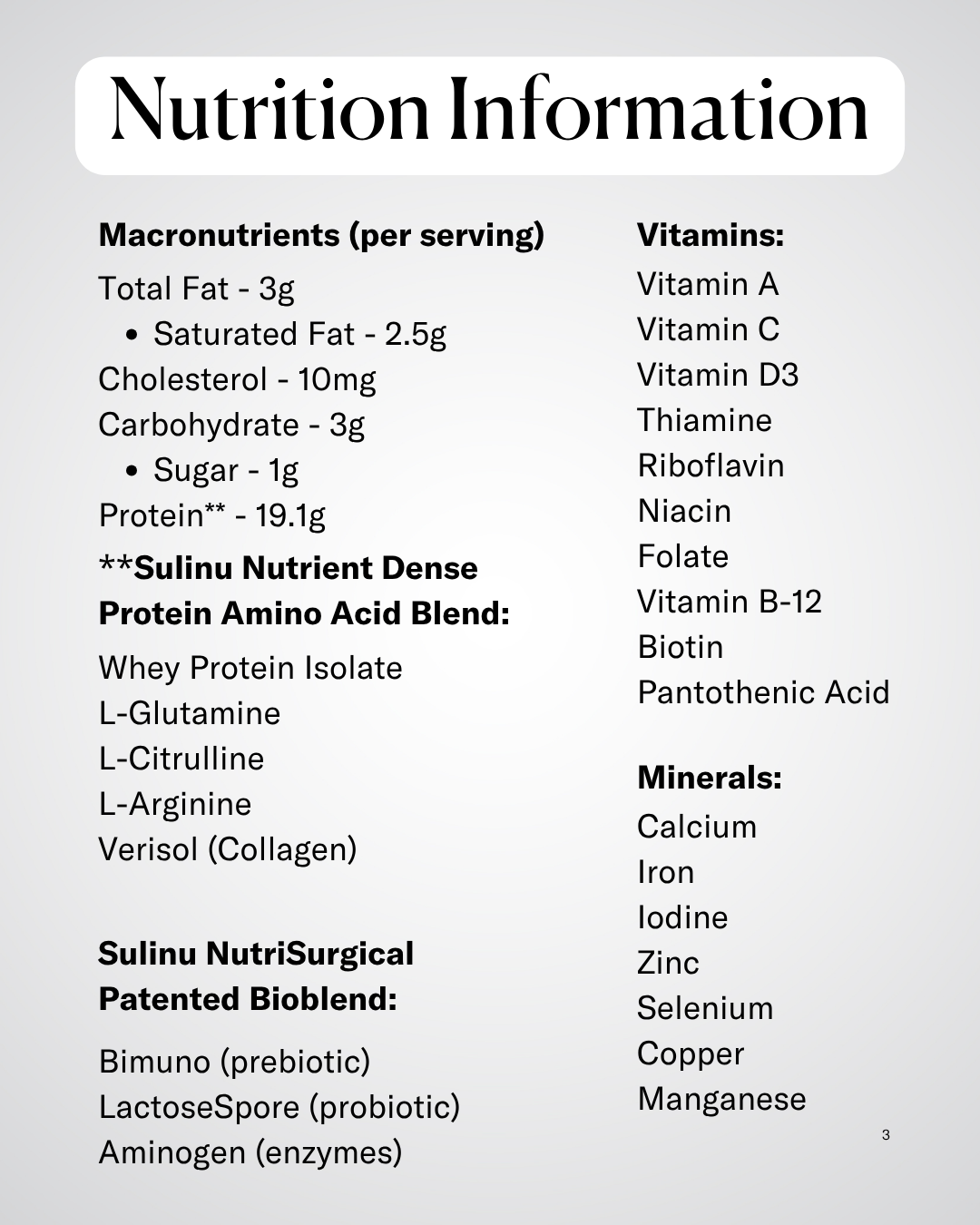
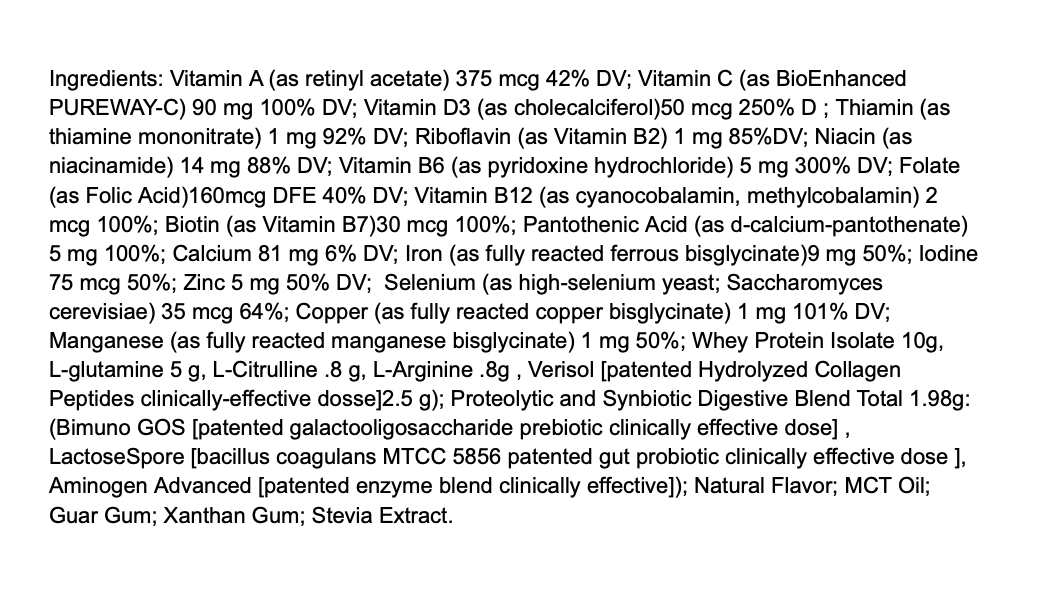
In a single daily scoop, Before + After Vitals also delivers hydrolyzed collagen peptides, a full proteolytic enzyme complex to address the bruising and swelling that define the most visible phase of facelift recovery, and 19 vitamins and minerals — each selected for bioavailability and formulated to work in concert rather than compete for absorption.

The formula accounts for the realities of cosmetic surgical recovery that standard supplements overlook: steroids commonly used post-operatively deplete Vitamin A, so it is included. Certain supplements that carry bleeding risk before surgery are deliberately excluded. These are formulation decisions that reflect the difference between a supplement designed for surgical patients and one adapted from a general wellness product.
Surgeon-approved ingredients. One daily scoop. No timing conflicts. No pill fatigue.
Scoop. Mix. Heal.
Before + After Vitals is designed to begin 2–4 weeks before surgery — building the nutritional reserves your body will draw on during the acute healing phase — and continue through the post-operative recovery window as directed by your surgical team. Beginning before surgery is not optional. It's where the protocol's effectiveness starts.
SHOP THE BEST SUPPLEMENT FOR FACELIFT RECOVERY
Supplements for Facelift Recovery: FAQs
When should I start taking supplements before a facelift?
Most surgery-focused protocols suggest beginning two to four weeks before your procedure date. This window allows time to build nutrient reserves and to identify and discontinue anything flagged for bleeding risk before your surgeon's cutoff.
How long should I continue supplementing after a facelift?
The first four to six weeks are the most critical, but facial tissue remodeling and healing continue for up to one year after your surgery. Many patients benefit from maintaining collagen, vitamin C, and gut support for three to four months post-op.
Can't I just eat a really healthy diet and skip the supplements?
Whole foods matter and should be prioritized. But food alone typically can't deliver the concentrations certain nutrients require during surgical recovery — particularly when appetite is reduced, and medications are affecting gut function. Supplementation works alongside nutrition, not instead of it.
Are there supplements I should definitely stop before surgery?
Yes — vitamin E, fish oil, turmeric, garlic supplements, ginkgo biloba, and St. John's Wort are among those most commonly flagged by surgical teams as potentially associated with increased bleeding risk. Most surgeons recommend stopping these at least two weeks prior. Always share your full supplement list with your surgical team.
Is there a difference between a surgical supplement and a regular multivitamin?
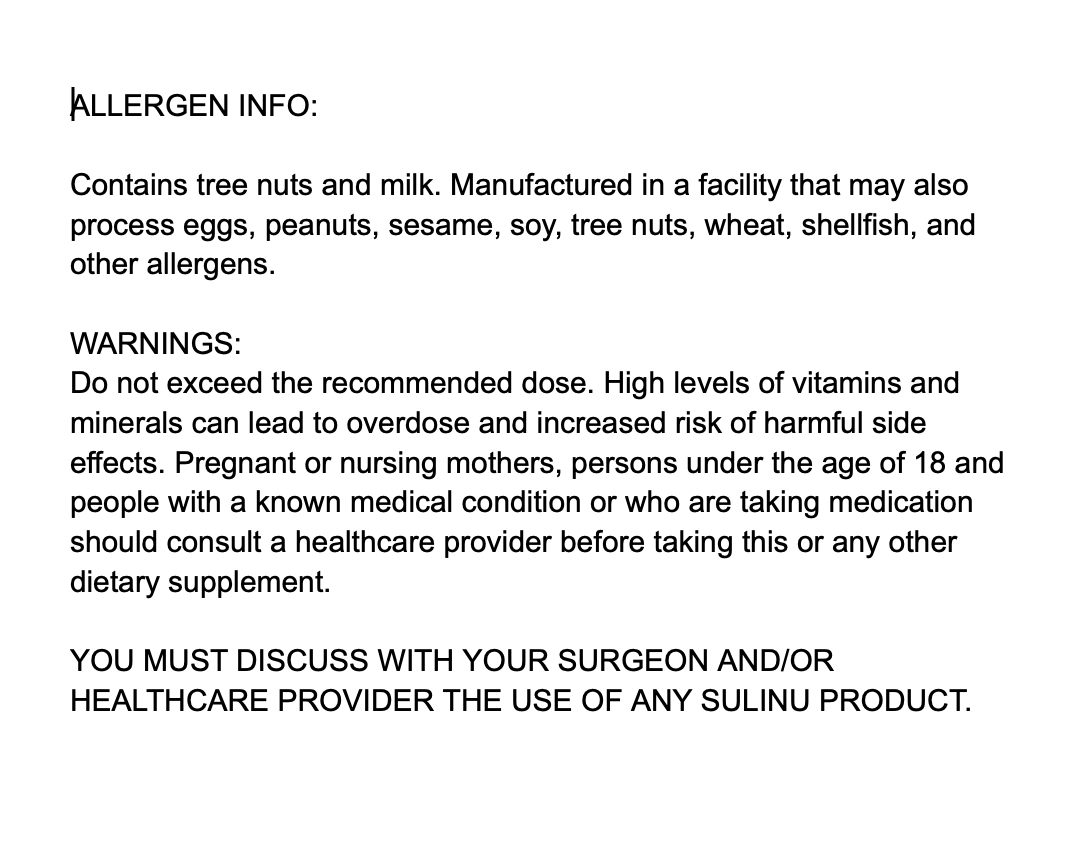
Significantly. A standard multivitamin is formulated for general health maintenance, not the demands of surgical recovery. Before + After Vitals addresses factors like nutrient depletion from anesthesia, absorption disruption from post-op medications, and the specific requirements of incision healing.
Medical Disclaimer
This article is intended for general educational purposes only and does not constitute medical advice, diagnosis, or treatment recommendations. Every facelift recovery is unique and depends on your individual health history, procedure specifics, and the surgical team's guidance.
Consult your plastic surgeon and healthcare provider before starting, stopping, or changing any supplement protocol — particularly in the weeks surrounding surgery.
Do not ignore post-operative instructions based on general information found online. Contact your surgeon promptly if you experience any unusual symptoms during recovery.


![A promotional image for The PREP STARTER Kit [free shipping], showcasing its key benefits such as protein, vitamins, minerals, amino acids, probiotics, and enzymes. Featured as an essential pre-op supplement in your surgery prep kit, the product bag is displayed alongside fresh green vegetables on a light background.](http://www.sulinu.com/cdn/shop/files/12.jpg?v=1776452906&width=1080)
![A hand holds a scoop of white powder above an open bag of The PREP STARTER Kit [free shipping]. Text highlights that this research-based formula aids surgery recovery, delivers 19g of protein and 29 carefully selected ingredients per daily scoop—making The PREP STARTER Kit an essential addition to any surgery prep kit.](http://www.sulinu.com/cdn/shop/files/3.jpg?v=1776452906&width=1080)
![A ⭐BEST VALUE⭐ The Prep + Recovery Bundle [free shipping] package is displayed on a white background with text highlighting its clinical benefits and international sourcing, emphasizing improved nerve regeneration, better protein absorption, and faster healing—making it an ideal addition to any surgical recovery kit.](http://www.sulinu.com/cdn/shop/files/2.jpg?v=1776452906&width=1080)
![A woman’s face in close-up appears on the left. On the right, text explains post-surgery risks: metabolism rises, appetite drops, food intake falls, and nutrient needs soar. The message: your body needs more while you eat less—making The PREP STARTER Kit [free shipping] essential for recovery.](http://www.sulinu.com/cdn/shop/files/9.jpg?v=1776452906&width=1080)
![Text graphic explaining consequences of not fueling the healing body: slower wound healing, higher infection risk, more bruising, increased fatigue, pain, and constipation. Highlights that nutrition is essential for recovery but often overlooked—using The PREP STARTER Kit [free shipping] can help support your body and make all the difference for surgical recovery.](http://www.sulinu.com/cdn/shop/files/10.jpg?v=1776452906&width=1080)
![A smiling woman holding a box labeled The PREP STARTER Kit [free shipping] stands beside text explaining the purpose behind creating The PREP STARTER Kit: to support post-surgery recovery by providing targeted nutrition backed by real clinical data, serving as an essential surgery protein guide for patients seeking optimal outcomes.](http://www.sulinu.com/cdn/shop/files/14.jpg?v=1776452906&width=1080)
![A person in a fitted outfit poses against a neutral background. Text reads ⭐BEST VALUE⭐ The Prep + Recovery Bundle [free shipping]. Discover the ultimate surgery prep bundle—nutrition for cosmetic surgery and essential support for your recovery kit.](http://www.sulinu.com/cdn/shop/files/UltimateSurgeryBundle-Sulinu.png?v=1775162796&width=537)