This article is for informational purposes only and is not a substitute for medical advice from your surgeon.
BBL fluffing is the term surgeons and patients use for the final stretch of Brazilian Butt Lift recovery, when the last of the swelling resolves and the results settle into their natural, permanent shape. It's one of the most searched-for terms in BBL recovery, and also one of the most misunderstood.
This guide walks through what BBL fluffing actually is, why it happens, the timeline you can expect, and what supports your body through the process.
What Is BBL Fluffing?
BBL fluffing is the stage of Brazilian Butt Lift recovery when residual swelling fully resolves, and the transferred fat settles into its final, natural-looking shape. During a BBL, a surgeon removes fat from another area of the body through liposuction and transfers it into the buttocks. In the weeks that follow, the area is swollen, and the newly transferred fat hasn't yet integrated with the surrounding tissue. As that swelling comes down and the fat graft stabilizes, the shape softens and "fluffs" into what most patients think of as their real result.
This stage typically begins around the three-month mark, though the exact timing varies by patient, surgical technique, and how closely activity and compression guidelines were followed during early recovery.
Why Does It Look Uneven or Firm Before It Fluffs?
Immediately after a BBL and for the first several weeks that follow, it's common for the buttocks to feel firm, look uneven from side to side, or appear larger or more swollen than the surgeon and patient discussed beforehand. This is expected, not a sign that something went wrong.
Swelling doesn't resolve evenly across the treated area, which is why one side may soften faster than the other in early recovery. Firmness during this window is largely swelling and the body's inflammatory response to both the liposuction sites and the graft sites, not a preview of the final shape. Judging the outcome of a BBL in the first six to eight weeks is one of the most common sources of unnecessary patient anxiety, since the tissue is still actively changing.
Why Fat Graft Survival Matters More Than the Swelling
Swelling gets most of the attention early on, but the bigger driver of how a BBL ultimately looks is what happens to the transferred fat at a cellular level.
Not every fat cell that's transferred during a BBL establishes a blood supply in its new location. A portion is naturally reabsorbed by the body in the weeks and months after surgery, while the fat that does successfully integrate develops its own blood supply and becomes part of the tissue long-term. This is a normal, expected part of fat grafting, and it's a major reason surgeons often transfer more fat than the exact target volume, to account for some natural loss during this process.
This graft integration process is also why final results take months rather than weeks to appear. The body isn't just resolving swelling; it's determining, cell by cell, which of the transferred fat will remain.
The BBL Recovery and Fluffing Timeline
Fluffing is one stage within a longer recovery process. Here's generally what to expect at each point.
The first two weeks
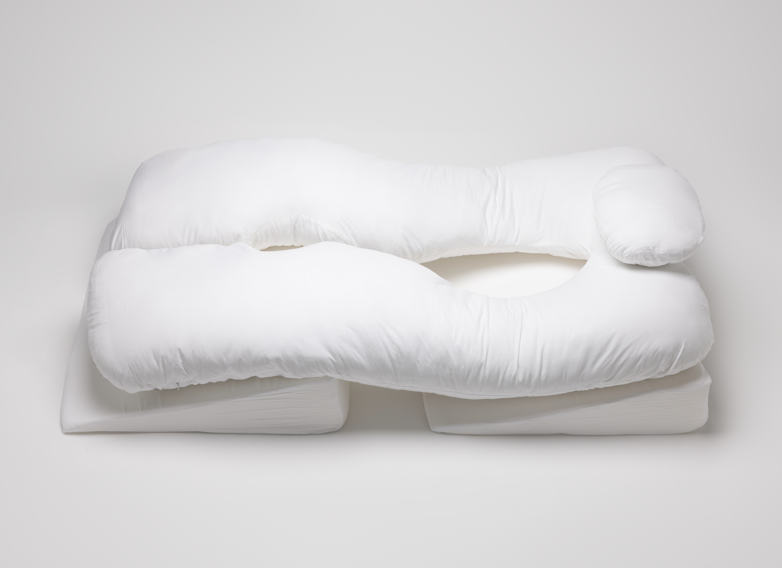
Swelling, bruising, and soreness are at their peak. A compression garment is worn continuously, sitting is avoided or heavily modified with a BBL pillow, and side or stomach sleeping is typically required.
Two to six weeks
Swelling gradually decreases as new blood vessels form to support the grafted fat. Most patients return to work and daily routines during this window, though heavy lifting and prolonged sitting are still restricted.
Six to twelve weeks
Discomfort has largely resolved by this point, and many surgeons clear patients to resume normal sitting and light exercise. The shape may still look firm or slightly uneven as swelling continues its slower resolution beneath the surface.
Around three months: entering the fluffing stage
This is when most patients notice the shift. Skin that felt stiff begins to soften, remaining swelling fades, and the curves start to look more natural and less inflated.
Four to six months
Fluffing continues, with the shape becoming progressively softer and more settled. Some asymmetry between sides may still be resolving during this window.
Six to eight months and beyond
Most patients see their final result somewhere in this range, once fat graft integration is complete and any remaining swelling has fully resolved. A well-executed BBL is considered a long-lasting result when a stable weight is maintained afterward.
Signs Your Recovery Needs a Closer Look
Most of what feels alarming during BBL recovery, including firmness, temporary asymmetry, and slow-changing shape, falls within the normal range described above. In some cases, though, symptoms point to something that needs a surgeon's evaluation rather than time alone.
Hard, painful lumps that don't soften over time, rather than gradually fading, can indicate fat necrosis, which occurs when transferred fat cells don't survive and calcify instead. Increasing pain, redness, warmth, or drainage at any incision site are signs of possible infection. Sudden, severe swelling on one side only, particularly with pain, can point to a seroma or hematoma that may need drainage. Any of these warrant a call to the surgical team rather than a wait-and-see approach.
Factors That Influence How You Fluff
Several variables affect how smoothly and predictably fluffing unfolds: the surgical technique and where fat was placed, how consistently compression garments and activity restrictions were followed in early recovery, individual healing factors like skin elasticity and inflammatory response, and nutritional status throughout the process.
Because fat graft survival and tissue remodeling are metabolically demanding processes, the body's nutrient intake during recovery has a direct influence on how efficiently it can complete this work. This is one of the few variables patients have meaningful control over during recovery.

Before + After Vitals: Supporting Your Body Through the Fluffing Process
Fat graft survival and tissue remodeling are both nutrient-intensive processes. The body needs protein to build and maintain the tissue the transferred fat is integrating into, along with specific vitamins and minerals that support circulation, collagen formation, and immune function during recovery. Some research suggests that many people enter surgery with lower nutrient stores than they realize, which can affect how efficiently the body supports fat graft integration and resolves swelling in the months that follow.
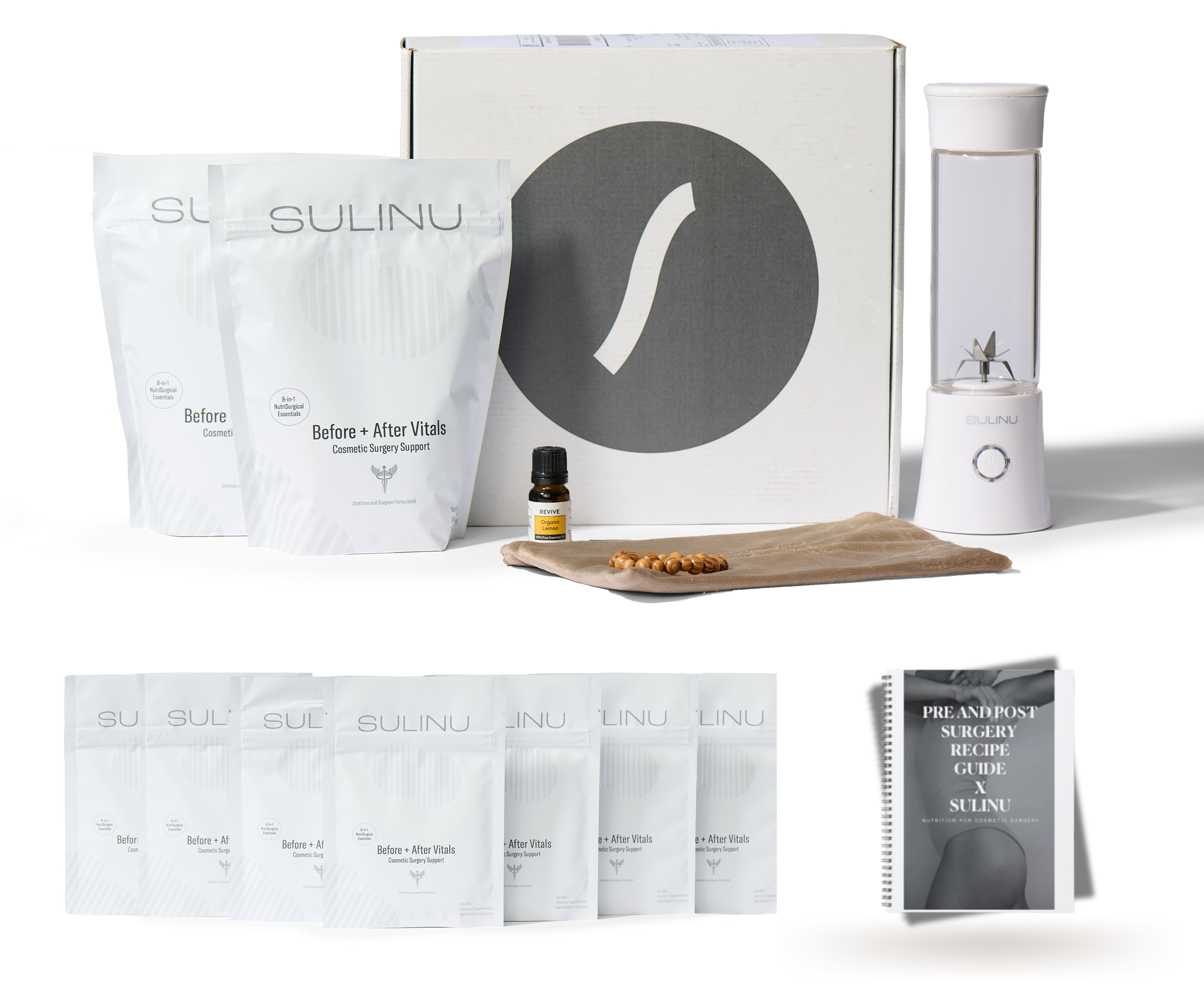
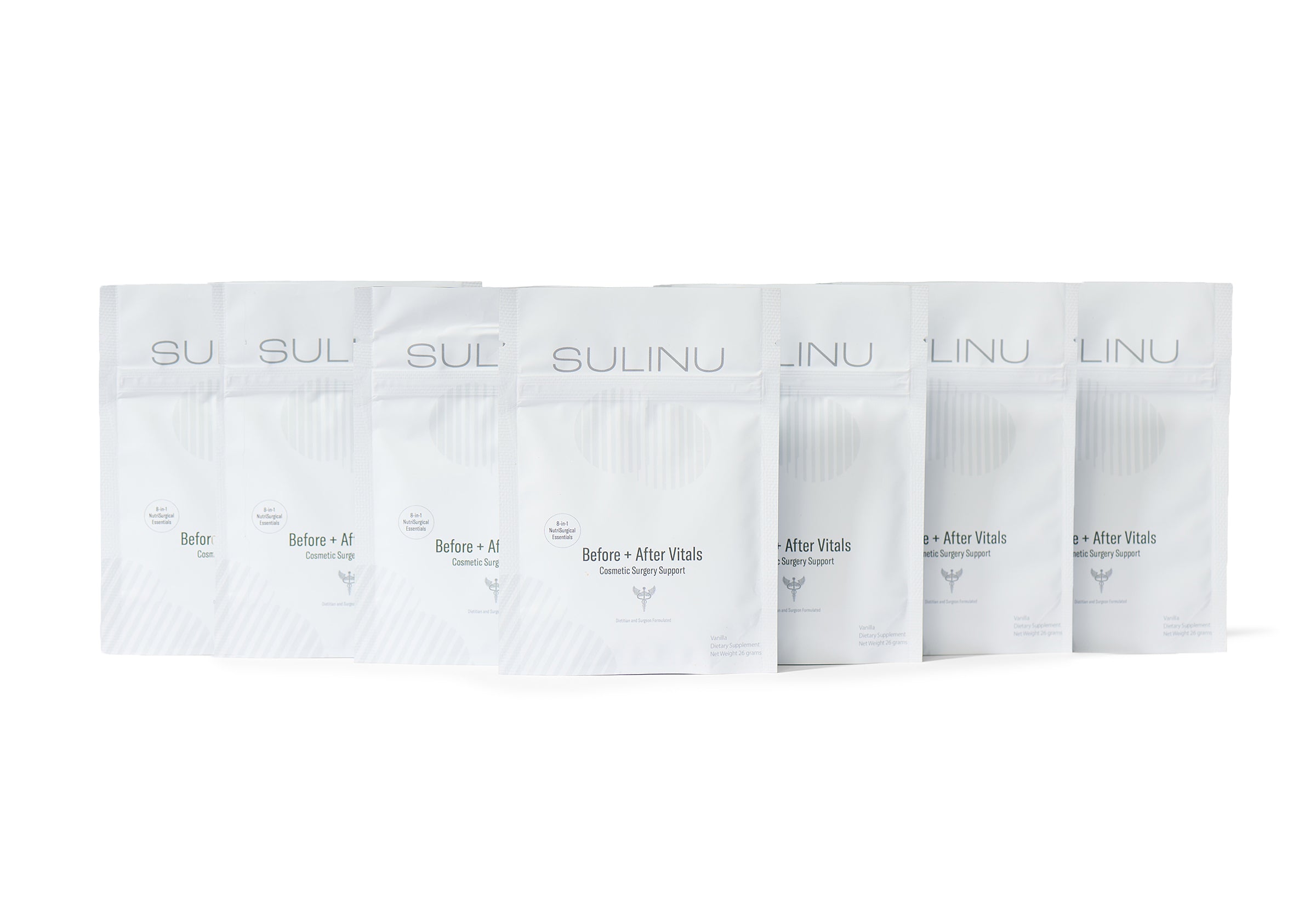
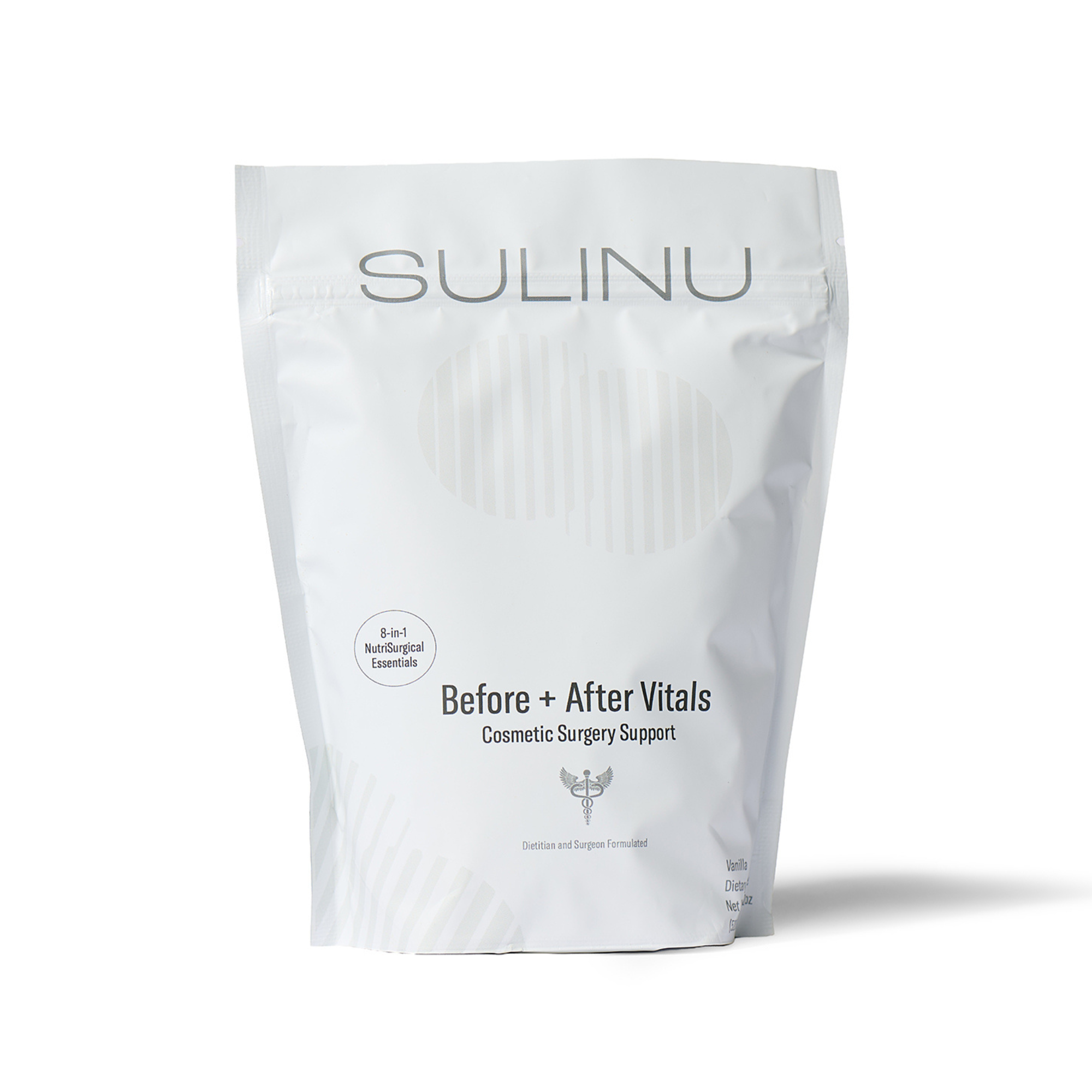
This is where Before + After Vitals was designed to fill a specific gap in surgical recovery. Before + After Vitals is the world's first and only pre and post-surgery supplement formulated specifically for recovery following surgery.
Rather than relying on a standard multivitamin or a generic protein powder, Before + After Vitals combines both micronutrients and macronutrients in a single formula.
BioEnhanced Vitamin C
A patented, rapid-absorbing form that some research suggests achieves significantly higher tissue retention than standard ascorbate formulations. Vitamin C is foundational to collagen synthesis, immune defense, and antioxidant protection during the inflammatory phase, all of which directly influence how your body manages bruising, swelling, and the quality of scar tissue over time. It's also formulated to avoid the GI side effects that typically make high-dose vitamin C difficult to tolerate post-surgery.
Hydrolyzed Collagen Peptides
A patented version that some studies indicate may support meaningful improvement in skin elasticity in a matter of weeks. Collagen peptides don't just add collagen. They signal skin cells to produce more of their own. This matters at every stage: for swelling resolution as tissues remodel, for bruising clearance as vascular integrity is restored, and for scar quality as new tissue architecture forms.
Protein + Proteolytic Enzymes
Patented enzymes that, when combined with protein, some research suggests, can help double total amino acid absorption. Amino acids are the building blocks your body uses to repair incision tissue, clear inflammatory debris, and build new scar architecture. Getting more of them absorbed, not just consumed, is the goal.
Biome Synbiotics
Surgery disrupts gut health, and disrupted gut health disrupts everything else: nutrient absorption, immune function, inflammatory response. Prolonged bruising and swelling are often downstream of a gut that isn't processing and delivering nutrients efficiently. This patented prebiotic and probiotic blend is designed to survive stomach acid and arrive active in the gut, supporting the digestive foundation that makes all other healing nutrients work.
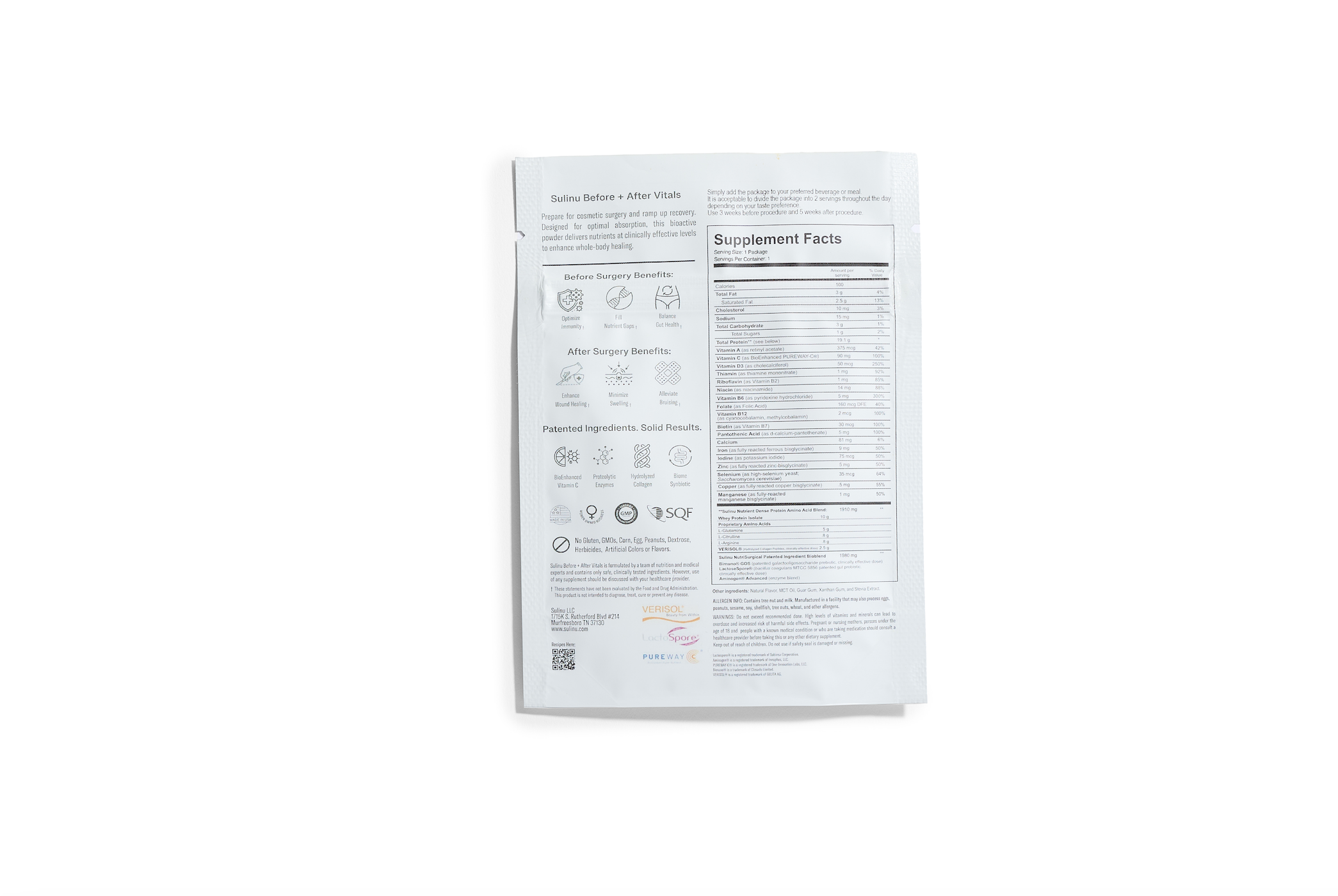
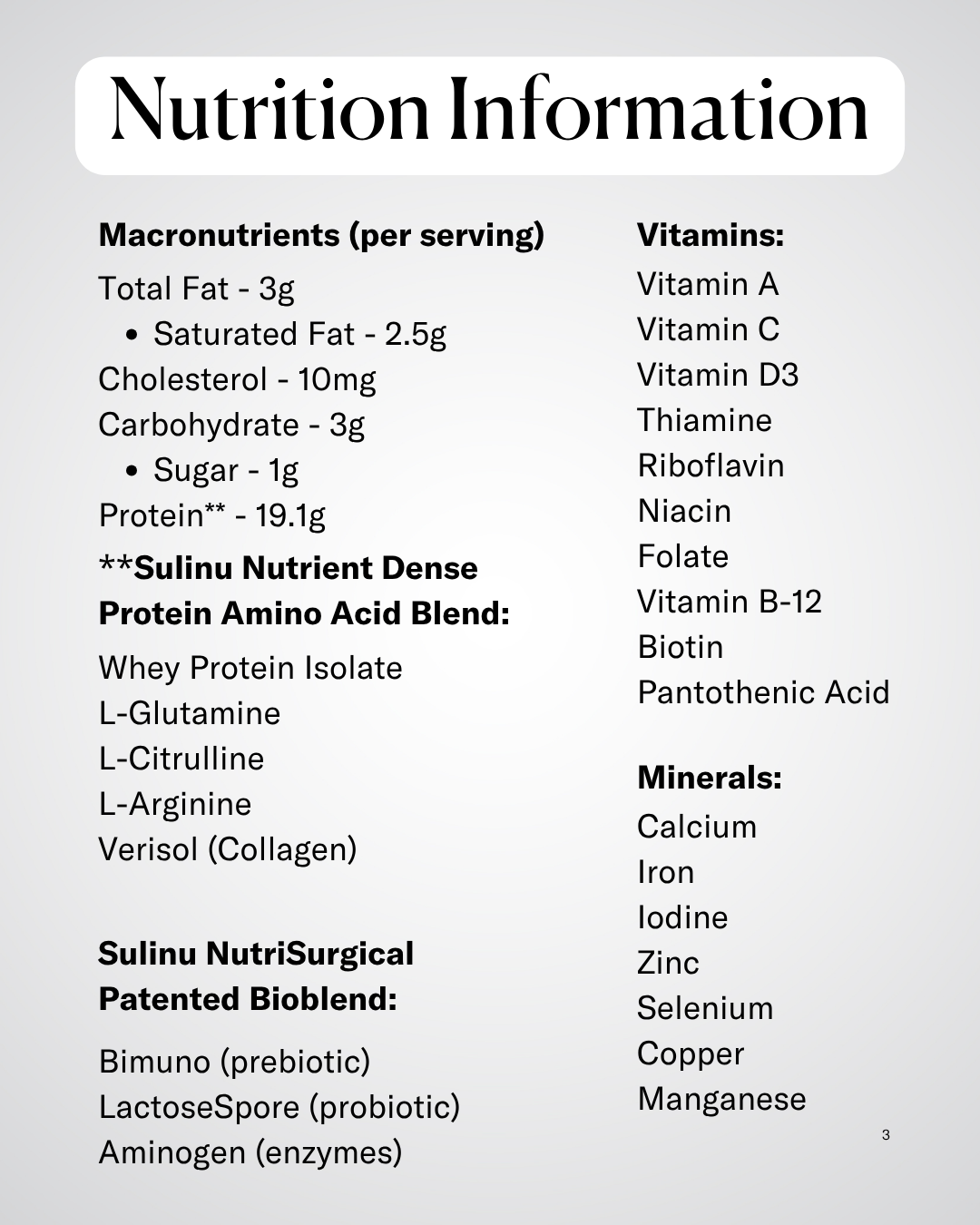
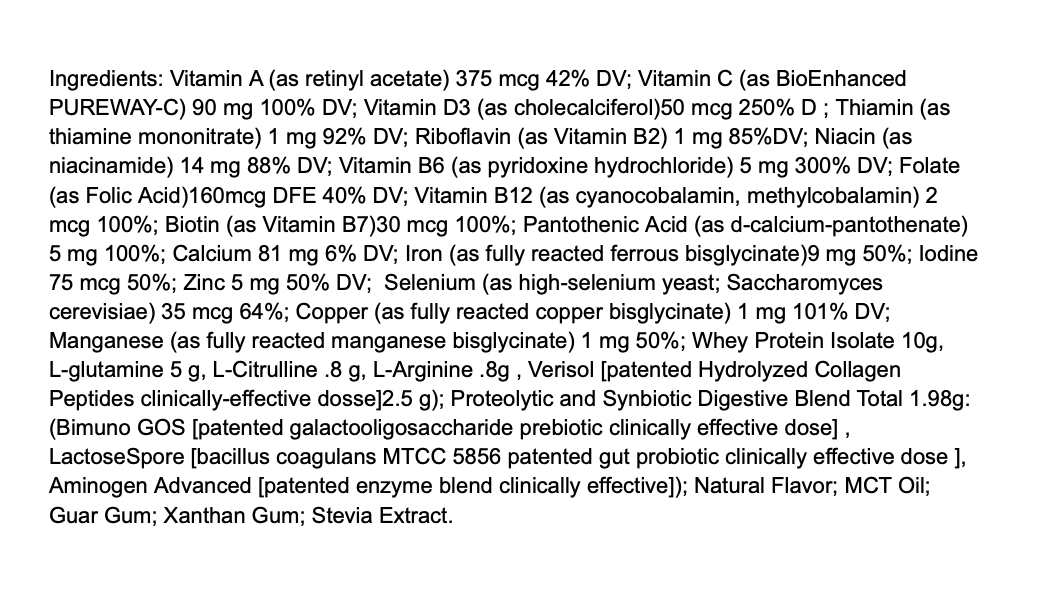
The formula also includes targeted amino acids (L-glutamine, L-citrulline, L-arginine), essential vitamins (A, B-complex, C, D3), and minerals (zinc, copper, manganese, iron) — all in clinically relevant dosages, not token inclusions.
No GMOs. No gluten. No artificial colors. No ingredients that interfere with each other. Everything in Before + After Vitals is there because it has a specific job in your recovery.
Scoop. Mix. Heal.

How much do I need to support my surgery recovery?
Our recommended protocol for post-surgical healing is at least:
1 bag before surgery
1 bag after surgery
Support your surgery recovery with our VIP Bundle and get everything you need for before and after surgery. You can also get a discount with a subscription plan.

Prepping for a BBL?
Get everything you need to start prepping your body before surgery - our highly rated supplement, travel-ready packs, and the guide that tells you exactly how to eat right leading up to your procedure.
Already Fluffing or Further Along?
Have you already had surgery and are wondering if this will still help? The short answer: yes, absolutely! Your tissue takes up to one year to heal. Starting now still counts.
Tips to Support a Smooth Fluffing Process
Alongside nutrition, a few recovery habits directly influence how smoothly the fluffing stage unfolds.
Wear your compression garment as directed.
Compression supports circulation and helps manage swelling while the fat graft stabilizes. Stopping early, even once things feel comfortable, can slow this process down.
Keep pressure off your results.
Sitting directly on the buttocks, especially in the first eight weeks, can compress the fat graft before it has established blood supply, which may affect how evenly the area fluffs. A BBL pillow and side or stomach sleeping help protect the area during this window.
Stay lightly active.
Gentle walking supports circulation, which plays a role in swelling resolution and graft integration. This is different from returning to strenuous exercise, which should wait for surgeon clearance.
Give it time before judging the shape.
The firmness and asymmetry that feel discouraging at four or six weeks are frequently gone by three months. Comparing week six to the eventual result is one of the most common sources of unnecessary recovery stress.
Keep every follow-up appointment.
Regular check-ins let a surgeon track healing and catch anything outside the normal range, like the warning signs above, before it becomes harder to manage.
FAQs: BBL Fluffing
What does fluffing feel like?
As fluffing sets in, the firmness that characterized early recovery gives way to softer, more natural-feeling tissue. Swelling is largely gone, and the shape starts to look like the intended result rather than a swollen version of it.
When does fluffing start, and how long does it last?
Fluffing typically begins around three months post-surgery and continues for several months, with most patients seeing their final result between six and eight months out.
Does the buttocks get smaller during fluffing?
It can appear that way. Some of the transferred fat is naturally reabsorbed rather than integrating long-term, so a small amount of size reduction during fluffing is expected and doesn't mean the surgery underperformed.
Can nutrition really affect how I fluff?
Fat graft survival and tissue remodeling both depend on the body having adequate protein, vitamins, and minerals available to do the work. Supporting those nutritional needs during recovery is one of the more controllable factors in how the process unfolds.
Final Thoughts
BBL fluffing isn't a separate procedure or a sign that anything went wrong along the way. It's the final phase of a process that started in the operating room, where the body determines which transferred fat cells will remain and resolves the last of the swelling around them.
Patience, consistent compression and activity habits, and supporting the body's nutritional needs during recovery are the factors most within a patient's control while that process plays out. A structured NutriSurgical protocol like Before + After Vitals is designed specifically to support that window, from the day surgery is booked through the months it takes for results to fully settle in.
Medical Disclaimer
The information provided in this article is for general educational purposes only and is not intended to constitute medical advice, diagnosis, or treatment.
Every individual's healing process is unique, and outcomes vary based on a wide range of factors, including health status, surgical technique, and post-operative care. Always follow the specific guidance of your board-certified plastic surgeon and medical team.
If you experience any concerning symptoms during recovery — including signs of infection, wound separation, or unusual pain — contact your surgical team immediately.
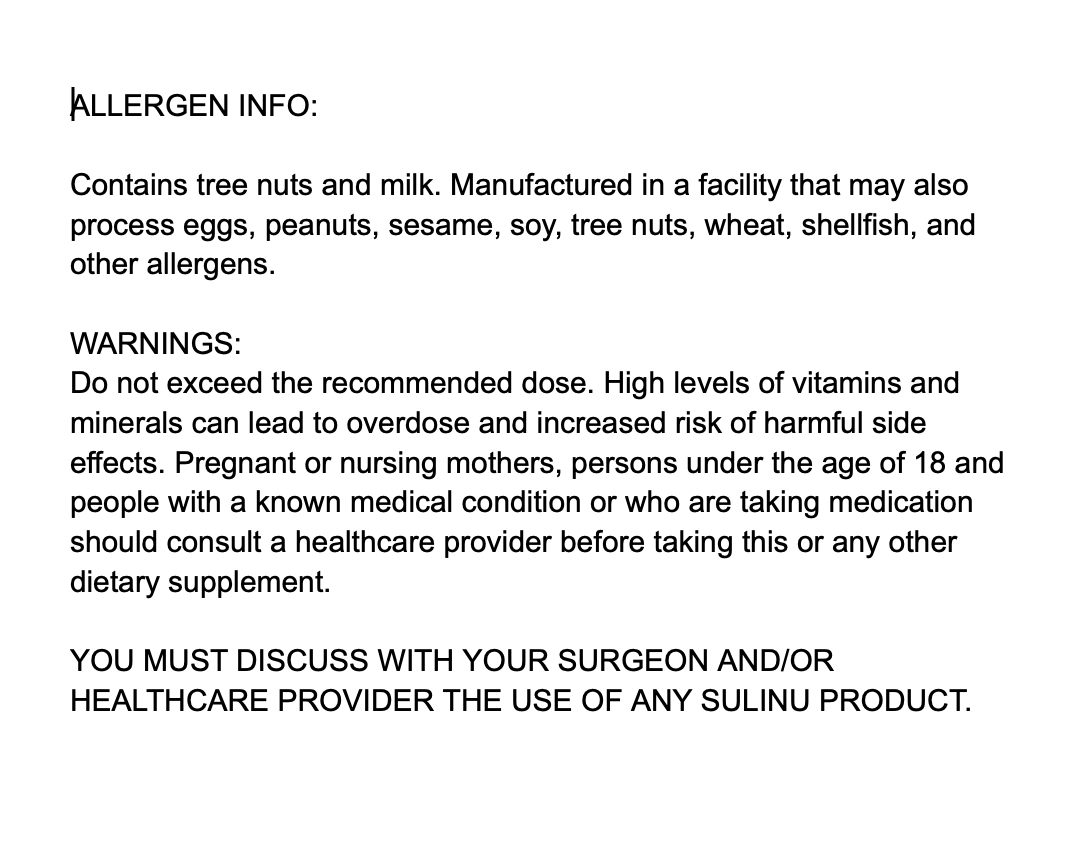
These statements have not been evaluated by the Food and Drug Administration. Sulinu's Before + After Vitals is not intended to diagnose, treat, cure, or prevent any disease.

![A promotional image for The PREP STARTER Kit [free shipping], showcasing its key benefits such as protein, vitamins, minerals, amino acids, probiotics, and enzymes. Featured as an essential pre-op supplement in your surgery prep kit, the product bag is displayed alongside fresh green vegetables on a light background.](http://www.sulinu.com/cdn/shop/files/12.jpg?v=1776452906&width=1080)
![A hand holds a scoop of white powder above an open bag of The PREP STARTER Kit [free shipping]. Text highlights that this research-based formula aids surgery recovery, delivers 19g of protein and 29 carefully selected ingredients per daily scoop—making The PREP STARTER Kit an essential addition to any surgery prep kit.](http://www.sulinu.com/cdn/shop/files/3.jpg?v=1776452906&width=1080)
![A ⭐BEST VALUE⭐ The Prep + Recovery Bundle [free shipping] package is displayed on a white background with text highlighting its clinical benefits and international sourcing, emphasizing improved nerve regeneration, better protein absorption, and faster healing—making it an ideal addition to any surgical recovery kit.](http://www.sulinu.com/cdn/shop/files/2.jpg?v=1776452906&width=1080)
![A woman’s face in close-up appears on the left. On the right, text explains post-surgery risks: metabolism rises, appetite drops, food intake falls, and nutrient needs soar. The message: your body needs more while you eat less—making The PREP STARTER Kit [free shipping] essential for recovery.](http://www.sulinu.com/cdn/shop/files/9.jpg?v=1776452906&width=1080)
![Text graphic explaining consequences of not fueling the healing body: slower wound healing, higher infection risk, more bruising, increased fatigue, pain, and constipation. Highlights that nutrition is essential for recovery but often overlooked—using The PREP STARTER Kit [free shipping] can help support your body and make all the difference for surgical recovery.](http://www.sulinu.com/cdn/shop/files/10.jpg?v=1776452906&width=1080)
![A smiling woman holding a box labeled The PREP STARTER Kit [free shipping] stands beside text explaining the purpose behind creating The PREP STARTER Kit: to support post-surgery recovery by providing targeted nutrition backed by real clinical data, serving as an essential surgery protein guide for patients seeking optimal outcomes.](http://www.sulinu.com/cdn/shop/files/14.jpg?v=1776452906&width=1080)
![A person in a fitted outfit poses against a neutral background. Text reads ⭐BEST VALUE⭐ The Prep + Recovery Bundle [free shipping]. Discover the ultimate surgery prep bundle—nutrition for cosmetic surgery and essential support for your recovery kit.](http://www.sulinu.com/cdn/shop/files/UltimateSurgeryBundle-Sulinu.png?v=1775162796&width=537)