If you're researching what to expect before your facelift, bruising is probably high on your list of worries, and for good reason. It's one of the most visible parts of recovery, and it can look far more dramatic than most patients are prepared for. The good news: knowing what's coming makes it far less alarming when it actually happens.
Here's the thing nobody quite prepares you for: the bruising often looks worse than the swelling, the swelling often looks worse than the pain, and none of it is a reliable preview of your final result. Bruising is simply the most visually loud part of a process that's mostly happening quietly underneath the surface.
This guide walks through why facelift bruising happens, what it actually looks like week by week, what helps it move along faster, and when it's worth picking up the phone — so you know exactly what's ahead before you're in it.
Why Facelift Bruising Is So Dramatic (Blame Your Face)
Not all bruising is created equal, and facial bruising in particular has a reputation for being the showiest kind. There's a reason for that.
Your face carries an enormous concentration of blood vessels close to the surface, packed into skin that's thinner than almost anywhere else on your body. During a facelift, your surgeon is lifting, repositioning, and tightening tissue in and around that dense vascular network. Some bleeding into the surrounding tissue is an unavoidable part of that process. It's not a sign anything went wrong; it's a sign your face is exactly as vascular as it's supposed to be.
Add in gravity, and things get more colorful. Blood doesn't stay put. It travels downward, which is why bruising after a facelift often migrates, starting near the incision lines and drifting toward the jaw, neck, or even the collarbone over the following days. This is normal, if occasionally alarming to witness in real time.
Thin, delicate under-eye and cheek skin bruises more visibly than tougher skin elsewhere, which is part of why facial bruising always seems to look worse than body bruising, even when the underlying trauma is comparable.
The extent of your specific procedure matters too. A more extensive lift, or one combined with additional work like a neck lift or fat grafting, generally means more tissue manipulation and more noticeable bruising. Your own vascular anatomy and skin thickness factor in as well, which is why two people having what looks like the same procedure can have noticeably different bruising experiences. Neither pattern is inherently better or worse. It's just different.
The Bruising Color Timeline: A Field Guide
Consider this your decoder ring for whatever shade you're currently sporting.
Days 1-3: Peak Drama
This is prime real estate for deep purple, blue-black, and "should I be concerned" tones. Swelling usually peaks alongside the bruising during this window, which doesn't help the overall effect. This is the most intense phase, and also the shortest — hang in there.
Days 4-7: The Shift Begins
Blue and purple start breaking down into murkier greenish-blue tones. Some research suggests this color change reflects your body's natural process of breaking down and reabsorbing blood pigments beneath the skin. It's not pretty, but it's progress.
Week 2: Yellow-Green Territory
This is the "sickly" phase most people don't warn you about. Bruising fades into yellow, green, and light brown tones — visually less alarming than deep purple, but often when patients feel most impatient, since the bruising has been around for a while and swelling hasn't fully caught up.
Weeks 3-4: The Fade-Out
For most patients, visible bruising has largely resolved by this point, though some subtle discoloration — particularly under the eyes or along the jaw — can linger a bit longer. Makeup is generally cleared for use around this stage, once your surgeon gives the go-ahead.
Beyond Week 4
Any remaining discoloration at this point tends to be faint and easily managed with camouflage makeup. If bruising is still prominent well past the one-month mark, that's worth a conversation with your surgical team rather than something to wait out on your own.
Individual timelines vary considerably based on your skin type, the extent of your procedure, and your own healing biology, so treat this as a general roadmap rather than a strict schedule.
A few patterns worth knowing in advance: it's fairly common for the deepest, most dramatic coloring to appear a day or two after surgery rather than immediately, as blood works its way to the surface. Under-eye bruising tends to linger a bit longer than bruising elsewhere on the face, since the skin there is thinner. And morning-to-evening fluctuation is normal throughout. Bruising often looks mildest first thing in the morning and creeps back up by evening, purely as a function of gravity.
What Actually Helps Facelift Bruising (Beyond Waiting It Out)
You can't skip the bruising process, but you can influence how quickly it resolves and how uncomfortable it feels along the way.
Elevate, elevate, elevate.
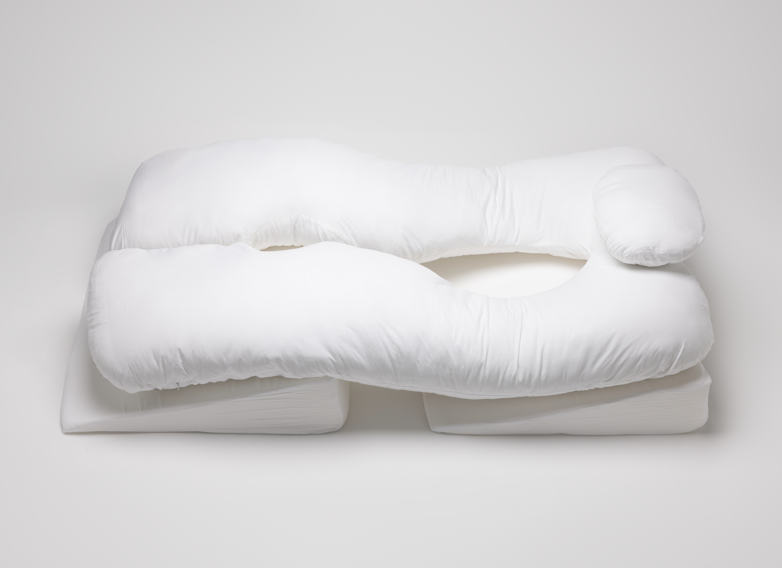
Sleeping in the doctor-recommended 30-45 elevated positionYour body does its most meaningful repair work while you're asleep. Skimping on rest can genuinely slow down how efficiently everything resolves.
Cold, then warm.
Cold compresses in the first 48-72 hours help constrict blood vessels and limit the spread of bruising. After that initial window, some surgeons recommend transitioning to gentle warmth to encourage circulation — but only once you've gotten explicit clearance to do so.
Skip the blood thinners and alcohol.
Aspirin, ibuprofen, fish oil, vitamin E, certain herbal supplements, and alcohol can all thin the blood or dilate vessels, worsening bruising. Your surgeon will give you a specific list of what to avoid and when — follow it closely, especially in the days leading up to surgery.
Protect your skin from the sun.
Bruised and healing skin is more prone to pigment changes when exposed to UV light. SPF isn't optional during this stretch, even if you're mostly staying indoors.
Be patient with your position.
Avoid bending over, straining, or any activity that sends extra blood rushing to your face. Your surgeon's activity restrictions exist largely because of this.
Watch your sodium.
Excess sodium encourages fluid retention, which can make bruising and swelling linger.
➡ Nutritional support
Collagen production, immune function, tissue repair — all of it depends on an adequate supply of the right nutrients at the right time. Surgery significantly increases your body's demand for specific vitamins, minerals, and amino acids, while simultaneously impairing absorption through medication side effects and gut disruption. A supplement designed specifically for cosmetic surgery can help support your surgery before you even walk through the door on the morning of.
Before + After Vitals & Nutrition's Role in Bruising Resolution
Here's the part that doesn't get enough attention: what you're eating (and supplementing) during recovery plays a real role in how efficiently your body clears bruising and repairs the surrounding tissue. This is a factor that often gets far less attention than elevation, cold therapy, or activity restrictions, even though it works alongside all of them.
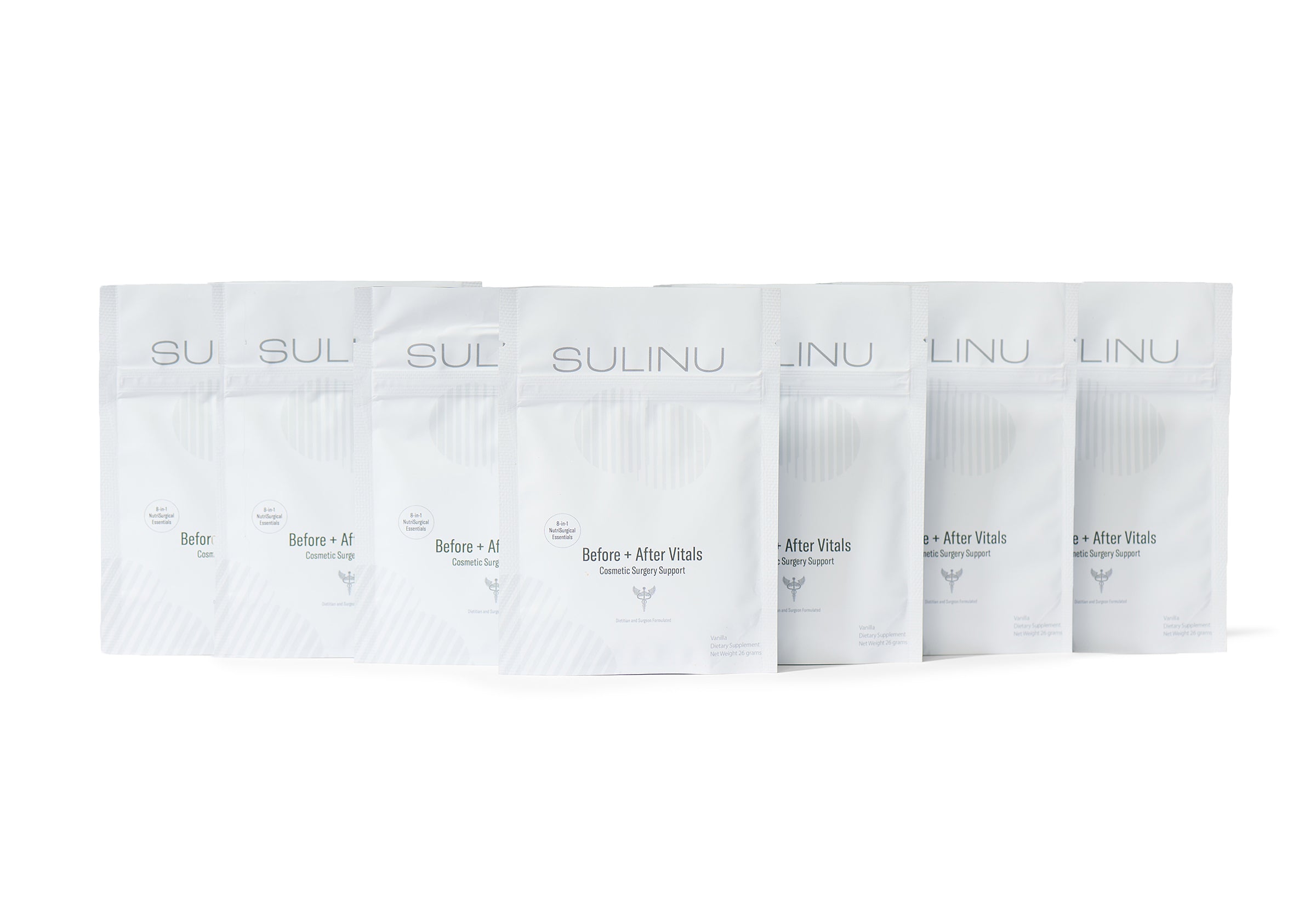
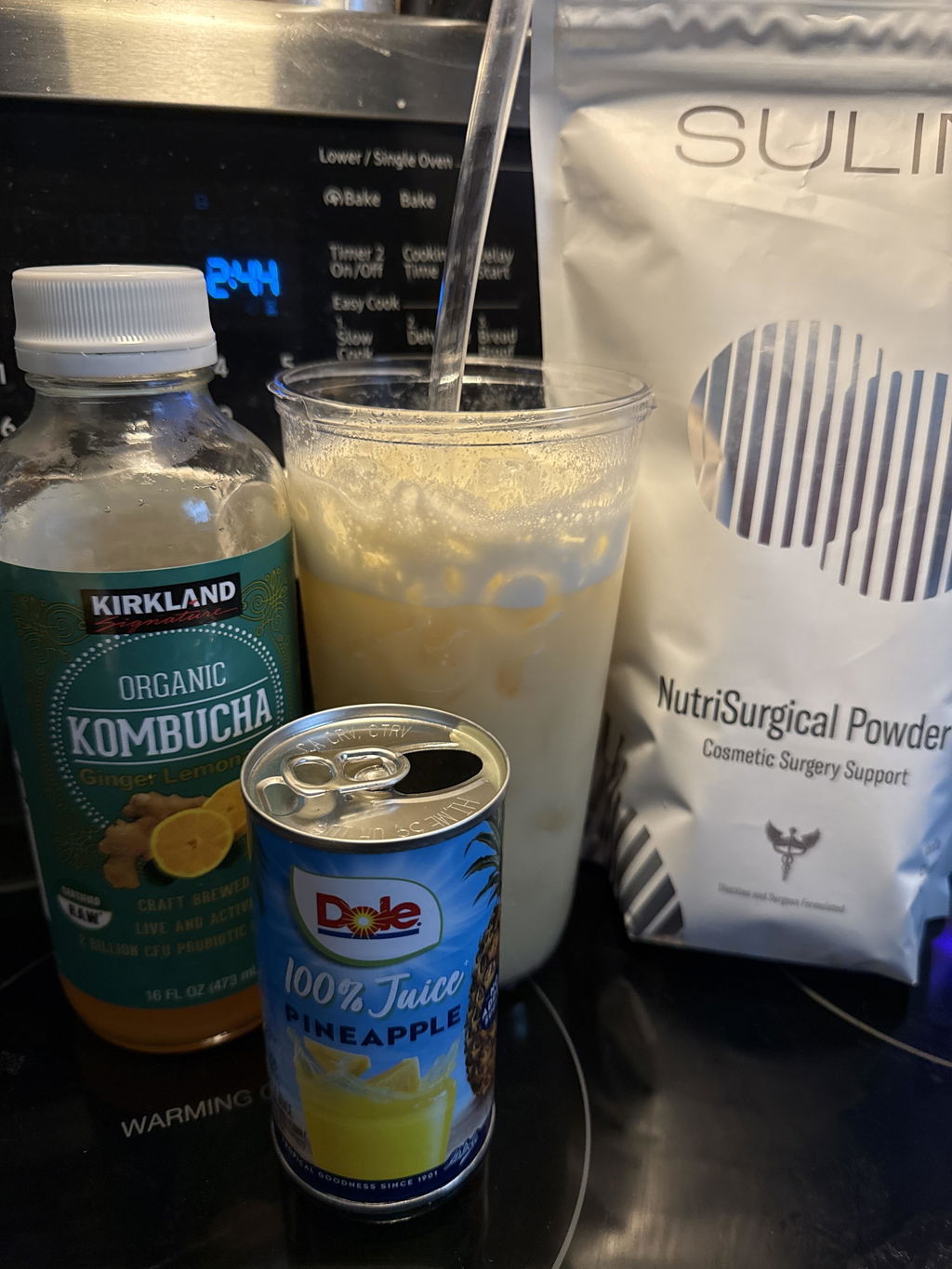
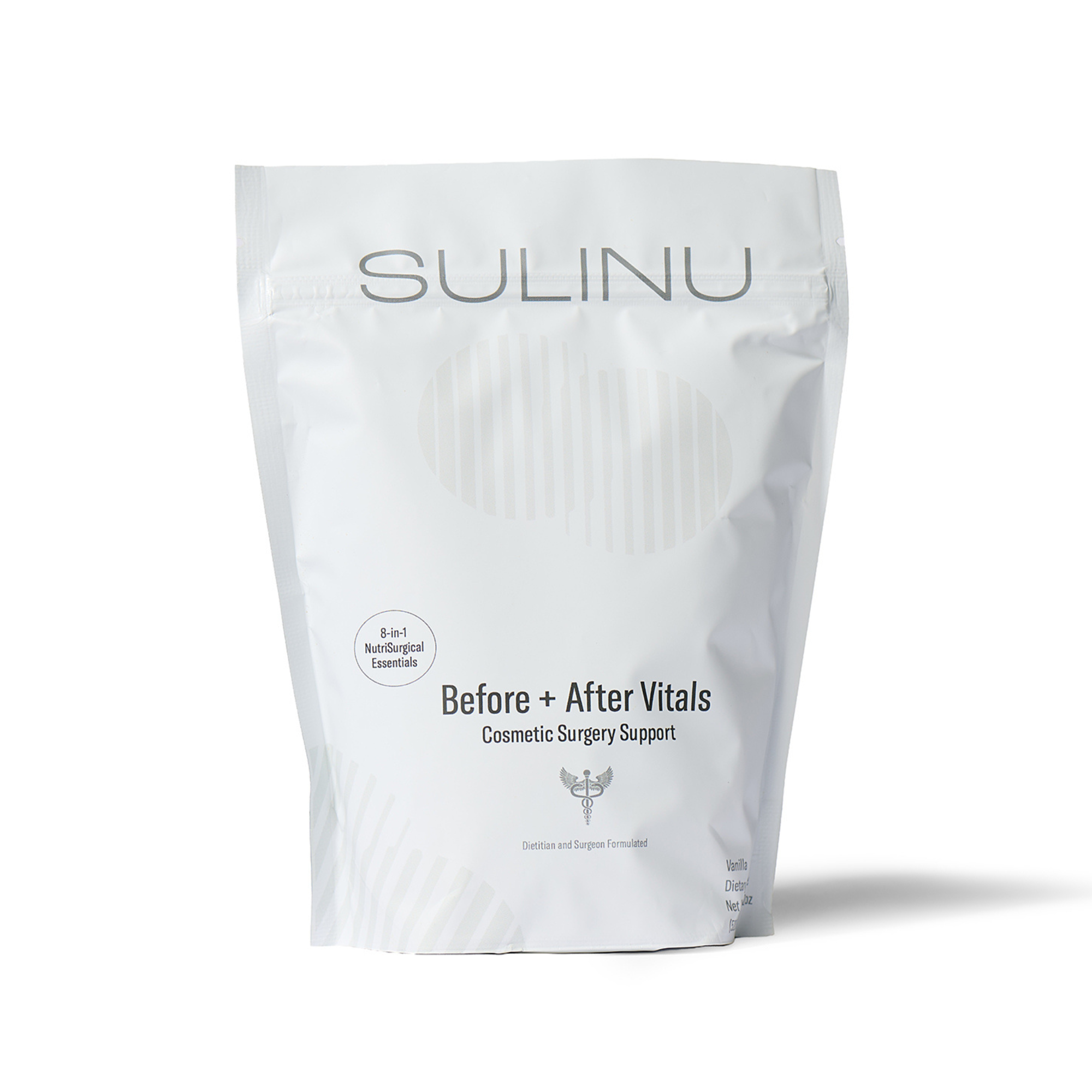
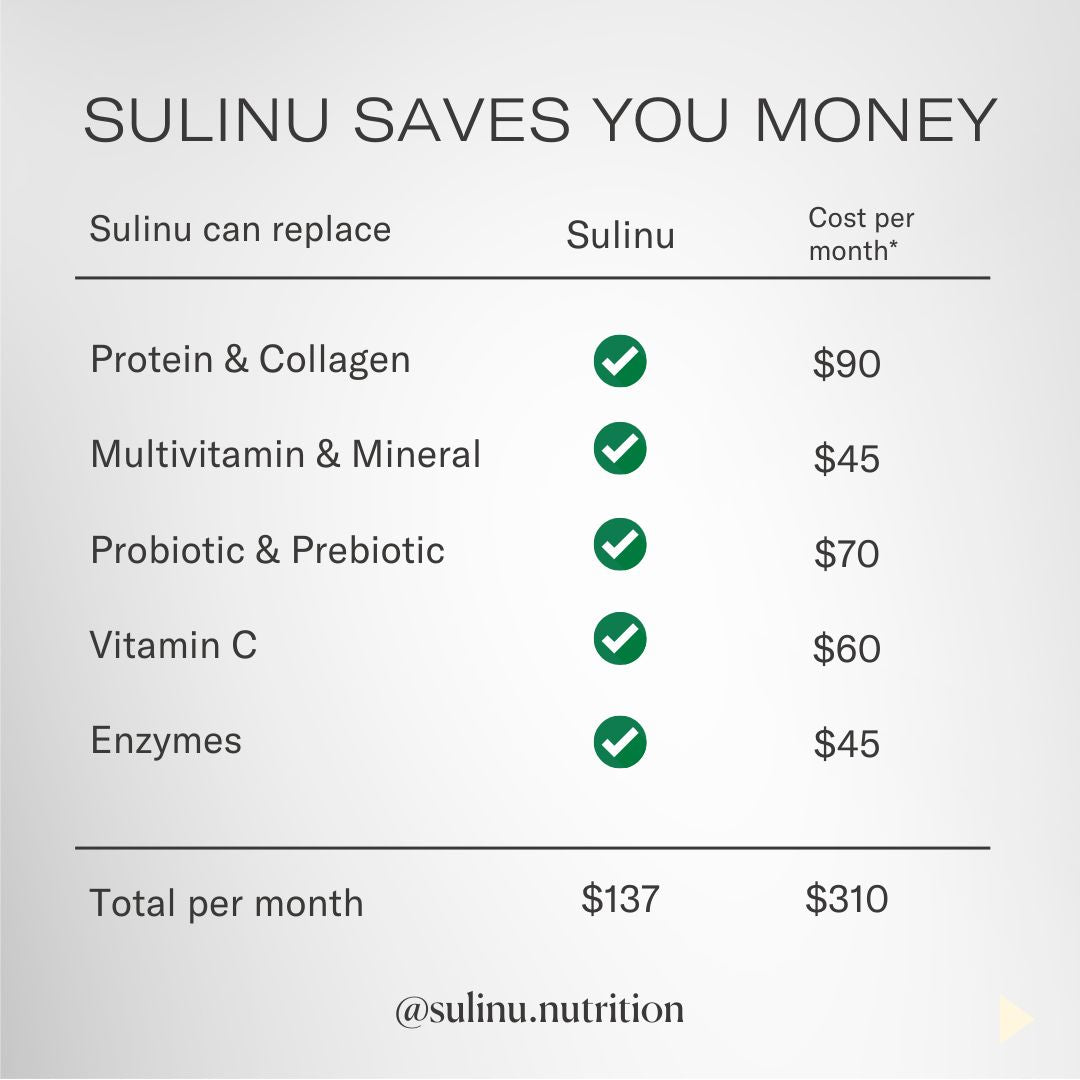
Sulinu's Before + After Vitals is the world's first and only comprehensive wound healing supplement formulated specifically for cosmetic surgery recovery. It operates under the NutriSurgical nutrition framework, a category built around the premise that cosmetic surgery recovery has distinct nutritional demands that general wellness products simply aren't designed to meet.
The formula's core components speak directly to what's happening under your skin during the bruising process. Its BioEnhanced Vitamin C is formulated for enhanced absorption, and some research suggests vitamin C plays a supportive role in both collagen synthesis and the antioxidant protection tissues need while healing. Its proteolytic enzyme blend is designed to support protein absorption, which some studies indicate may help supply the amino acid building blocks used in tissue repair. And its hydrolyzed collagen peptides are intended to support the skin's own collagen production, which factors into vascular and tissue integrity as bruising resolves. There's also a synbiotic blend addressing gut health, since digestion is often disrupted by anesthesia and pain medication in ways that can affect nutrient absorption more broadly.
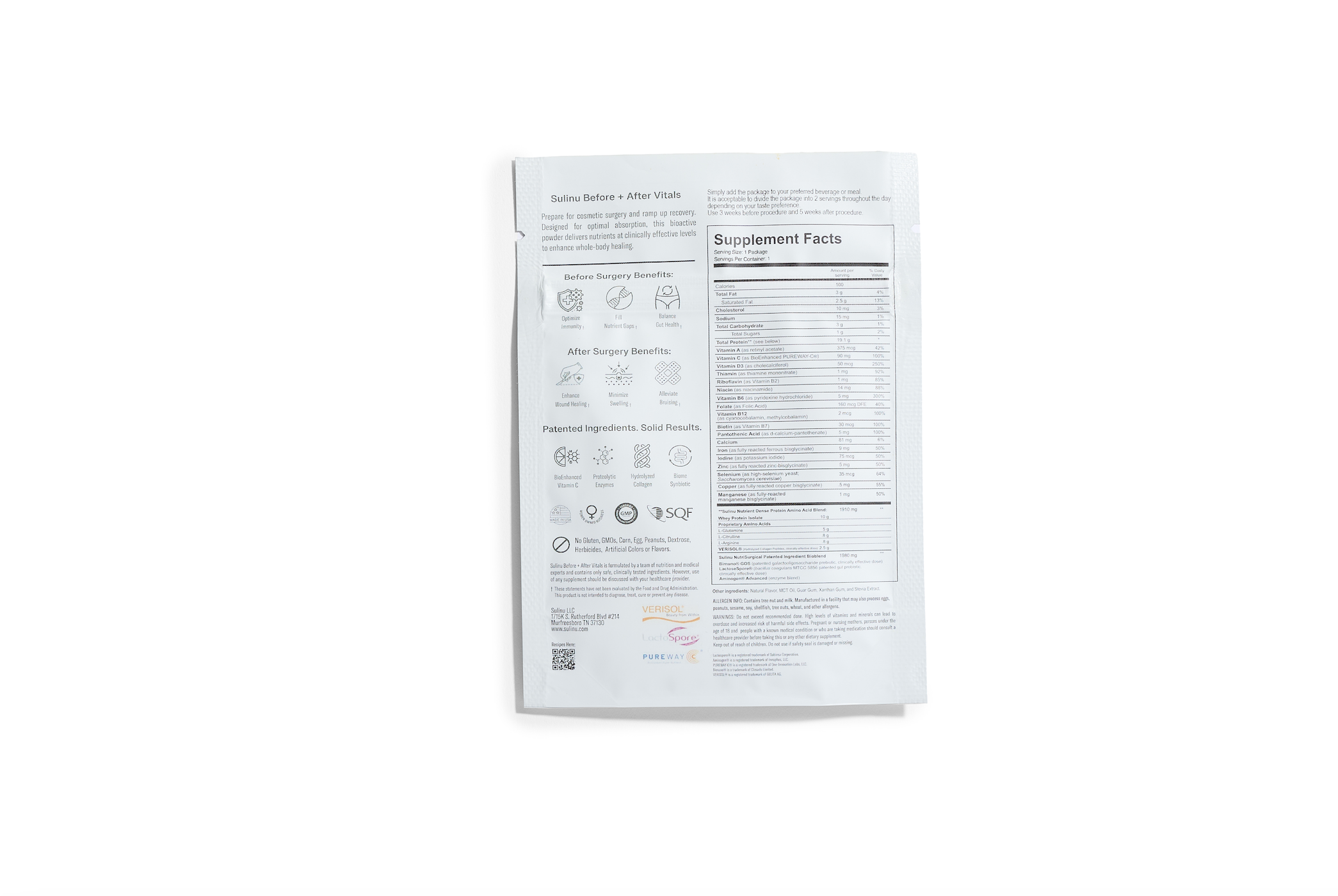
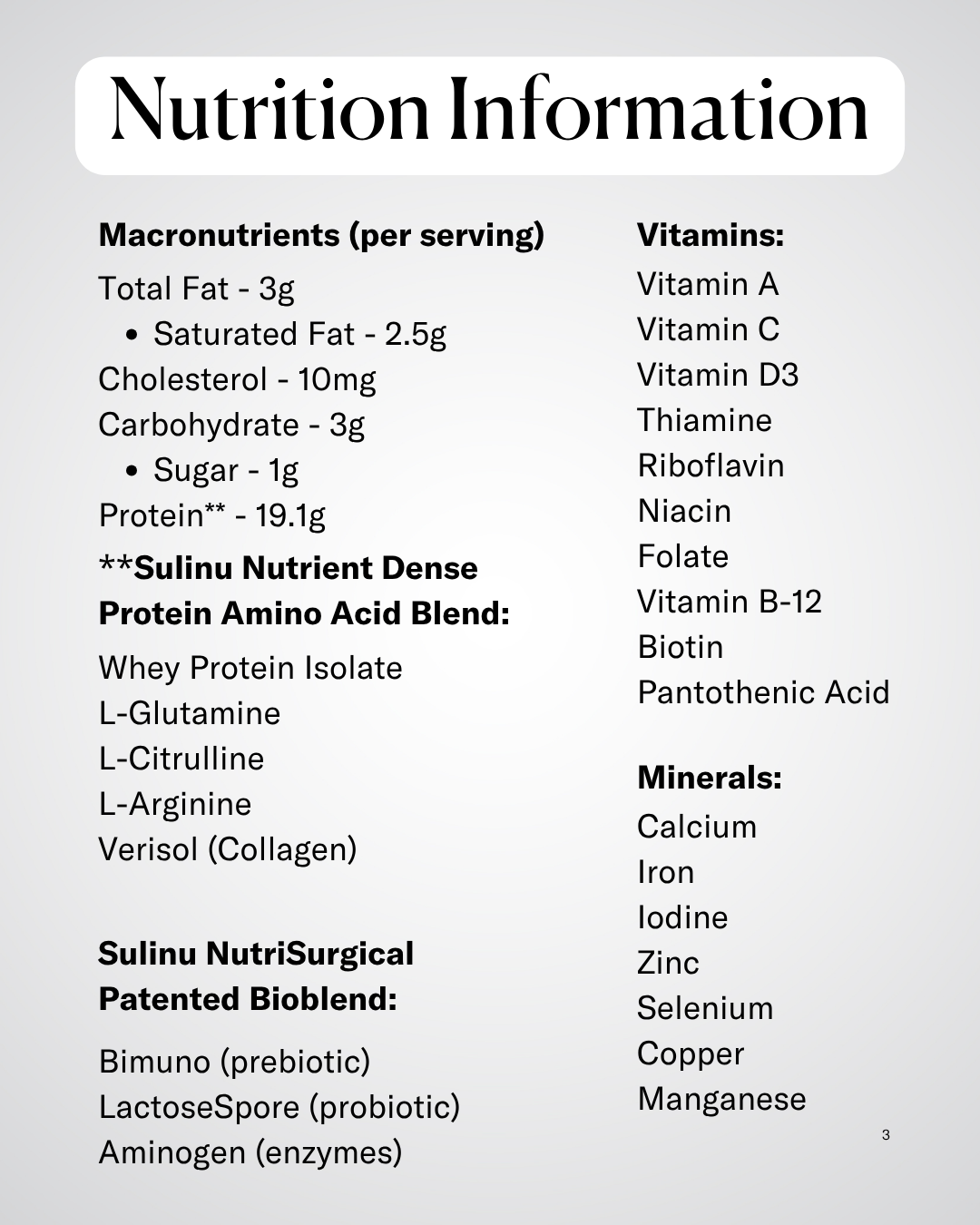
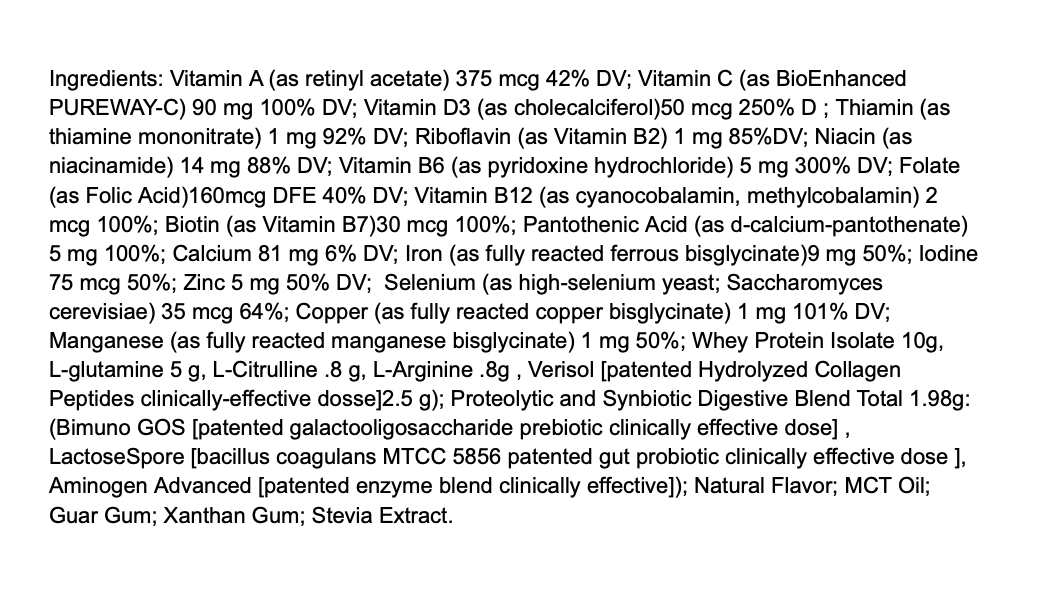
The formula includes 27 surgical essentials:
BioEnhanced Vitamin C
A patented, rapid-absorbing form that some research suggests achieves significantly higher tissue retention than standard ascorbate formulations. Vitamin C is foundational to collagen synthesis, immune defense, and antioxidant protection during the inflammatory phase, all of which directly influence how your body manages bruising, swelling, and the quality of scar tissue over time. It's also formulated to avoid the GI side effects that typically make high-dose vitamin C difficult to tolerate post-surgery.
Hydrolyzed Collagen Peptides
A patented version that some studies indicate may support meaningful improvement in skin elasticity in a matter of weeks. Collagen peptides don't just add collagen. They signal skin cells to produce more of their own. This matters at every stage: for swelling resolution as tissues remodel, for bruising clearance as vascular integrity is restored, and for scar quality as new tissue architecture forms.
Proteolytic Enzymes
Patented enzymes that, when combined with protein, some research suggests can help double total amino acid absorption. Amino acids are the building blocks your body uses to repair incision tissue, clear inflammatory debris, and build new scar architecture. Getting more of them absorbed, not just consumed, is the goal.
Biome Synbiotics
Surgery disrupts gut health, and disrupted gut health disrupts everything else: nutrient absorption, immune function, inflammatory response. Prolonged bruising and swelling are often downstream of a gut that isn't processing and delivering nutrients efficiently. This patented prebiotic and probiotic blend is designed to survive stomach acid and arrive active in the gut, supporting the digestive foundation that makes all other healing nutrients work.
The formula also includes targeted amino acids (L-glutamine, L-citrulline, L-arginine), essential vitamins (A, B-complex, C, D3), and minerals (zinc, copper, manganese, iron) — all in clinically relevant dosages, not token inclusions.
No GMOs. No gluten. No artificial colors. No ingredients that interfere with each other. Everything in Before + After Vitals is there because it has a specific job in your recovery.
Scoop. Mix. Heal.


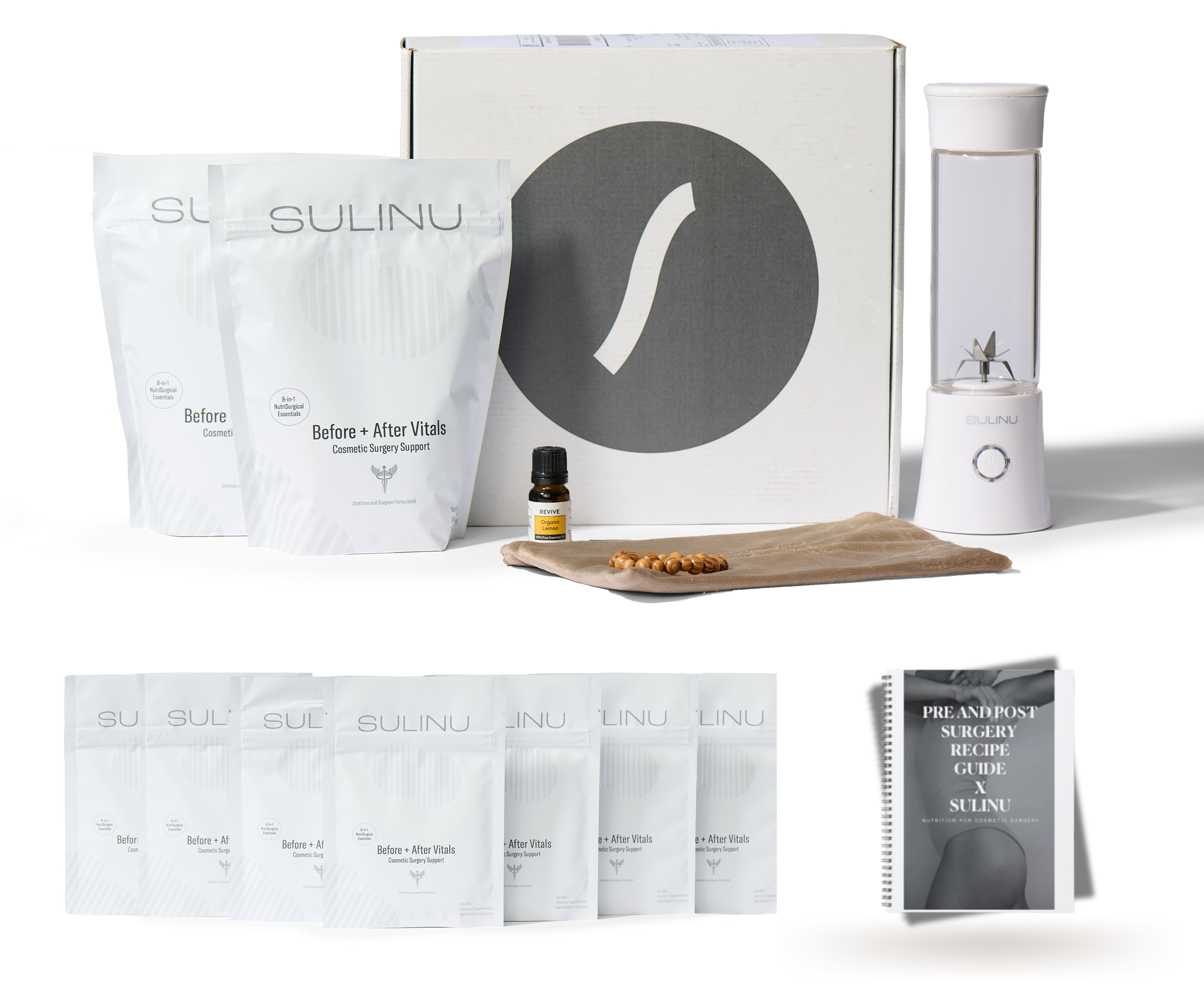
Support your surgery results with our VIP Bundle and get everything you need before and after surgery.
Red Flags: When to Call Your Surgeon
Most facelift bruising is textbook normal. Contact your surgical team if you notice:
-
Bruising that suddenly worsens or expands rapidly after several days of improvement
-
Significant swelling or firmness on one side that's clearly out of proportion to the other
-
Warmth, redness, or streaking spreading from an incision
-
Fever
-
Pain that intensifies rather than gradually easing
-
Any unusual drainage from an incision site
You know your own face better than any general guideline does. If something looks or feels meaningfully different from what your surgeon walked you through beforehand, that's reason enough to call.
FAQs: Facelift Bruising
How long does facelift bruising typically last?
Most visible bruising resolves within two to four weeks, though some subtle discoloration can linger a bit longer depending on your individual healing pattern.
Why is my bruising showing up in places my surgeon didn't operate on?
Gravity moves blood downward through tissue, so it's common for bruising to migrate toward the jaw, neck, or even the collarbone in the days after surgery. This is a normal part of the process, not a sign of a problem.
Will bruising near my hairline or behind my ears behave differently than bruising on my cheeks?
Often, yes. Incision-adjacent areas like behind the ears and along the hairline can bruise in ways that are partially hidden by hair, while cheek and jawline bruising is more exposed. Neither pattern is more or less normal — it's largely a function of where the incisions and tissue work are concentrated.
Does combining my facelift with a neck lift or other procedure change what my bruising looks like?
It can. Combined procedures generally involve more total tissue manipulation, which tends to mean a broader bruising pattern and, in some cases, a slightly longer timeline before things fully settle. Worth discussing with your surgeon ahead of time so your expectations match your specific procedure.
When is it realistic to expect I'll be comfortable being seen in public again?
This varies by individual and by how visible you want your recovery to be, but many patients feel ready for low-key public outings once the deepest bruising has faded to yellow-green tones, often somewhere in the two-to-three-week range. Your comfort level and your surgeon's clearance both matter here more than a fixed date.
Does nutrition actually make a difference, or is that just marketing?
Some research suggests that specific nutrients play a supportive role in how efficiently the body clears bruising and repairs tissue after surgery, though nutrition works alongside the fundamentals like elevation, rest, and following your surgeon's instructions.
Medical Disclaimer
The information provided in this article is for general educational purposes only and is not intended to constitute medical advice, diagnosis, or treatment.
Every individual's healing process is unique, and outcomes vary based on a wide range of factors, including health status, surgical technique, and post-operative care. Always follow the specific guidance of your board-certified plastic surgeon and medical team.
If you experience any concerning symptoms during recovery — including signs of infection, wound separation, or unusual pain — contact your surgical team immediately.
These statements have not been evaluated by the Food and Drug Administration. Sulinu's Before + After Vitals is not intended to diagnose, treat, cure, or prevent any disease.


![A promotional image for The PREP STARTER Kit [free shipping], showcasing its key benefits such as protein, vitamins, minerals, amino acids, probiotics, and enzymes. Featured as an essential pre-op supplement in your surgery prep kit, the product bag is displayed alongside fresh green vegetables on a light background.](http://www.sulinu.com/cdn/shop/files/12.jpg?v=1776452906&width=1080)
![A hand holds a scoop of white powder above an open bag of The PREP STARTER Kit [free shipping]. Text highlights that this research-based formula aids surgery recovery, delivers 19g of protein and 29 carefully selected ingredients per daily scoop—making The PREP STARTER Kit an essential addition to any surgery prep kit.](http://www.sulinu.com/cdn/shop/files/3.jpg?v=1776452906&width=1080)
![A ⭐BEST VALUE⭐ The Prep + Recovery Bundle [free shipping] package is displayed on a white background with text highlighting its clinical benefits and international sourcing, emphasizing improved nerve regeneration, better protein absorption, and faster healing—making it an ideal addition to any surgical recovery kit.](http://www.sulinu.com/cdn/shop/files/2.jpg?v=1776452906&width=1080)
![A woman’s face in close-up appears on the left. On the right, text explains post-surgery risks: metabolism rises, appetite drops, food intake falls, and nutrient needs soar. The message: your body needs more while you eat less—making The PREP STARTER Kit [free shipping] essential for recovery.](http://www.sulinu.com/cdn/shop/files/9.jpg?v=1776452906&width=1080)
![Text graphic explaining consequences of not fueling the healing body: slower wound healing, higher infection risk, more bruising, increased fatigue, pain, and constipation. Highlights that nutrition is essential for recovery but often overlooked—using The PREP STARTER Kit [free shipping] can help support your body and make all the difference for surgical recovery.](http://www.sulinu.com/cdn/shop/files/10.jpg?v=1776452906&width=1080)
![A smiling woman holding a box labeled The PREP STARTER Kit [free shipping] stands beside text explaining the purpose behind creating The PREP STARTER Kit: to support post-surgery recovery by providing targeted nutrition backed by real clinical data, serving as an essential surgery protein guide for patients seeking optimal outcomes.](http://www.sulinu.com/cdn/shop/files/14.jpg?v=1776452906&width=1080)
![A person in a fitted outfit poses against a neutral background. Text reads ⭐BEST VALUE⭐ The Prep + Recovery Bundle [free shipping]. Discover the ultimate surgery prep bundle—nutrition for cosmetic surgery and essential support for your recovery kit.](http://www.sulinu.com/cdn/shop/files/UltimateSurgeryBundle-Sulinu.png?v=1775162796&width=537)