Here's what nobody explains clearly before surgery: BBL bruising doesn't follow the same rules as bruising after other procedures. It travels to unexpected places and fades on its own timeline. Knowing this now — not on day three when you're staring at your reflection — means you'll recognize normal healing instead of mistaking it for a problem.
Why BBL Bruising Behaves Differently
Most bruising guides treat "bruising after surgery" as one category. BBL doesn't fit into it.
A Brazilian Butt Lift is really two separate procedures performed as one recovery. First, there's the liposuction, usually from multiple donor areas like the abdomen, flanks, back, and thighs, harvesting fat to be purified and prepared for transfer. Second, there's the graft itself, where that fat is injected into the buttocks in careful layers. Each of these stages disrupts blood vessels in its own way, which means you're not managing bruising from one surgical site. You're managing it from several, all healing on different timelines, all draining into each other via gravity and your body's natural fluid pathways.
That's why BBL bruising tends to travel. Blood doesn't stay put. It follows the path of least resistance through your tissue, often pooling in areas well below the actual incision or injection site. Bruising on the backs of your knees or ankles after extensive lower-body lipo isn't a red flag. It's just physics.
It also means the sheer volume of bruising tends to run higher than what patients see after a single-area procedure. A tummy tuck or a facelift concentrates trauma in one region. A BBL, by design, spreads it across the abdomen, flanks, back, thighs, and buttocks all at once, which is part of why the visual impact of BBL bruising can feel so much more dramatic in the mirror than what friends who've had other procedures describe.
Then there's the sitting restriction, which most patients think of purely as a "protect the fat graft" rule. It's also a bruising factor. Because you're avoiding direct pressure on your bruised, newly grafted tissue, you're often shifting your weight in unusual ways — leaning, side-lying, using donut cushions — and that altered positioning can create secondary pressure points and even new minor bruising in places that wouldn't normally take a hit during a typical recovery.
Compression garments add one more layer. They're doing important work supporting your donor sites and helping manage swelling, but the seams, panels, and pressure points of a garment worn nearly around the clock can also contribute to localized bruising or deepen existing discoloration in the spots where the fabric presses hardest.
The BBL Bruising Timeline
The general color science of bruising — purple to blue to green to yellow — works the same way here as it does after any procedure, and we've covered that progression in detail in our guide to liposuction bruising if you want the full breakdown. What's worth noting specifically for BBL is the pacing across multiple sites at once.
Week 1
The first week tends to bring the most dramatic coloring, and because you have donor sites and a graft site healing simultaneously, don't be surprised if one area is still deep purple while another has already started shifting toward blue. Uneven timing across sites is normal — each area has its own blood supply and its own healing pace.
Weeks 2-4
Weeks two through four are typically when donor-site bruising starts fading faster than anything near the graft area, since the buttocks are working through fat integration on top of standard bruising resolution. Some patients notice their stomach or flanks look nearly bruise-free while their hips and thighs are still catching up.
Weeks 6-8
By six to eight weeks, most visible bruising across all sites should have resolved. If a specific spot is lagging well behind everything else, or if you notice a hard, isolated lump that isn't softening the way the surrounding bruising is, that's worth a call to your surgeon rather than something to wait out. More on that below.
It's worth noting that the pace of resolution isn't just about the number of sites. It's also about how much fat was harvested and transferred overall. A larger-volume BBL naturally involves more donor tissue disruption, which can mean a longer runway before every area looks fully settled. None of this is a sign that something's gone wrong; it's simply a reflection of how much healing your body has been asked to do in one procedure.
Bruising vs. What Actually Needs a Call to Your Surgeon
Because BBL involves fat grafting, there's an extra layer of vigilance worth building into how you're monitoring your recovery, including separating "normal bruising" from signs that something with the graft itself needs attention.
Ordinary BBL bruising is diffuse, follows the expected color progression, and softens gradually to the touch as it heals, even while the color lingers. It shows up in predictable gravity-driven patterns and improves symmetrically across similar sites over time.
What's worth flagging to your surgical team: bruising that comes with an area that feels unusually hard or firm rather than soft, a spot that seems to be getting more swollen or painful rather than less as the days pass, any area with red streaking or warmth that could suggest infection, or bruising that's dramatically worse on one side with no clear explanation. None of this is meant to alarm you. Most BBL recoveries proceed exactly as expected. But knowing the difference between normal, if uneven, healing and a sign to call your surgeon is useful to have going into recovery.
What Actually Supports Multi-Site Healing
Because BBL asks your body to heal several different types of tissue trauma at once, including donor-site vascular disruption, graft-site integration, and general surgical inflammation, the nutritional demands during recovery are higher than they are for a single-site procedure. Some research suggests that adequate protein, vitamin C, and micronutrient support during the healing window may help the body manage the demands of tissue repair and vascular healing more efficiently, though individual recovery still depends heavily on surgical technique and personal health factors.
This is really where a targeted approach matters more than a general "eat healthy" plan.
Standard multivitamins aren't built for the kind of nutrient demand multi-site surgical recovery creates, and stacking a pile of separate supplements can create its own absorption problems. Calcium can interfere with zinc uptake, and zinc can block copper, if they're not delivered in a form designed to work together. Skin and vascular healing also depend on more than the biotin-and-collagen basics most people default to; gut health and mineral depletion play a role in whether your body can actually use the nutrients you're taking in, rather than letting them pass through unused.
Before + After Vitals for BBL Bruising Support
Here's the part that doesn't get enough attention: what you're eating (and supplementing) during recovery plays a real role in how efficiently your body repairs tissue.
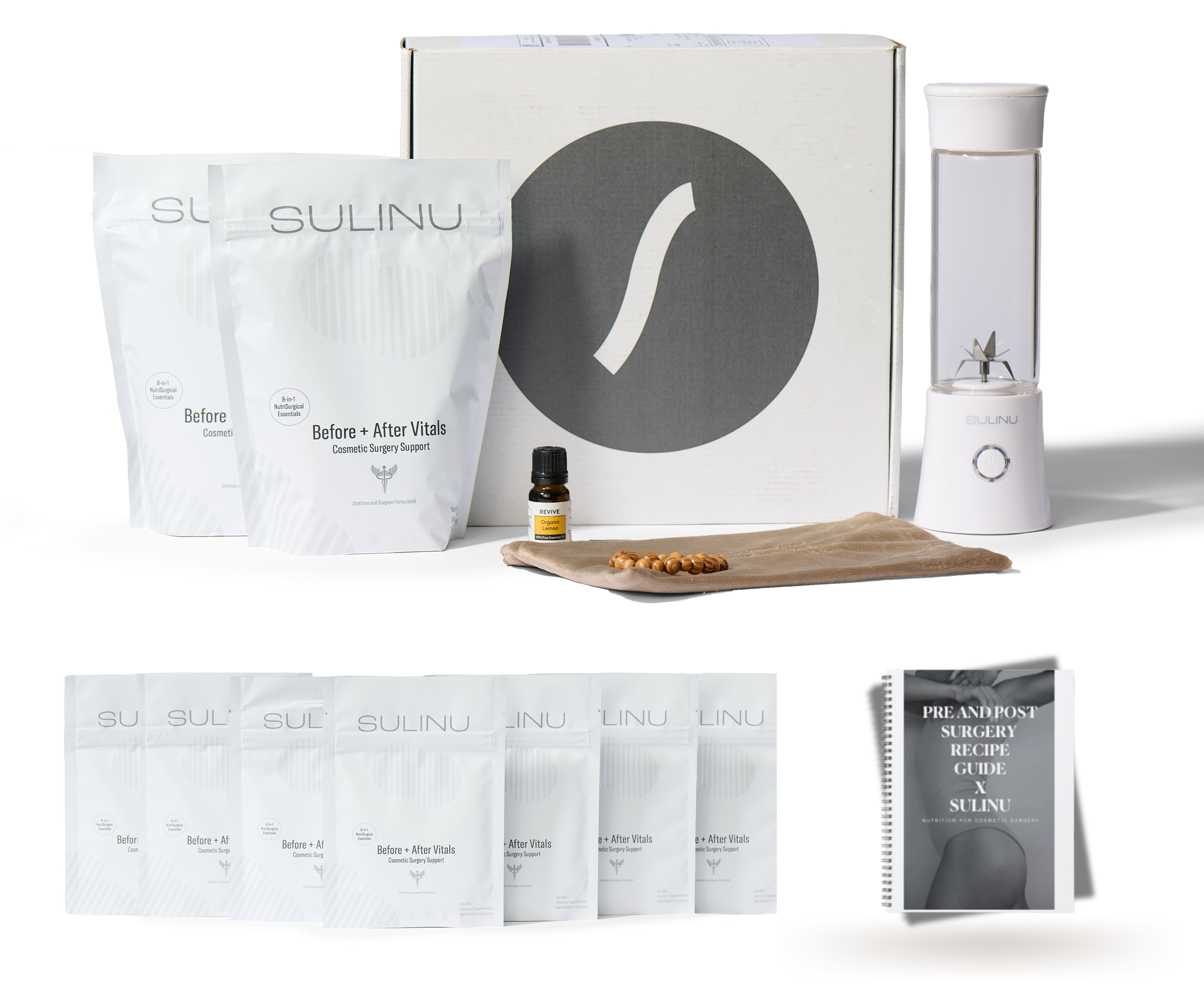
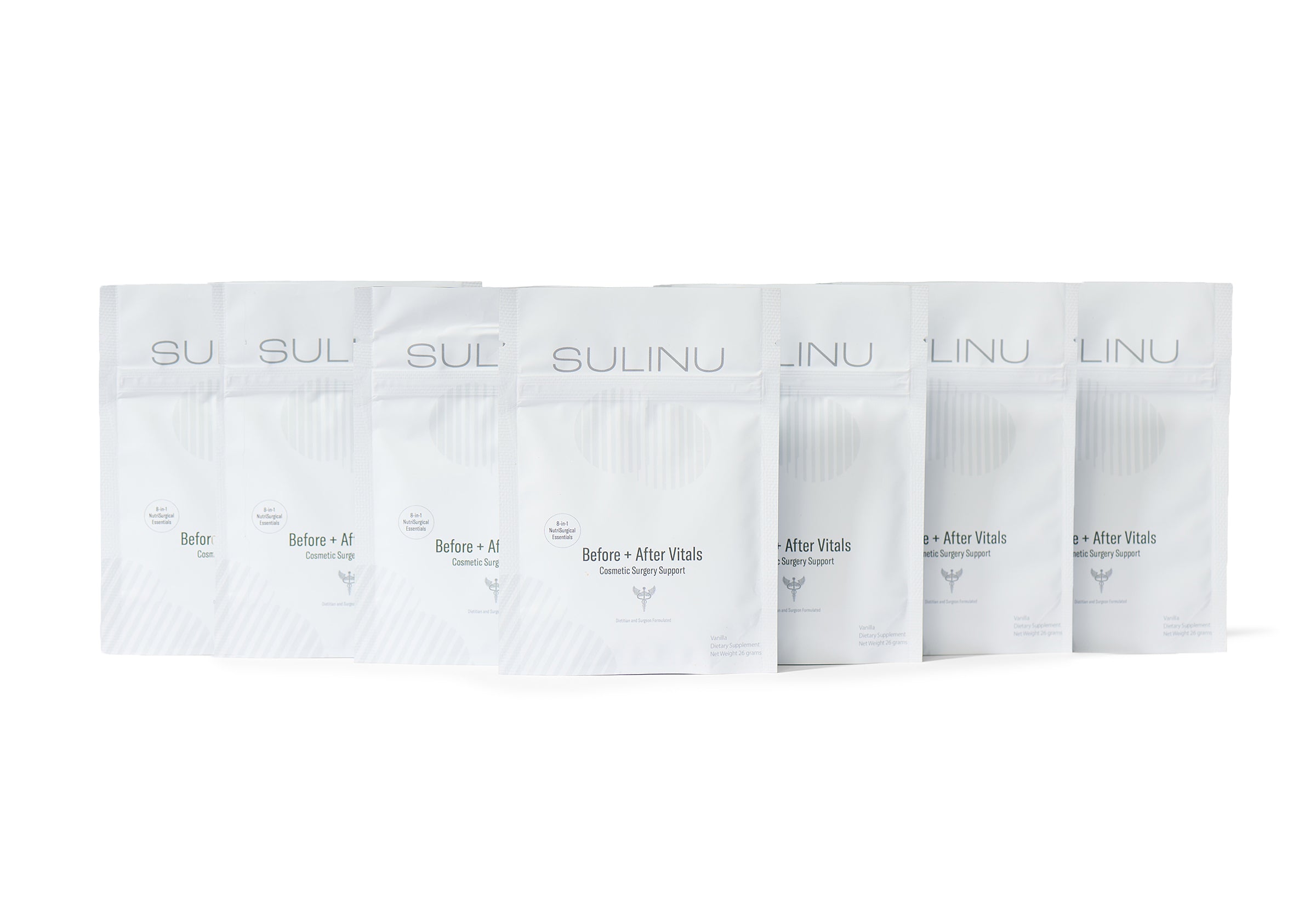
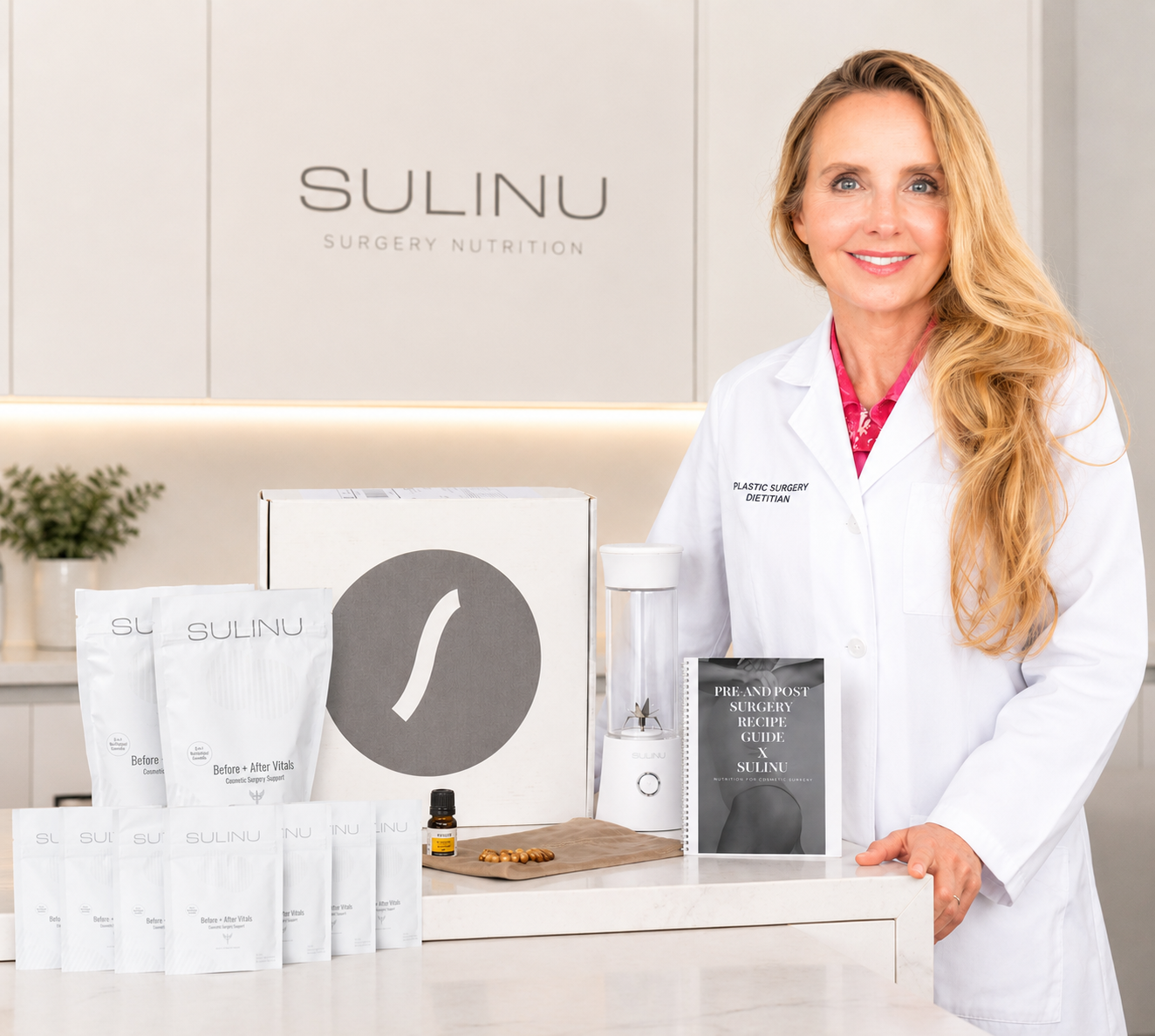
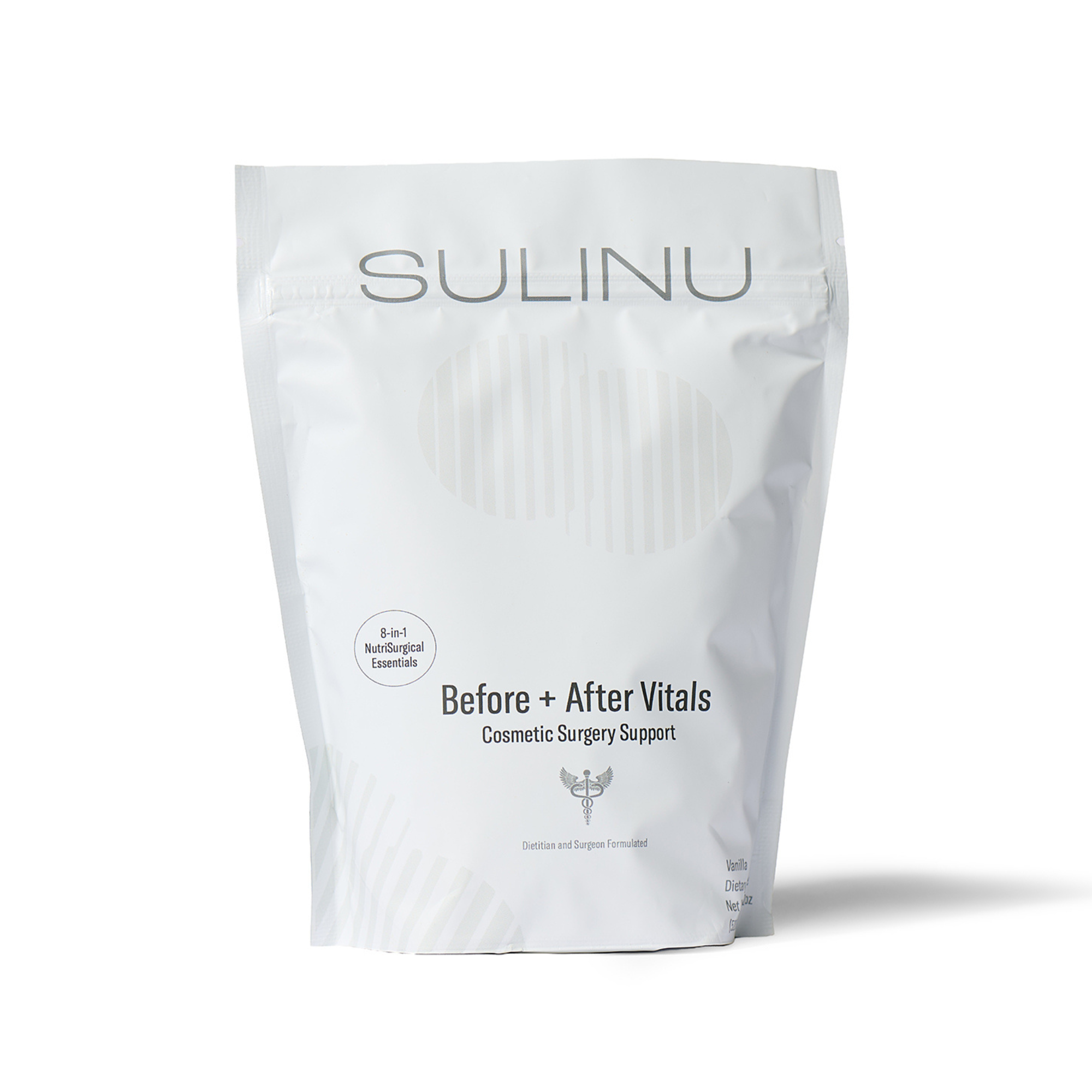
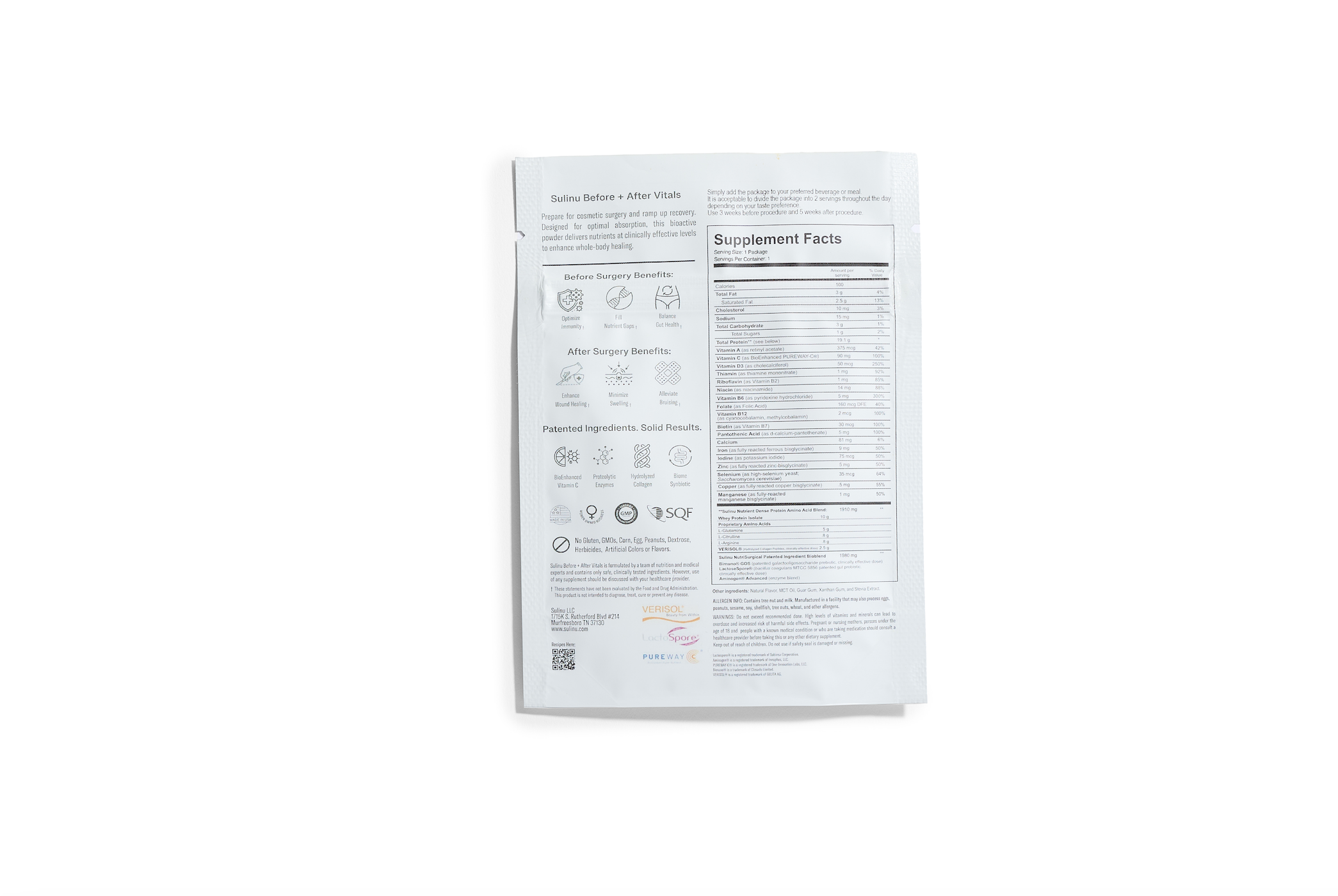
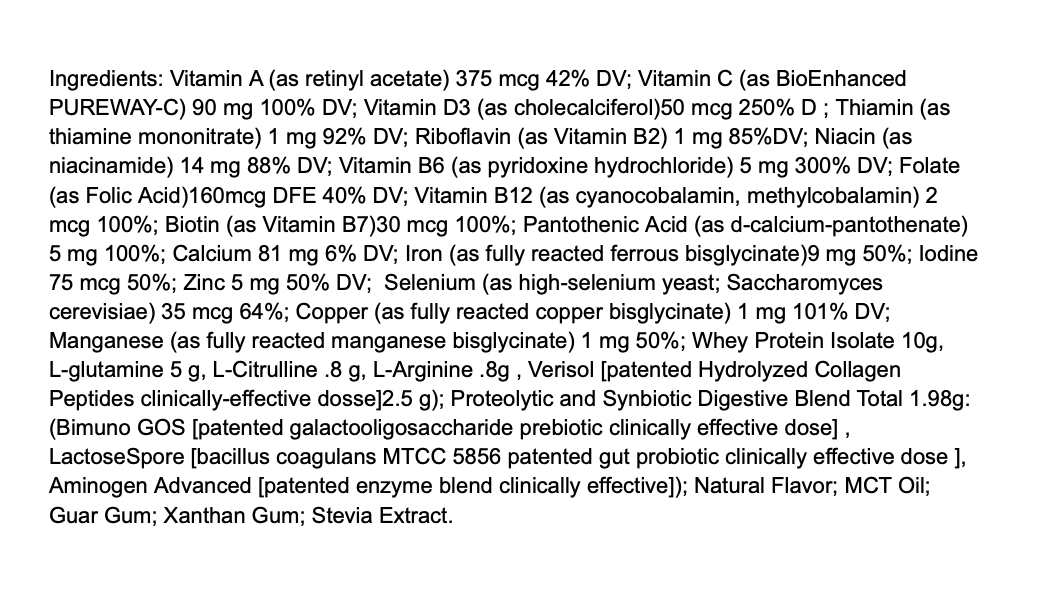
Sulinu's Before + After Vitals is the world's first comprehensive wound healing supplement built specifically for cosmetic surgery recovery — a NutriSurgical formula, meaning it addresses the surgical healing process directly rather than functioning as a general multivitamin. The formula includes 27 surgeon-approved ingredients, including patented ingredients and a few core components that impact your recovery.
The formula includes 27 surgical essentials:
BioEnhanced Vitamin C
A patented, rapid-absorbing form that some research suggests achieves significantly higher tissue retention than standard ascorbate formulations. Vitamin C is foundational to collagen synthesis, immune defense, and antioxidant protection during the inflammatory phase, all of which directly influence how your body manages bruising, swelling, and the quality of scar tissue over time. It's also formulated to avoid the GI side effects that typically make high-dose vitamin C difficult to tolerate post-surgery.
Hydrolyzed Collagen Peptides
A patented version that some studies indicate may support meaningful improvement in skin elasticity in a matter of weeks. Collagen peptides don't just add collagen. They signal skin cells to produce more of their own. This matters at every stage: for swelling resolution as tissues remodel, for bruising clearance as vascular integrity is restored, and for scar quality as new tissue architecture forms.
Proteolytic Enzymes
Patented enzymes that, when combined with protein, some research suggests, can help double total amino acid absorption. Amino acids are the building blocks your body uses to repair incision tissue, clear inflammatory debris, and build new scar architecture. Getting more of them absorbed, not just consumed, is the goal.
Biome Synbiotics
Surgery disrupts gut health, and disrupted gut health disrupts everything else: nutrient absorption, immune function, inflammatory response. Prolonged bruising and swelling are often downstream of a gut that isn't processing and delivering nutrients efficiently. This patented prebiotic and probiotic blend is designed to survive stomach acid and arrive active in the gut, supporting the digestive foundation that makes all other healing nutrients work.
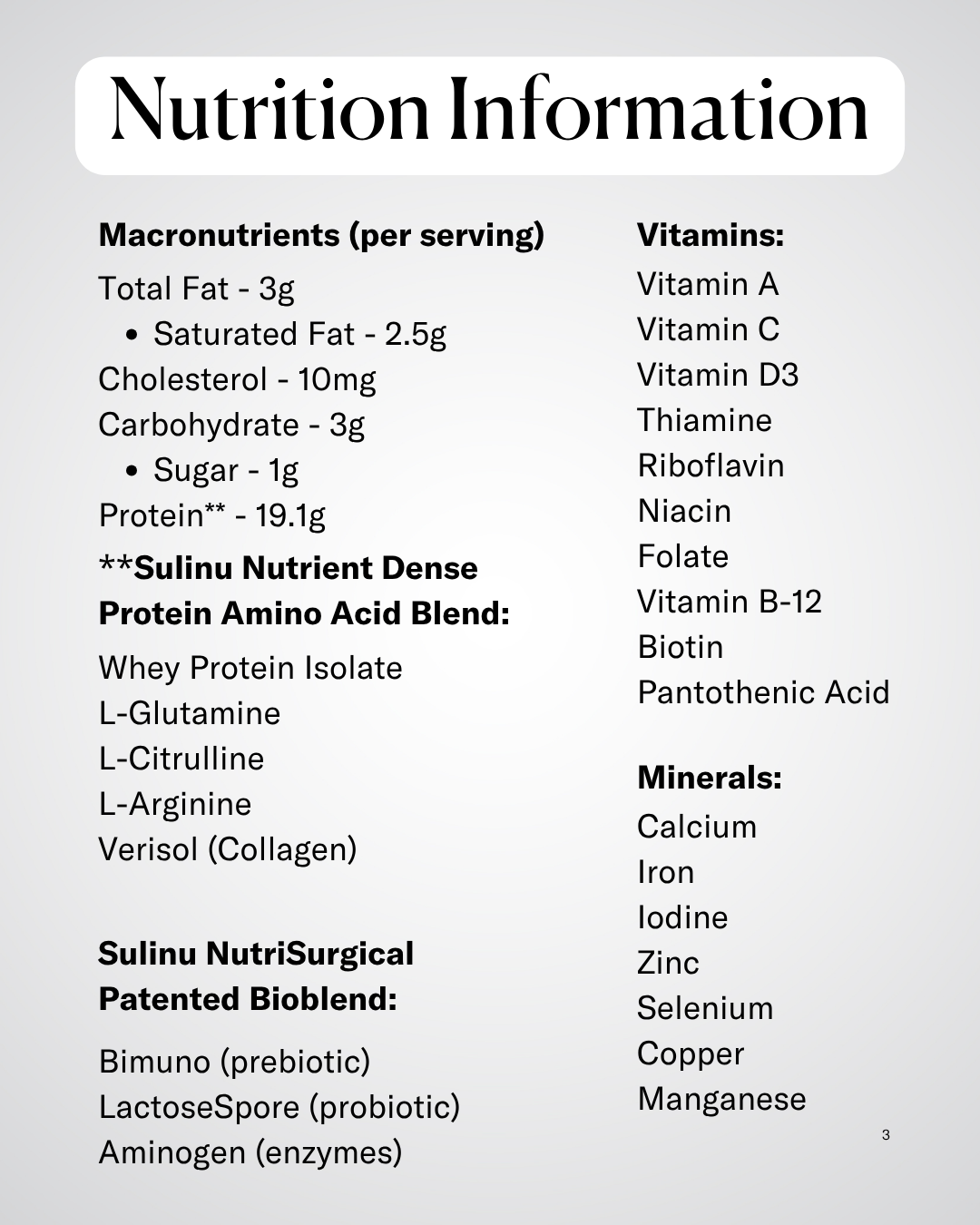
The formula also includes targeted amino acids (L-glutamine, L-citrulline, L-arginine), essential vitamins (A, B-complex, C, D3), and minerals (zinc, copper, manganese, iron) — all in clinically relevant dosages, not token inclusions.
No GMOs. No gluten. No artificial colors. No ingredients that interfere with each other. Everything in Before + After Vitals is there because it has a specific job in your recovery.
Scoop. Mix. Heal.
How much do I need to support my BBL Recovery?
Our recommended protocol is three bags total for most surgeries.
1 bag for before surgery
2 bags for after surgery
Support your surgery results with our VIP Bundle and get everything you need before and after surgery. Or you can get a discount with a subscription plan.
Already healing from a BBL and worried about your bruising and scarring?
Bruising and scarring don't stop mattering after surgery. You've got up to a year to still influence how your scars heal. Starting now still counts.
Getting Through the Bruising Phase
A few practical habits make a real difference during this phase of recovery:

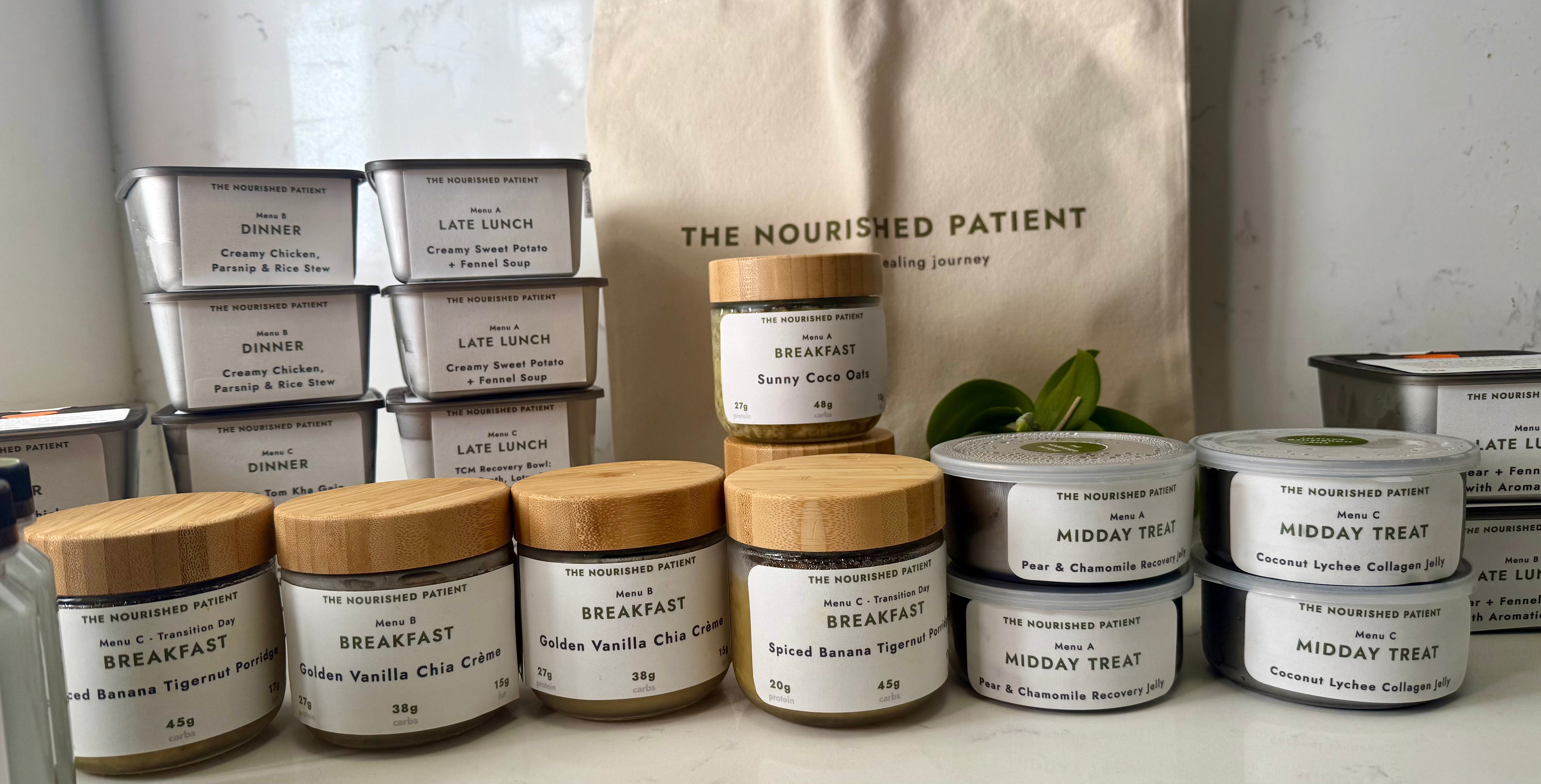
Prioritize Nutrition
Multi-site healing means your body needs more than a standard multivitamin can offer. Before + After Vitals delivers patented ingredients formulated to support tissue repair and circulation during recovery — no piecing together separate pills required.
Don't stop at supplements. The Ultimate Surgery Bundle hands you eight expert guides ($130 value) for $57, so nothing about recovery catches you off guard.

Get a Sleep System That Works for BBL.
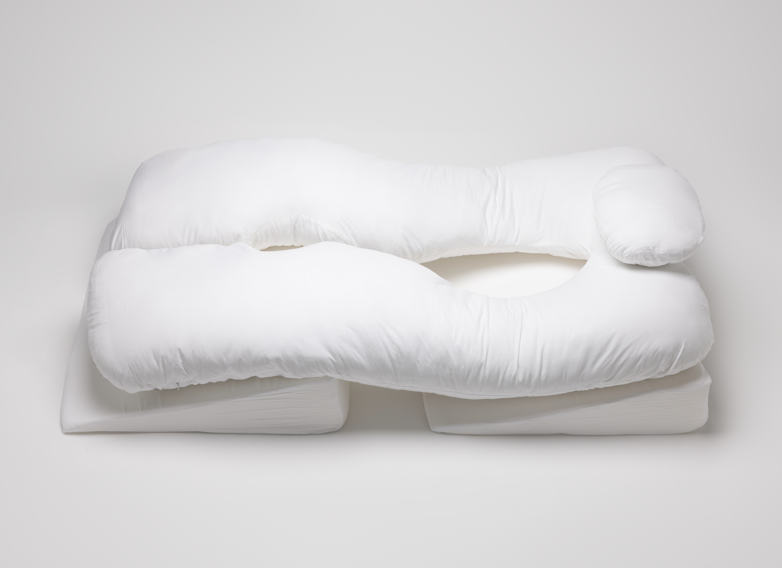
Sleep and rest in whatever position your surgeon has cleared, and avoid the temptation to shift positions "just for a minute" to relieve discomfort. A post-surgical BBL Pillow designed for sleep and healing can help protect your results. The Sleep Again Pillow System, combined with the BBL Add-On Set, is perfect for getting the healing rest you need following your BBL.
Compression Matters.
Stick to your surgeon's compression garment schedule, even when you're tempted to size up for comfort. Proper fit matters for both swelling and bruising management.
Movement.
Keep up with gentle walking as soon as you're cleared, since movement supports circulation without putting pressure on the graft site.
Track Your Bruising Progress.
Take photos in consistent lighting every few days so you can track real progress instead of relying on memory, which tends to make slow, steady healing feel like no progress at all. Give yourself permission to look worse before you look better. BBL bruising is extensive and highly visible. It is not a preview of your final results.
Hydrate.
Prioritize consistent hydration throughout recovery. Well-hydrated tissue tends to show bruising less dramatically and can support your body's general recovery processes.
Avoid Comparison.
Resist comparing your bruising to what you see in other patients' recovery photos online. Donor site count, fat volume transferred, skin thickness, and individual healing pace all vary enough that side-by-side comparisons rarely tell you anything useful.
FAQs: BBL Bruising
Is it normal for BBL bruising to show up somewhere I wasn't treated?
Yes. Blood follows gravity and tissue planes, not surgical boundaries, so bruising commonly travels to areas like the lower back, thighs, or ankles even when those spots weren't part of your procedure.
Why does my stomach look better than my hips and thighs at the same point in recovery?
Different sites heal on different timelines. Donor areas often show visible improvement faster than areas closer to the graft site, which is managing fat integration on top of standard healing.
How long does BBL bruising typically last?
Most patients see significant fading within three to four weeks, with full resolution generally by six to eight weeks, though this varies by individual and by how many donor sites were involved.
Can my compression garment actually cause bruising?
It's possible for seams or high-pressure panels to contribute to localized bruising or worsen existing discoloration in specific spots, which is why proper garment fit and surgeon guidance matter.
Should I be worried if one spot is bruised much longer than the rest?
A single area lagging noticeably behind — especially if it also feels firm or increasingly tender — is worth a call to your surgeon rather than something to simply wait out.
Does nutrition actually make a difference in how fast bruising resolves?
Some studies suggest that adequate protein and micronutrient intake may support the body's natural healing processes during recovery, though results vary and nutrition is only one factor among many, including surgical technique and individual health.
Medical Disclaimer
The information provided in this article is for general educational purposes only and is not intended to constitute medical advice, diagnosis, or treatment.
Every individual's healing process is unique, and outcomes vary based on a wide range of factors, including health status, surgical technique, and post-operative care. Always follow the specific guidance of your board-certified plastic surgeon and medical team.
If you experience any concerning symptoms during recovery — including signs of infection, wound separation, or unusual pain — contact your surgical team immediately.
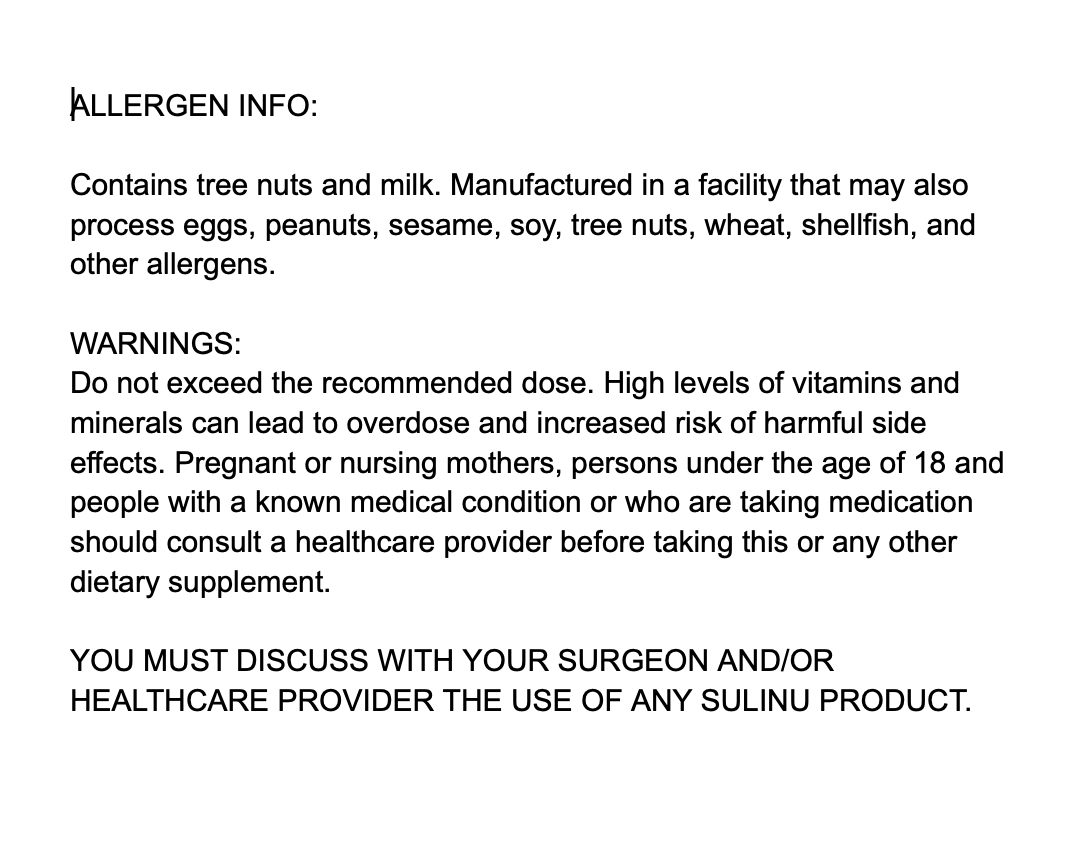
These statements have not been evaluated by the Food and Drug Administration. Sulinu's Before + After Vitals is not intended to diagnose, treat, cure, or prevent any disease.


![A promotional image for The PREP STARTER Kit [free shipping], showcasing its key benefits such as protein, vitamins, minerals, amino acids, probiotics, and enzymes. Featured as an essential pre-op supplement in your surgery prep kit, the product bag is displayed alongside fresh green vegetables on a light background.](http://www.sulinu.com/cdn/shop/files/12.jpg?v=1776452906&width=1080)
![A hand holds a scoop of white powder above an open bag of The PREP STARTER Kit [free shipping]. Text highlights that this research-based formula aids surgery recovery, delivers 19g of protein and 29 carefully selected ingredients per daily scoop—making The PREP STARTER Kit an essential addition to any surgery prep kit.](http://www.sulinu.com/cdn/shop/files/3.jpg?v=1776452906&width=1080)
![A ⭐BEST VALUE⭐ The Prep + Recovery Bundle [free shipping] package is displayed on a white background with text highlighting its clinical benefits and international sourcing, emphasizing improved nerve regeneration, better protein absorption, and faster healing—making it an ideal addition to any surgical recovery kit.](http://www.sulinu.com/cdn/shop/files/2.jpg?v=1776452906&width=1080)
![A woman’s face in close-up appears on the left. On the right, text explains post-surgery risks: metabolism rises, appetite drops, food intake falls, and nutrient needs soar. The message: your body needs more while you eat less—making The PREP STARTER Kit [free shipping] essential for recovery.](http://www.sulinu.com/cdn/shop/files/9.jpg?v=1776452906&width=1080)
![Text graphic explaining consequences of not fueling the healing body: slower wound healing, higher infection risk, more bruising, increased fatigue, pain, and constipation. Highlights that nutrition is essential for recovery but often overlooked—using The PREP STARTER Kit [free shipping] can help support your body and make all the difference for surgical recovery.](http://www.sulinu.com/cdn/shop/files/10.jpg?v=1776452906&width=1080)
![A smiling woman holding a box labeled The PREP STARTER Kit [free shipping] stands beside text explaining the purpose behind creating The PREP STARTER Kit: to support post-surgery recovery by providing targeted nutrition backed by real clinical data, serving as an essential surgery protein guide for patients seeking optimal outcomes.](http://www.sulinu.com/cdn/shop/files/14.jpg?v=1776452906&width=1080)
![A person in a fitted outfit poses against a neutral background. Text reads ⭐BEST VALUE⭐ The Prep + Recovery Bundle [free shipping]. Discover the ultimate surgery prep bundle—nutrition for cosmetic surgery and essential support for your recovery kit.](http://www.sulinu.com/cdn/shop/files/UltimateSurgeryBundle-Sulinu.png?v=1775162796&width=537)